Fake IT Support Uses Teams and Remote-Access Tools to Deliver Malware
Social Engineering & Fraud · 3 sources · Updated 2mo ago · First seen May 15, 2024
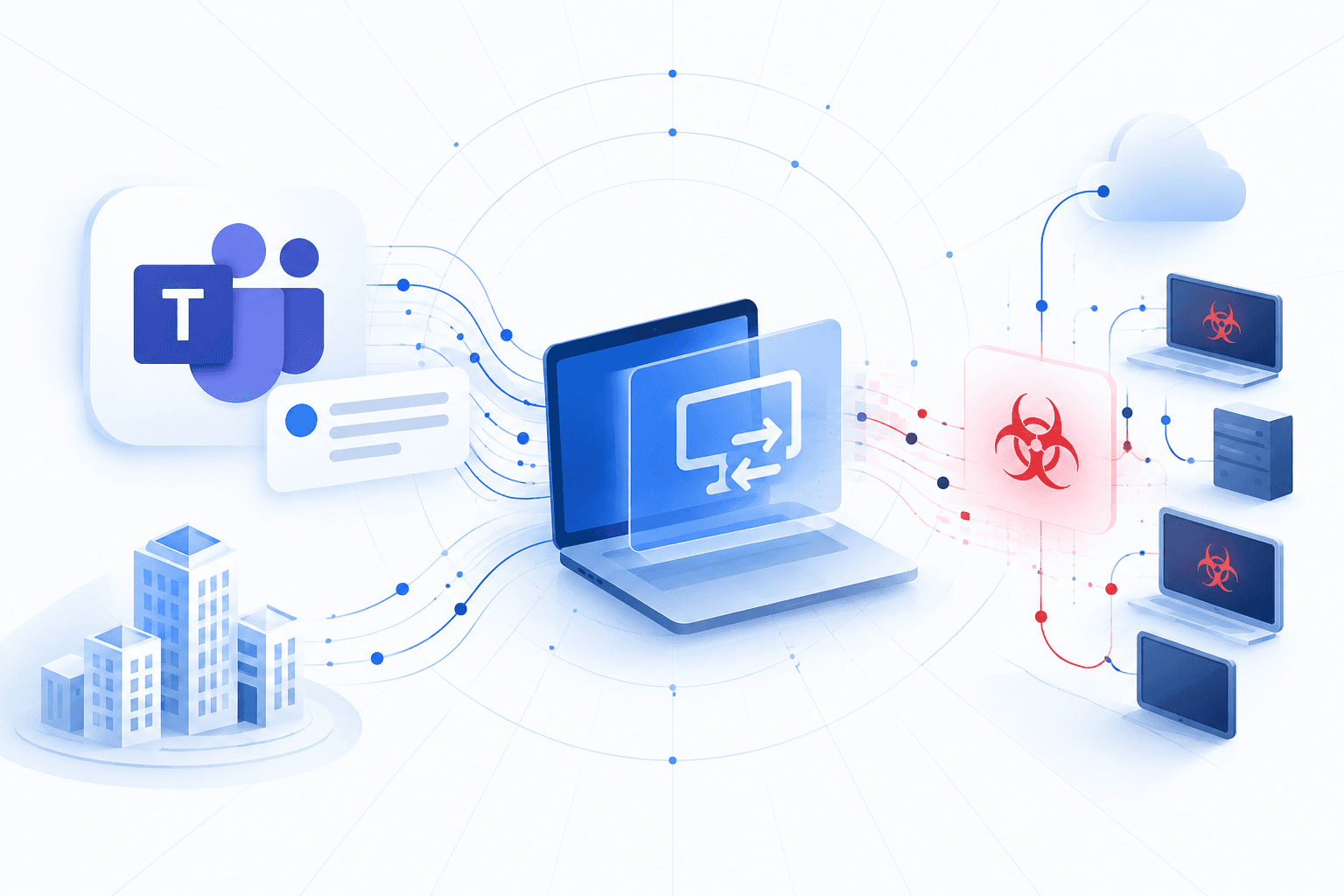
Attackers are impersonating IT support through Microsoft Teams chats, calls, and voice phishing to persuade employees to grant remote access using Quick Assist or AnyDesk. Permiso documented campaigns targeting users in English-speaking regions, including an incident involving a multistage PowerShell payload capable of credential theft, host profiling, persistence, encrypted command-and-control communication, and attacker-directed execution. Related reporting from Morphisec described a Teams-call-linked Matanbuchus 3.0 malware-as-a-service threat. ReliaQuest documented a Black Basta campaign that overwhelmed users with newsletter subscriptions before fraudulent support calls; its three investigated cases did not progress beyond the initial user, although similar attacks elsewhere reportedly resulted in ransomware deployment.
The PowerShell malware analyzed by Permiso persists through a scheduled task or registry autorun entry and attempts to mark its process as critical, potentially crashing Windows if terminated. Reused cryptographic constants connect the payload to tooling previously attributed to EncryptHub, also known as LARVA-208 and Water Gamayun, but do not conclusively attribute every campaign or indicator to that actor. Organizations should require independent verification of unsolicited support requests, restrict remote-access software to approved tools, and monitor suspicious scripting and persistence activity following support interactions. ReliaQuest also recommends blocking newly registered domains; Permiso cautions that its published indicators span similar campaigns rather than a single confirmed actor.
Why it matters
Attackers impersonate IT support through Microsoft Teams and telephone calls to obtain employee-approved remote access, steal credentials, and establish persistent access to Windows endpoints. Exposure spans multiple industries and English-speaking regions; successful compromise can lead to account takeover, lateral movement, ransomware, and operational disruption, including a Windows crash if the analyzed PowerShell process is terminated.
- Permiso documented targeting from individual employees to dozens of users across organizations. External Teams communication and employee access to Quick Assist or AnyDesk enable the initial approach.
- ReliaQuest investigated three incidents: none progressed beyond the initially targeted user, but one successfully captured a password. Other organizations reportedly experienced ransomware deployment following similar attacks.
- The PowerShell payload shares cryptographic constants with tooling previously attributed to EncryptHub/LARVA-208/Water Gamayun. This does not establish common attribution for every campaign or indicator.
- These references describe activity published between May 2024 and August 2025, not a newly confirmed October 2026 campaign.