Microsoft Teams Vishing Used to Gain Remote Access and Deploy Malware
Social Engineering & Fraud · 3 sources · Updated 5mo ago · First seen Mar 18, 2026
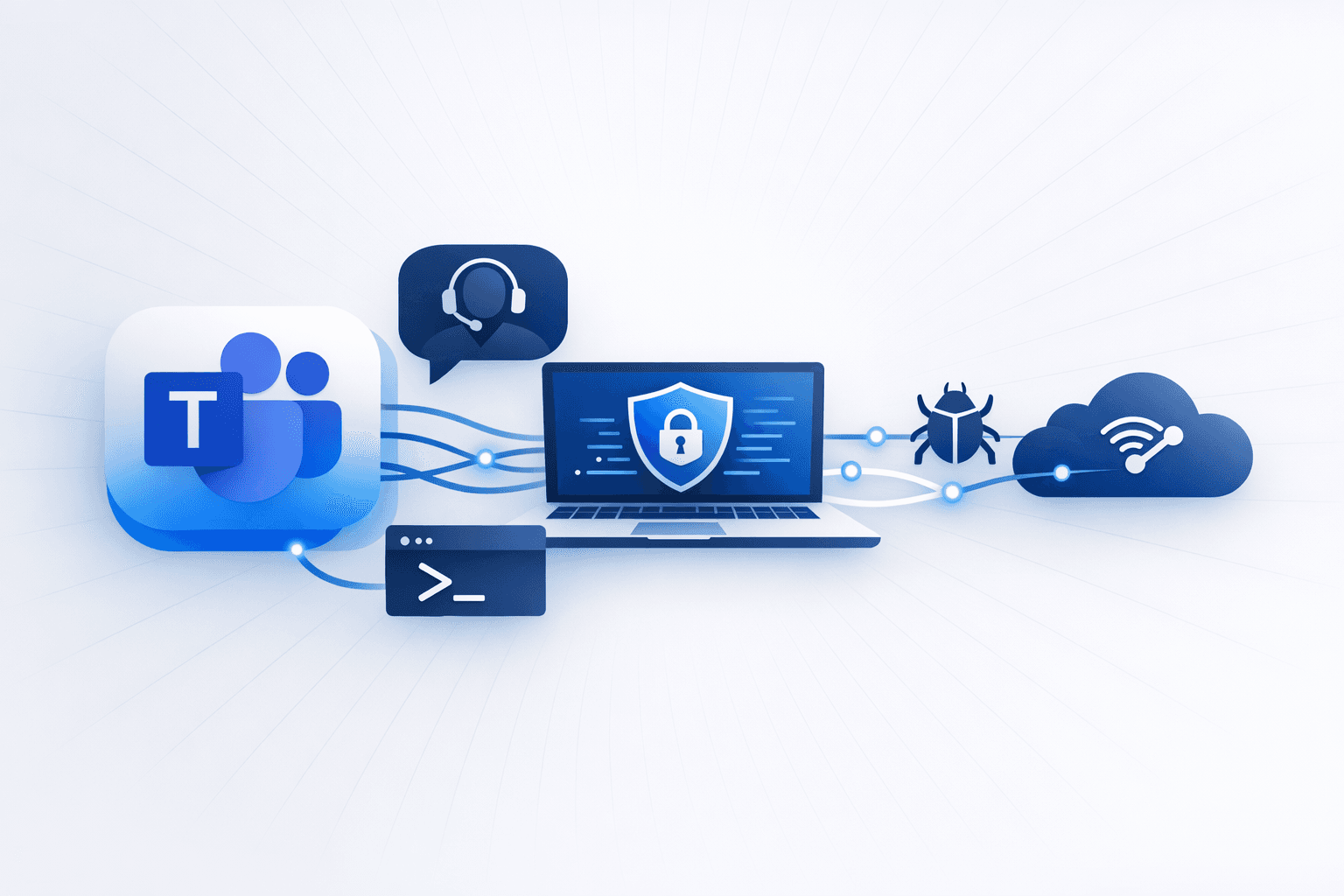
Attackers used Microsoft Teams to impersonate IT or helpdesk staff and socially engineer employees into granting access or executing malicious actions, turning collaboration tooling and trusted support workflows into the initial access vector. One report describes a compromise at an Italy-based consumer services company where a Teams meeting invite and screen sharing session led the victim to run a staged PowerShell chain that deployed PhantomBackdoor, a multi-stage WebSocket-based backdoor associated with earlier spear-phishing activity. The observed sequence included post-call PowerShell execution, device reconnaissance, and establishment of WebSocket command-and-control.
A second report describes a similar vishing intrusion in which a threat actor posing as support staff called employees through Teams and, after multiple attempts, convinced one user to grant remote access through Quick Assist. The attacker then directed the victim to a spoofed credential-harvesting site, used a malicious MSI and sideloaded DLL to launch follow-on payloads, and established outbound C2. While the malware families and exact post-compromise chains differ, both accounts document the same operational pattern: Teams-based social engineering, abuse of legitimate remote assistance or user-guided execution, credential theft or payload staging, and transition to hands-on intrusion activity inside a corporate environment.
Why it matters
Impact assessment
Teams-based vishing is affecting enterprise users who rely on Microsoft Teams, Quick Assist, and helpdesk-style support workflows, with observed targeting of Italy-based organizations and at least one broader corporate environment. The impact is high because the intrusion path leads directly to credential theft, remote access, malware deployment, lateral movement, and interactive command-and-control without exploiting a software vulnerability.
Supporting details
- Affected products and workflows:
- Microsoft Teams used for initial contact, meeting invites, voice calls, and screen sharing
- Microsoft Quick Assist abused for remote access
- PowerShell abused for staged in-memory payload execution
- MSI and DLL sideloading used for follow-on payload delivery
- Affected populations:
- Corporate employees susceptible to IT/helpdesk impersonation
- Organizations with permissive external Teams communications
- Environments that allow remote assistance tools without strict verification controls
- Severity:
- Credential theft was confirmed in the Quick Assist case via a spoofed login portal
- Malware deployment included PhantomBackdoor, a multi-stage WebSocket-based backdoor
- Follow-on activity included reconnaissance, outbound C2, lateral movement, remote command execution, and session hijacking
- Business risk includes account compromise, internal spread, operational disruption, and reputational damage from unauthorized access
- Scope:
- The technique is broadly applicable to enterprises using Teams, but observed incidents appear targeted and operator-driven rather than indiscriminate mass exploitation
- Reports show multiple social-engineering attempts before success, indicating deliberate targeting of users
- Exploitation status:
- Yes, there are known real-world intrusions
- Microsoft DART reported a successful November 2025 compromise originating from Teams vishing
- Cato CTRL reported a successful Teams-led PhantomBackdoor intrusion against an Italy-based organization