Mallory
← Back to News
phishing-campaign-intelligencecredential-access-methodpersistence-methodremote-access-implant

Microsoft Teams Phishing Campaigns Drive MFA Theft and RMM-Based Intrusions

Social Engineering & Fraud · 2 sources · Updated 5mo ago · First seen Jun 23, 2026
Microsoft Teams Phishing Campaigns Drive MFA Theft and RMM-Based Intrusions

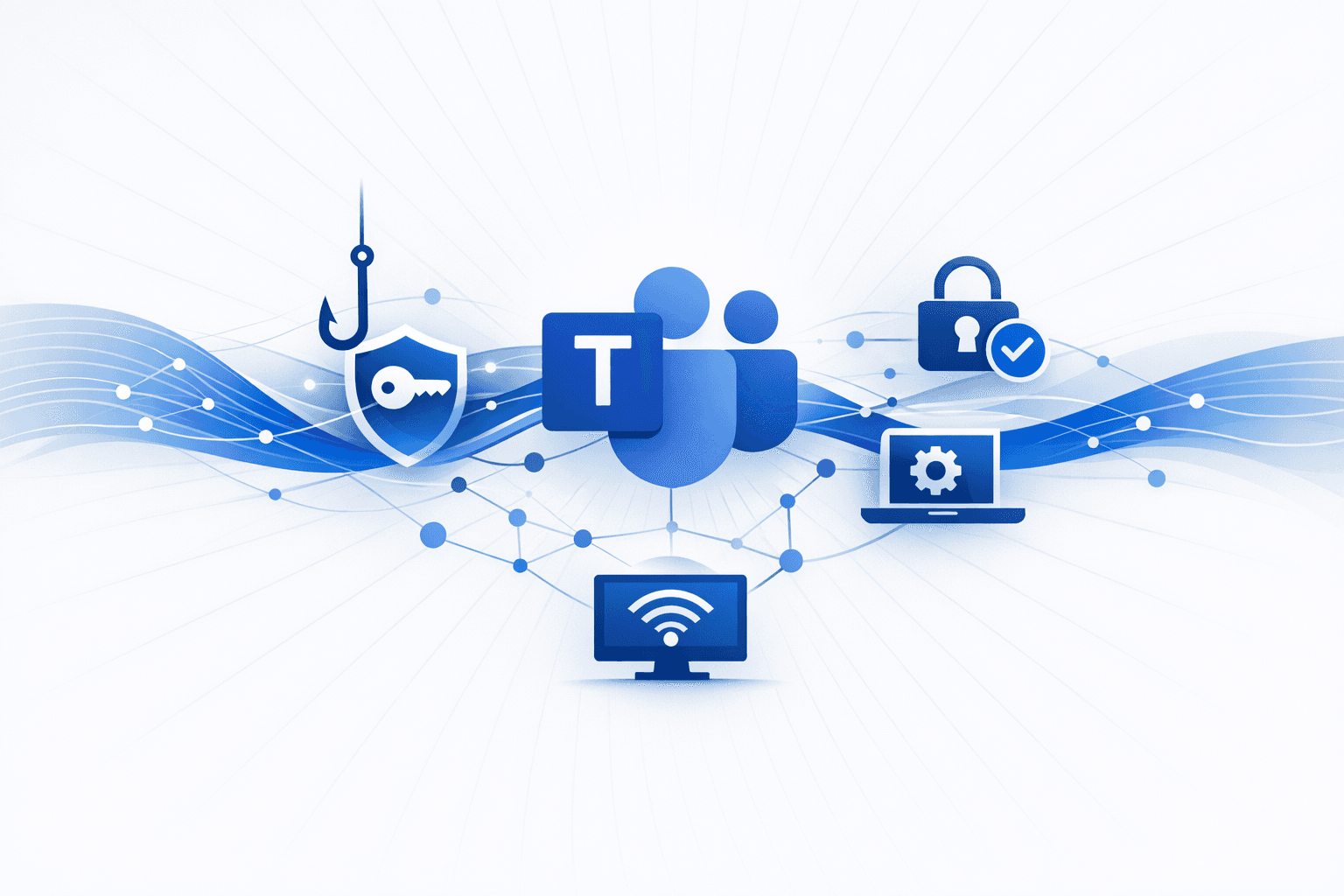
Threat actors are increasingly abusing workplace collaboration platforms, especially Microsoft Teams, to impersonate IT staff, vendors, and support personnel in social-engineering attacks that bypass user trust controls. Palo Alto Networks Unit 42 reported that collaboration-tool phishing accounted for 42% of all phishing alerts seen in Cortex during the first four months of 2026, up from 30% in the prior four-month period, showing a broader shift away from traditional email lures. The attacks commonly pressure users to approve multifactor authentication prompts or otherwise grant access, and researchers said both criminal and nation-state actors are using the technique.

Cyfirma separately identified an active Teams-themed campaign that uses fake meeting transcript and recording notifications to lure victims to counterfeit landing pages hosted on compromised websites and attacker-controlled cloud infrastructure, including Cloudflare Workers and Pages. Victims are served a signed Windows installer that silently deploys a legitimate remote monitoring and management tool connected to attacker relay servers, then establishes persistence through a Windows service and registry changes, including mechanisms that survive Safe Mode with Networking. The intrusion chain also includes anti-analysis checks and credential theft via a credential provider DLL and an LSA authentication package, indicating the campaign is designed to convert a trusted collaboration message into durable unauthorized access.

Why it matters

Impact assessment

Collaboration-platform phishing via Microsoft Teams is affecting organizations that rely heavily on Teams and similar workplace messaging tools, with particular risk to enterprises whose users interact with external vendors, support staff, and partners through chat. The impact can escalate from account takeover through MFA approval theft to full endpoint compromise and persistent remote access when users install attacker-delivered software.

This exposure is broad rather than narrowly targeted. Unit 42 reported collaboration-tool phishing made up 42% of all phishing alerts observed in Cortex during the first four months of 2026, up from 30% in the prior four-month period, and Cyfirma described an active campaign with infrastructure spanning multiple countries and compromised business websites.

Supporting details

  • Affected user populations: Microsoft Teams users, especially employees who receive external chats or support-themed messages.
  • Affected industries observed in infrastructure abuse: cafes, law firms, medical practices, schools, and other real businesses whose websites were compromised.
  • Business impact:
    • MFA prompt approval can enable account takeover.
    • Silent deployment of a legitimate RMM tool can provide attacker-controlled remote access.
    • Credential theft via Windows logon components can lead to broader domain or enterprise compromise.
    • Persistence mechanisms can increase dwell time and complicate remediation.
  • Scope of exposure:
    • Widespread tradecraft trend across collaboration platforms.
    • Campaign infrastructure observed across the United States, United Kingdom, Brazil, India, and Russia.
    • Infrastructure age analysis suggests expansion beginning around March 2026 and continued active maintenance.
  • Exploitation in the wild: yes. Both references describe active abuse of Teams for phishing, and Cyfirma documented an active campaign delivering persistent unauthorized access.
Is your org in this campaign?Get the infrastructure and lures behind it.
Hunt this campaign
Event timeline

How this story unfolded

Events from the most recent confirmed update back to the earliest known activity.

4 events · Jun 23, 2026 – Jun 24, 2026
  1. Jun 24, 20265mo ago

    Cyfirma identifies active Teams-themed RMM phishing campaign

    Cyfirma identified an active phishing campaign that impersonates Microsoft Teams notifications with fake transcript or recording alerts to lure users to counterfeit landing pages. Victims who click receive a signed Windows installer that deploys a legitimate remote monitoring and management tool configured to connect to attacker-controlled relay servers, with persistence and credential-theft components.

    Microsoft Teams Impersonation Campaign Enables Unauthorized Access Through RMM Abuse
  2. Jun 24, 20265mo ago

    Cyfirma-linked Teams impersonation infrastructure likely expanded

    Cyfirma found that about 56% of the infrastructure tied to a Microsoft Teams impersonation campaign was three to six months old, indicating a likely expansion phase beginning around March 2026. The infrastructure included compromised legitimate websites and attacker-controlled Cloudflare Workers and Pages.

    Microsoft Teams Impersonation Campaign Enables Unauthorized Access Through RMM Abuse
  3. Jun 23, 20265mo ago

    Unit 42 reports Teams social engineering used for MFA approval fraud

    Palo Alto Networks Unit 42 reported that threat actors were abusing Microsoft Teams to impersonate IT personnel and trick users into approving multifactor authentication prompts, enabling compromise of organizational environments. The report said both criminal and nation-state actors were using the technique and that built-in impersonation and external-sender warnings were not always sufficient.

    Social Engineering Attacks Abuse Workplace Collaboration Tools
  4. Jun 23, 20265mo ago

    Collaboration-tool phishing rose to 42% of Cortex alerts in early 2026

    Palo Alto Networks Unit 42 reported that phishing via workplace collaboration tools accounted for 42% of all phishing alerts in Cortex during the first four months of 2026, up from 30% in the preceding four months. The report described a broader shift away from traditional email phishing toward collaboration-platform abuse.

    Social Engineering Attacks Abuse Workplace Collaboration Tools
Linked entities

Related entities

Vulnerabilities, threat actors, malware, products, organizations, and breaches Mallory has linked to this story.

Open in app →

Organizations

1 linked
Microsoft Corporation
Do you run this?Get the infrastructure, lures, and IOCs behind this campaign, ready to push into your email and identity stack.
Hunt This Campaign
Mallory platform

See the full picture, correlated to your attack surface.

This page covers what’s public. Mallory adds the parts that aren’t: which of your assets are affected, which threat actors are using it right now, and what to deploy next.

Exposure mappingMap indicators from this story to your assets and identify affected systems in minutes.
Threat actor evidenceEvery observed campaign, victim, and pivot linked to actors named in this story.
Associated malwareMalware, exploits, and IOCs connected to the activity described here.
Detection signaturesYARA, Sigma, and Snort rules deployed to your SIEM as soon as they’re published.
Scheduled alertsGet matching new stories delivered to your team as they break, not the next morning.
AI threadsAsk questions about this story and take action on the answers.