
Today in threat intelligence.
Mallory correlates nearly 9,000 sources and methods: vendor advisories, government alerts, researcher write-ups, underground collection, scanning and honeypots. We extract the facts that matter, so you can act on them right now.
- nearly 9,000
- sources monitored
- continuously
- 7,302
- reports analyzed
- last 24 hours
- 128
- stories surfaced
- last 24 hours
Your morning threat briefing.
The day's top threat intelligence stories, plus everything else filed in the last 24 hours. One email each morning.
Get the daily digestFree · Unsubscribe anytime
SAP Confirms Security Incident After Reported GitHub Token Theft and Code Alteration
Attack Tradecraft · 25 sources · Updated 14h agoSAP confirmed an IT security incident after detecting suspicious activity and said it took immediate measures to protect customers and secure its services. DER SPIEGEL reported that attackers stole SAP employees’ authentication tokens and used them to alter and copy source code hosted on GitHub. SAP said investigators had found no evidence of unauthorized access to customer business data at that stage; that finding does not establish whether customer-facing software was affected.
- ~14h agoSAP alerts employees to suspicious GitHub activity and advises credential review
- ~19h agoSAP reportedly forgoes proactive notification and instructs employees to remain silent
Latest

California HCAI Funding Portal Misconfiguration Exposed Applications via Search Links
Breach & Incident Intelligence · 2 sources · Updated 8h agoCalifornia’s Department of Health Care Access and Information (HCAI) discovered on May 27, 2026, that a multi-factor authentication misconfiguration allowed certain search-engine links to expose grant, scholarship, and loan applications submitted through its Funding Portal 1.0. Potentially affected applications were submitted from 2017 through the discovery date. Information at risk included identity and contact details, uploaded attachments, and, where supplied, Social Security numbers, military identification numbers, or medical information.

pCloud Pass Attack Exposes Email Addresses Amid Suspicious Login Alerts
Breach & Incident Intelligence · 4 sources · Updated 13h agopCloud confirmed a cyberattack against its pCloud Pass password manager after customers received alerts that unfamiliar devices had connected to their accounts. Some users reported a device named “pd” and active sessions despite having two-factor authentication enabled. The company said it quickly contained the attack, which exposed a small number of user email addresses and involved login attempts. pCloud said stored passwords, notes, and other vault contents were not compromised, and its cloud storage services were unaffected.

Attackers Set Slovenian Meat Plant Freezer to 100°C and Block Control Access
Breach & Incident Intelligence · 3 sources · Updated 3h agoAttackers changed a freezer chamber’s temperature setpoint to 100°C at Salamerija Alpija, a meat processing plant operated by the Tolmin Agricultural Cooperative in Slovenia. A service technician also found access to the cooling control system blocked. Staff detected the unauthorized change before temperatures rose, preventing spoilage of stock valued at approximately €250,000. That figure represents potential exposure, not a confirmed loss, and the chamber did not reach 100°C.
Trending (24h)

Hackers Reportedly Breach US Air Force Cloud One, Potentially Exposing Military Data
Active Exploitation · 13 sources · Updated 2h agoHackers reportedly breached Cloud One, the US Air Force’s flagship cloud computing platform, potentially putting sensitive tactical, personnel and logistics data at risk. Reuters reported the intrusion, citing people familiar with the matter. The breach was discovered during system upgrades approximately a month before the November 27 disclosure. Numerama’s account of the Reuters reporting said one source described attackers exploiting a software vulnerability to reach the platform’s control plane, potentially exposing administrative capabilities over hosted systems. The attackers’ identities, the extent of their access and whether any data was stolen remained unknown.

DWP Takes Online Benefit and Pension Services Offline After Cyber Incident
Breach & Incident Intelligence · 13 sources · Updated 8h agoThe UK’s Department for Work and Pensions (DWP) took some online services offline as a precaution after identifying a cyber incident, disrupting access to pension services, Personal Independence Payment (PIP) applications and Universal Credit. DWP said benefit and pension payments would continue as normal while it worked with the National Cyber Security Centre and Government Cyber Coordination Centre to investigate and restore services.

Critical Linux nfsd Flaw Could Allow Unauthenticated Root Execution
Patch & Detection Intelligence · 20 sources · Updated yesterdayA critical memory-corruption vulnerability in the Linux kernel’s NFS server, nfsd, could allow unauthenticated attackers to execute commands as root on affected servers. Tracked as CVE-2026-99362 and dubbed NFS2ROOT, the flaw reportedly carries a CVSS 3.1 score of 9.8, has existed since Linux 3.16, and affects unpatched servers exposing NFSv4.1 or NFSv4.2 over TCP port 2049. OpenSec Intelligence reported demonstrating root command execution in a laboratory using its Antara research system; the exploit remains private, and no exploitation in the wild was reported as of November 25.
Newly Updated

KARTE Breach Exposes Customer Data Across Hundreds of Companies, Including Retained Records
Active Exploitation · 2 sources · Updated 29min agoAn attacker breached PLAID’s Japanese marketing platform KARTE on November 13 by exploiting a server vulnerability and stealing database credentials. PLAID identified confirmed or possible exposure of imported customer data from 570 companies and website-behaviour records from 487 companies, with overlap between the groups. MUFG Bank reported approximately 6.5 million affected records containing demographic information, while DHC reported approximately 19.11 million records containing information including names and email addresses. These figures represent records, not a confirmed total of unique people affected.

SolarWinds Serv-U Update Fixes Seven Critical Flaws; Dameware Command Injection Also Flagged
Attack Tradecraft · 7 sources · Updated 34min agoSolarWinds released Serv-U 2026.4 to fix seven privilege-escalation vulnerabilities, each rated Critical with a vendor severity score of 9.1. The flaws involve insecure direct object references, path traversal, type confusion, a time-of-check/time-of-use issue, and insufficient validation. Several require an existing Serv-U domain administrator or domain group administrator role; two Linux root-escalation records do not specify the attacker’s starting privileges. SolarWinds describes lower risk for Windows installations. The available reporting does not establish exploitation, and external reachability alone does not demonstrate unauthenticated code execution.

Treasury’s FinCEN Takes Systems Offline After Unauthorized Access
Breach & Incident Intelligence · 35 sources · Updated 34min agoThe U.S. Treasury Department’s Financial Crimes Enforcement Network (FinCEN) is investigating unauthorized access to a limited subset of its systems and has proactively taken some systems and services offline. The agency’s Bank Secrecy Act Electronic Filing website remains operational, although some services may be unavailable. The scope of any data exposure has not been established in the reports.
Emerging Stories

NebuSec Reports KVM and Firecracker Guest Escapes via Linux Checksum Validation Flaw
2 sources · Created 5h agoNebuSec reports that a Linux kernel checksum-metadata validation flaw, identified by the researchers as CVE-2026-99999, can let a privileged virtual-machine guest crash its host or execute code on it. Guest-controlled virtio-net checksum metadata can cause software checksum completion to overwrite IPv4 header information, triggering memory corruption during subsequent packet processing. NebuSec developed exploits for Firecracker and QEMU and reported host-level execution in 20 of 20 cold-start tests with Firecracker v1.14.4 on Ubuntu kernel 7.0.0-1011-aws. Exploitation requires guest root or CAP_NET_RAW privileges, a suitable virtio-net interface, and an IPv4 route forwarded by the host; the test results do not establish equivalent reliability across other deployments.
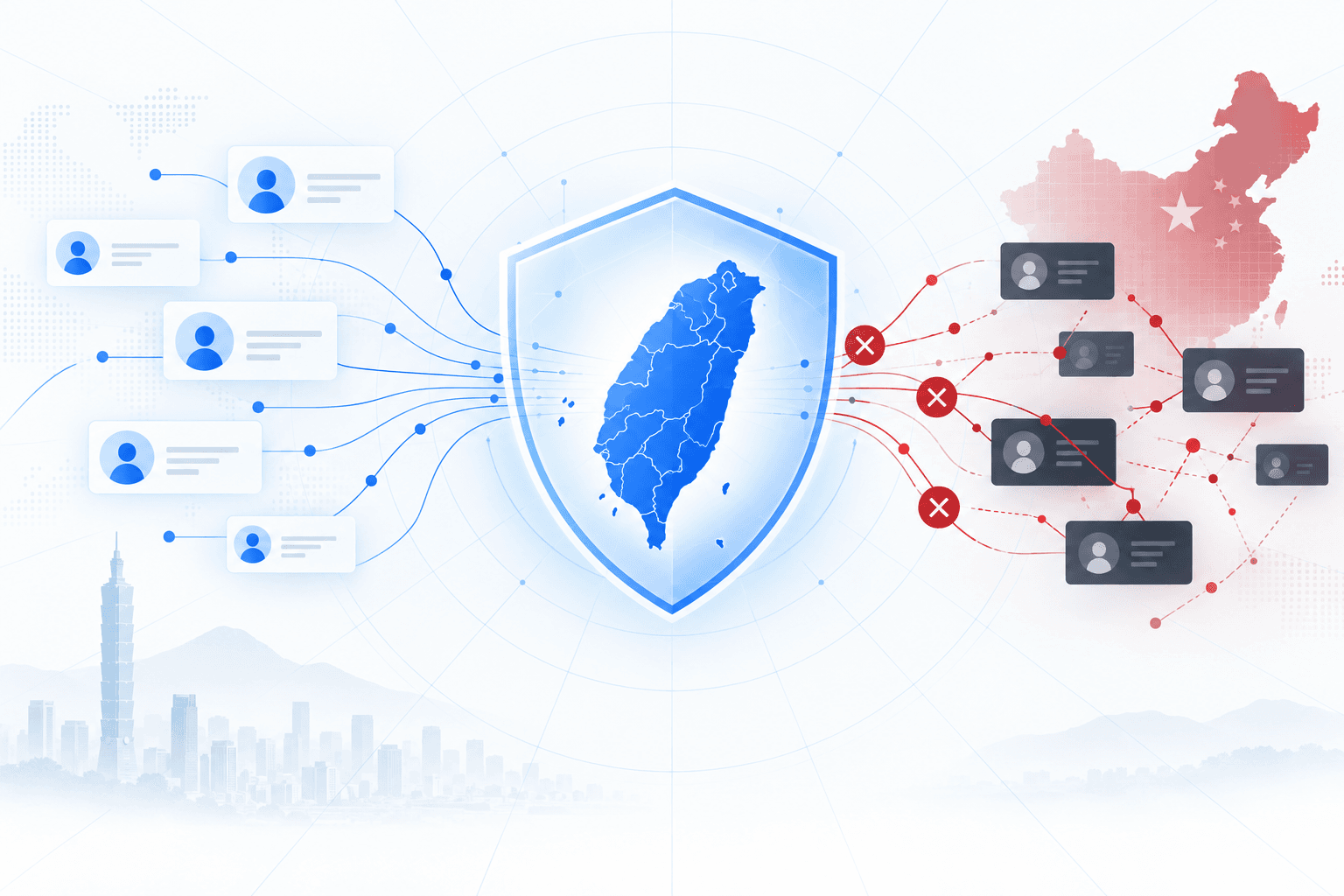
Taiwan Flags Nearly 2,700 Accounts Over Suspected Chinese Election Influence
Emerging Technology Risk · 2 sources · Created 14h agoTaiwanese officials reported nearly 2,700 social media accounts to Meta over suspected Chinese information operations targeting the November 28 local elections, a political bellwether ahead of the 2028 presidential contest. The accounts allegedly sought to undermine confidence in the governing Democratic Progressive Party, discourage voting, and inflame public anger. Reported tactics include credible-looking fake personas, entertainment mixed with political messaging, AI-generated content, impersonation, and influencer amplification of pro-China narratives.

FAA Ground Stop and Federal IT Outages Expose Change-Management and Resilience Gaps
Patch & Detection Intelligence · 2 sources · Created 14h agoA series of technology outages disrupted U.S. aviation, intelligence work, banking and email services, with administration officials reporting no evidence of a coordinated cyberattack. The FAA imposed a nationwide ground stop after two routers flooded its communications network during a copper-to-fiber modernization effort, according to IOActive. The disruption affected 17 of 22 en route centers, with approximately 12,462 flights canceled that day. An investigation involving the FBI continued to examine hardware and installation or configuration problems. Separately, a three-day NSANet disruption was linked to PHP patching, while a Microsoft outage involved a previously introduced software flaw.
Trending (30d)

Binance Hit by $6.3 Billion Crypto Theft Linked to North Korea’s TraderTraitor
288 sources · Updated 22d agoBinance reported approximately $6.3 billion in unauthorized cryptocurrency withdrawals, described by blockchain investigators as the largest crypto theft on record. TRM Labs estimated that $6.36 billion moved across ten blockchains on October 29, mostly within about 20 minutes. Binance’s preliminary investigation identified a potentially compromised DevOps engineer’s laptop that enabled access to an internal service container and withdrawal submission, but subsequent findings revealed additional breach points. Researchers assessed that attackers abused transaction-signing infrastructure, including valid Ethereum EIP-7702 authorizations that delegated a hot wallet to attacker-controlled code. Binance reported no evidence of leaked wallet private keys; the findings do not establish a vulnerability in Ethereum itself. TRM attributed the theft with high confidence to North Korea’s TraderTraitor, while Chainalysis independently identified the group as likely responsible. Neither Binance nor government authorities had confirmed attribution; the FBI confirmed involvement in the response.

Oracle Patches Java4Shell RCE in OpenJDK’s Accelerated Base64 Decoder
Patch & Detection Intelligence · 250 sources · Updated 4d agoOracle and OpenJDK released fixes for Java4Shell (CVE-2026-114938) after Calif disclosed a memory-corruption vulnerability in OpenJDK’s hardware-accelerated Base64 decoder that can enable unauthenticated remote code execution in exposed applications. Technical reports describe malformed input triggering an integer underflow and heap buffer overflow in an AVX-512 decoding path on supported x86-64 processors. Exposure depends on the exact JDK build, CPU capabilities, enabled JVM optimizations, and whether attacker-controlled input reaches the vulnerable decoder—not simply whether an application runs Java 17. Reports identify OpenJDK 17.0.6 and later as potentially affected, but precise vendor-specific scope requires checking advisories. The [OpenJDK advisory](https://openjdk.org/groups/vulnerability/advisories/2026-11-17) confirms the CVE was fixed and assigns it to hotspot/compiler with a CVSS 3.1 score of 8.1; researchers separately report a CVSS 4.0 score of 9.2.

Critical NGINX Flaws Enable Unauthenticated RCE; Researchers Demonstrate Root Escalation Chain
Patch & Detection Intelligence · 183 sources · Updated 4d agoResearchers disclosed critical vulnerabilities in NGINX Open Source and NGINX Plus that could allow unauthenticated attackers to execute code on exposed servers. Rapid7 and Wiz describe CVE-2026-123007, a CVSS v4.0 9.2 HTTP/2 flow-control integer underflow that can cause information disclosure, memory corruption and code execution with worker-process privileges, including on static-file servers. Wiz also reports CVE-2026-123633, a similarly rated HTTP/2 connection use-after-free affecting reverse-proxy processing. Xint describes five independent NGINX flaws across HTTP/2, resolver, upstream-proxying, HTTP/3 and mail-proxy configurations, collectively presented as nginx2root alongside a separate Linux SCTP privilege-escalation flaw. Xint demonstrated chaining worker-level execution with the SCTP vulnerability to obtain host root privileges, including from a Docker container. Croatia’s CERT separately warns of four critical flaws, also naming CVE-2026-121810 and CVE-2026-123634. The reports describe laboratory exploitation, not confirmed attacks in the wild; Rapid7’s demonstrated HTTP/2 exploit required approximately 128 GB of traffic and a specific glibc memory-copy implementation.
Don't read about it. Know when it affects you.
Mallory correlates every story on this page with your attack surface (assets, vendors, identities, subsidiaries) and surfaces a small set of evidence-based cases instead of 10,000 alerts.
Or grab the RSS feeds →