Senators Introduce Water Infrastructure Cybersecurity Bill After Utility Threat Warnings
Active Exploitation · 3 sources · Updated 4mo ago · First seen Aug 14, 2026
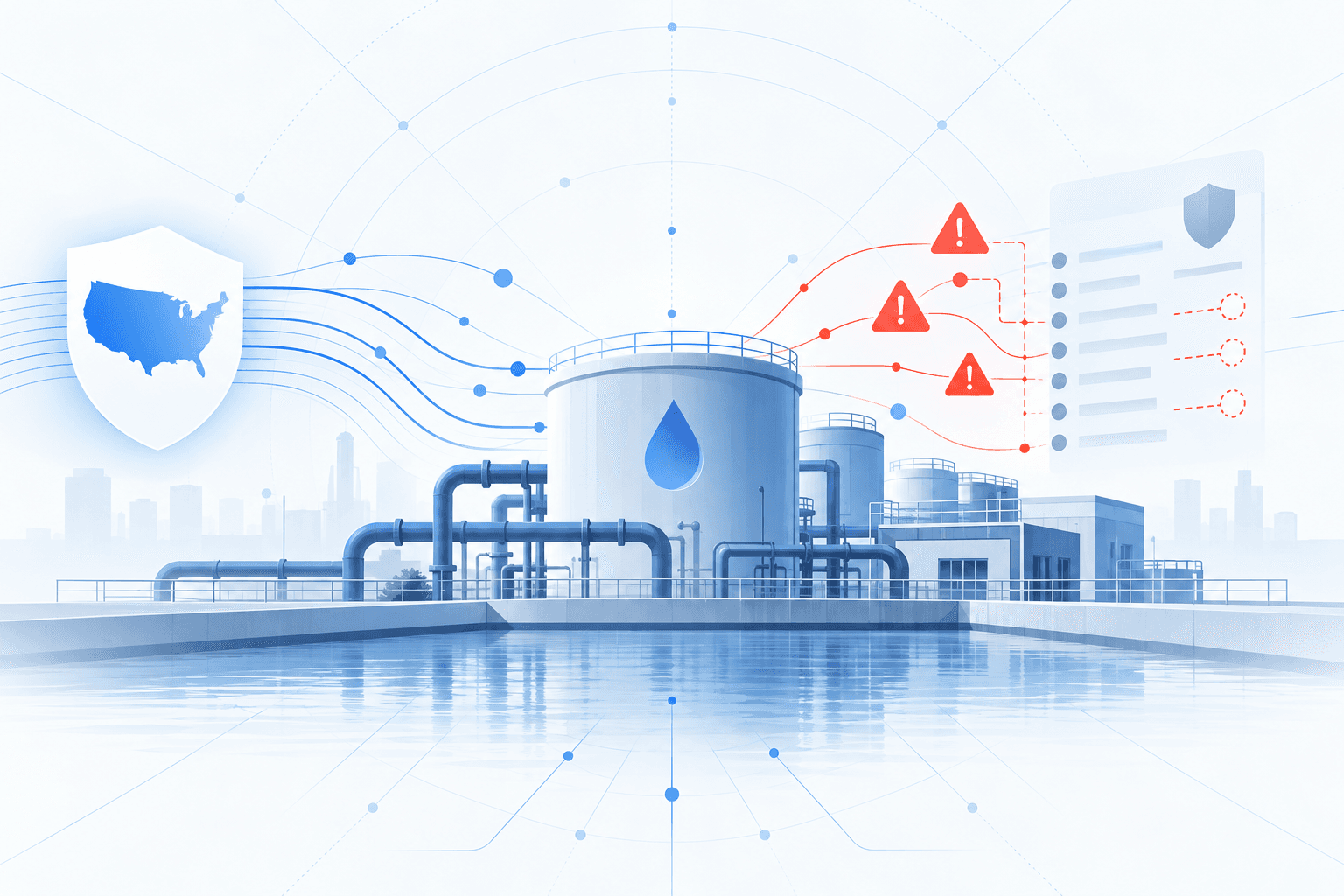
Senators Adam Schiff and Amy Klobuchar introduced a comprehensive cybersecurity bill aimed at strengthening protections for U.S. water infrastructure after recent cyberattacks on water systems. The legislative push follows longstanding federal concern over the sector’s weak cyber posture, including a GAO finding that the EPA urgently needs a strategy to address cybersecurity risks across water and wastewater systems, underscoring gaps in oversight, coordination, and resilience for a critical public service.
The move comes as sector-specific defenders continue to warn utilities about exploitable flaws in widely used technology. WaterISAC highlighted several high-priority vulnerabilities for water and wastewater operators, including CVE-2026-8037 in Progress LoadMaster (unauthenticated OS command injection leading to remote code execution), CVE-2026-68820 in Microsoft Windows (privilege escalation), CVE-2026-72898 in Metabase (SQL injection that can enable unauthenticated administrator access), and CVE-2026-19516 in Grafana MCP Server (server-side request forgery), noting that multiple issues are listed in CISA’s Known Exploited Vulnerabilities catalog.
Why it matters
Impact assessment
U.S. water and wastewater utilities are the primary affected population, but the exposure extends to any organization running the cited products, especially internet-facing Progress LoadMaster, Metabase, Windows systems, and Grafana MCP Server deployments. The impact ranges from remote code execution and unauthenticated administrative compromise to local privilege escalation and SSRF-driven access to internal services, creating risk of operational disruption, unauthorized access, and follow-on compromise in critical infrastructure environments.
The scope is broader than a single targeted campaign because WaterISAC highlighted widely used products and noted multiple vulnerabilities are in CISA’s Known Exploited Vulnerabilities catalog, indicating active exploitation in the wild. For water infrastructure operators with weak cyber maturity or exposed management services, these flaws materially increase the likelihood of service interruption, data exposure, and reputational damage.
Supporting facts
- Sector focus: U.S. water and wastewater utilities.
- Legislative trigger: recent cyberattacks on water systems and longstanding federal concern over weak sector cybersecurity.
- Oversight context: GAO reported EPA urgently needs a strategy to address cybersecurity risks across water and wastewater systems.
- Exploitation status: CISA KEV inclusion is explicitly noted for CVE-2026-8037, CVE-2026-68820, and CVE-2026-72898.
- Severity drivers:
- Unauthenticated RCE on Progress LoadMaster can enable full appliance compromise.
- Unauthenticated Metabase SQL injection can enable administrator access.
- Windows local privilege escalation can support post-compromise escalation.
- Grafana MCP SSRF can expose internal, loopback, link-local, and metadata services.
Entities
- WaterISAC
- U.S. EPA
- U.S. GAO
- Senators Adam Schiff and Amy Klobuchar
- Progress Software
- Microsoft
- Metabase
- Grafana
- CISA