Microsoft Teams Vishing Campaign Deploys Nimbus RAT via Quick Assist and Cloud Services
Social Engineering & Fraud · 3 sources · Updated 5mo ago · First seen Jun 2, 2026

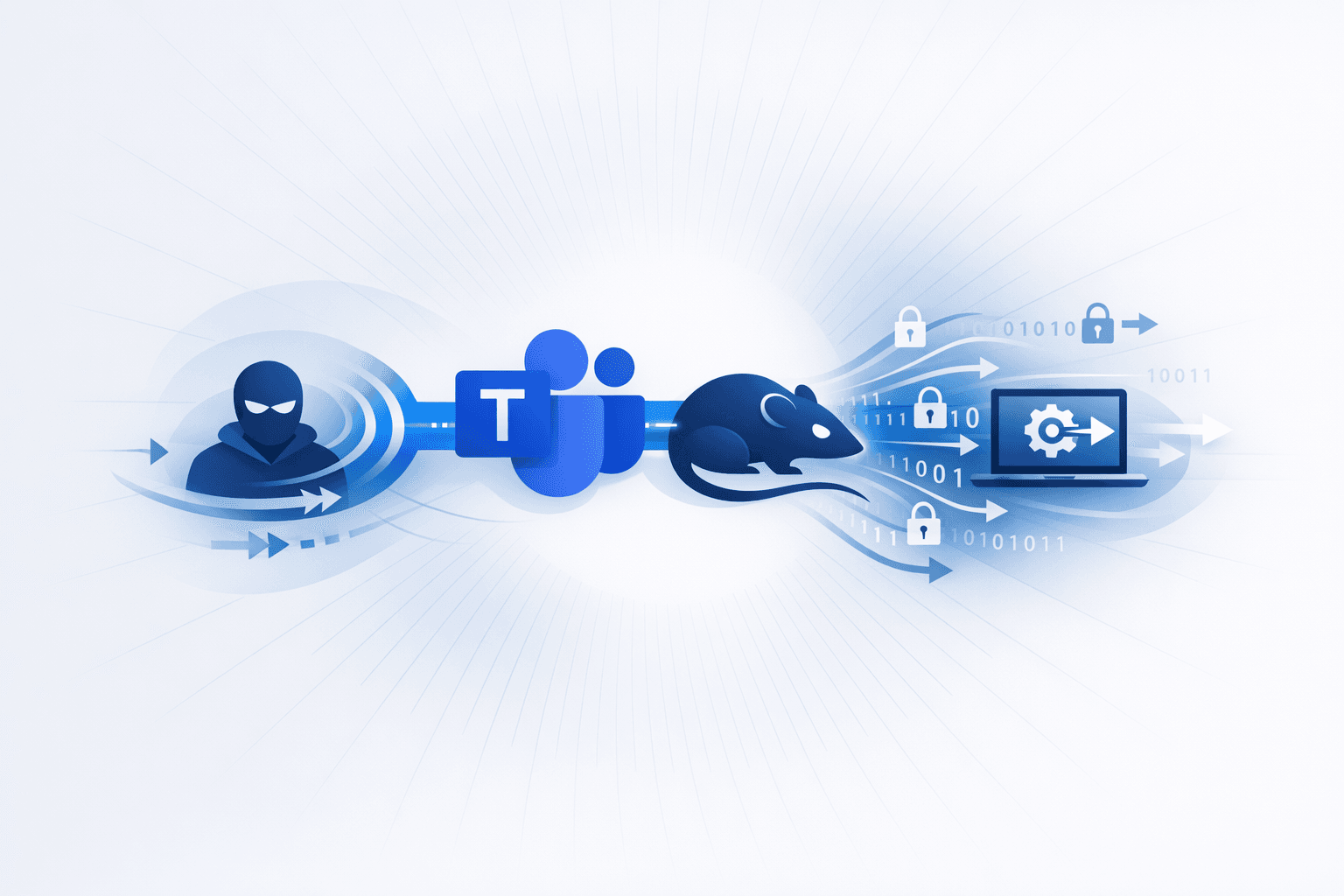
Attackers used email bombing and fake IT support messages over Microsoft Teams to trick employees into launching Windows Quick Assist, giving remote access that led to the deployment of Nimbus RAT. eSentire said the campaign targeted corporate organizations globally, with notable impact on the legal sector, and observed a full compromise path from Teams contact to RAT execution in under 20 minutes. In one documented intrusion, the victim received more than 280 legitimate subscription emails before being contacted by an actor-controlled Teams account, then was directed to download malware from a compromised Microsoft 365 tenant hosted on SharePoint.
Nimbus RAT is a Java-based backdoor bundled with OpenJDK to run on Windows systems and uses Google Drive and Google Sheets for command-and-control, helping malicious traffic blend into normal SaaS activity. Researchers said the malware supports command execution, file and registry manipulation, screenshot capture, in-memory payload execution, and credential theft, while a secondary tool, InboxSetupPro, uses OneDrive for exfiltration and steals communications data including Signal attachments and large offline email archives. eSentire reported 1,540 similar Teams-related events across 172 customer environments, with activity rising sharply from December 2025 through March 2026, prompting recommendations to restrict external Teams communications, disable Quick Assist where possible, monitor transfers to public cloud storage, and train users to spot email-flooding and fake helpdesk tactics.
Why it matters
Impact assessment
This campaign affects organizations using Microsoft Teams and Windows Quick Assist, with observed targeting across corporate environments globally and notable impact on the legal sector. The impact is high because attackers can obtain interactive remote access, deploy Nimbus RAT in under 20 minutes, steal credentials and communications data, and potentially use the intrusion as a precursor to broader ransomware or espionage activity.
Supporting details
- Affected populations:
- Corporate organizations globally
- Legal sector organizations specifically identified as impacted
- Users with Microsoft Teams access and Windows Quick Assist enabled
- Severity:
- Remote compromise of endpoints through social engineering rather than software exploitation
- Credential theft via fake Windows Security prompts and CredUIPromptForCredentialsW
- Data theft including Signal attachments and large offline email archives via InboxSetupPro
- Potential follow-on risk of ransomware deployment
- Scope:
- eSentire observed 1,540 suspicious Teams-related interactions across 172 customer environments over 12 months
- Activity rose sharply between December 2025 and March 2026, indicating a broad and growing campaign rather than isolated incidents
- Nearly 65 percent of observed attacks originated from throwaway Microsoft 365 tenants using onmicrosoft.com domains
- Exploitation in the wild:
- Yes, incident responders documented a real intrusion in April 2026
- Full compromise from Teams contact to RAT execution occurred in less than 20 minutes