Fake Microsoft Teams IT Support Calls Deliver EtherRAT via Remote Access Tools
Social Engineering & Fraud · 7 sources · Updated 5mo ago · First seen Jul 7, 2026
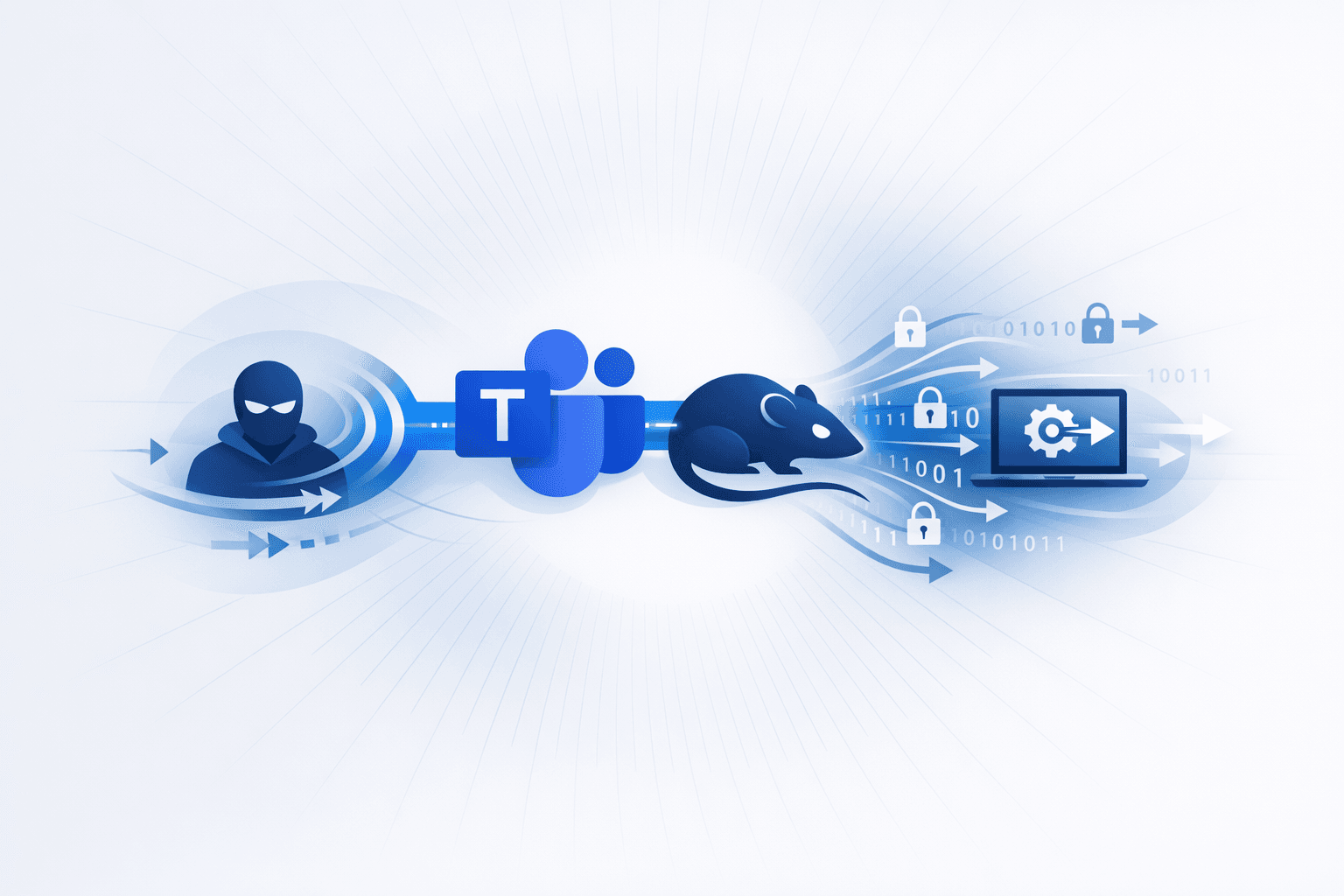
Threat actors are impersonating corporate IT support staff in Microsoft Teams voice calls to trick employees into granting remote access and installing the EtherRAT remote access trojan. The campaign begins with a phishing email themed as an "Employee Survey", then shifts to a Teams call from an external Microsoft 365 tenant, where the caller poses as helpdesk or system administration staff and persuades the target to enable screen sharing and install legitimate remote management tools such as HopToDesk or AnyDesk. Attackers then execute a malicious MSI installer, including samples such as v7.msi, to deploy a multi-stage loader that fetches a legitimate Node.js runtime, decrypts embedded payloads, and launches EtherRAT.
Researchers said EtherRAT is a cross-platform Node.js RAT for Windows, Linux, and macOS that supports command execution, file manipulation, persistence, and data theft. The malware uses Ethereum smart contracts to locate active command-and-control infrastructure, with some reporting also noting a fallback conventional domain, making disruption more difficult. Investigators found multiple installer versions in an open directory, including versions 1 through 9, indicating active development, and identified Teams forensic artifacts such as files beginning with CtrlVirtualCursorWin_* that may show an attacker remotely controlled a victim's desktop during a session. The activity adds to a broader rise in Teams-based impersonation attacks, even as Microsoft rolls out protections such as external caller warnings and stricter handling of suspected third-party bots.
Why it matters
Impact assessment
This campaign affects organizations using Microsoft Teams with external communications enabled, especially enterprises where employees may trust unsolicited IT support interactions. Impact is high because the intrusion chain can yield full remote access, persistence, and data theft across Windows, Linux, and macOS endpoints, creating risk of credential compromise, lateral movement, and operational disruption.
The exposure appears broad rather than narrowly targeted because the technique abuses common Microsoft 365 and Teams workflows, though prior related Teams impersonation activity has hit financial and healthcare organizations. The reporting describes active malicious use in the wild and ongoing malware development, indicating a credible and current threat rather than a theoretical scenario.
Supporting details
- Affected platform: Microsoft Teams in Microsoft 365 environments.
- Affected users: employees who can receive external Teams calls/chats and may install remote support tools.
- Affected endpoints: Windows, Linux, and macOS systems targeted by EtherRAT.
- Business risks: unauthorized remote access, sensitive data theft, persistence, possible follow-on ransomware or lateral movement, and reputational damage from account or data compromise.
- Scope: potentially widespread across organizations that permit external Teams communication.
- Exploitation status: yes, the story describes an active social-engineering campaign observed by Unit 42.
- Industry context: prior Teams-abuse campaigns referenced in reporting targeted financial and healthcare organizations.
Entities
- Microsoft Teams
- Microsoft 365
- EtherRAT
- Palo Alto Networks Unit 42
- HopToDesk
- AnyDesk
- Node.js