North Korean Cyber Actors Target Employers, Networks, and Cryptocurrency Firms
Emerging Technology Risk · 4 sources · Updated 2mo ago · First seen Sep 24, 2026
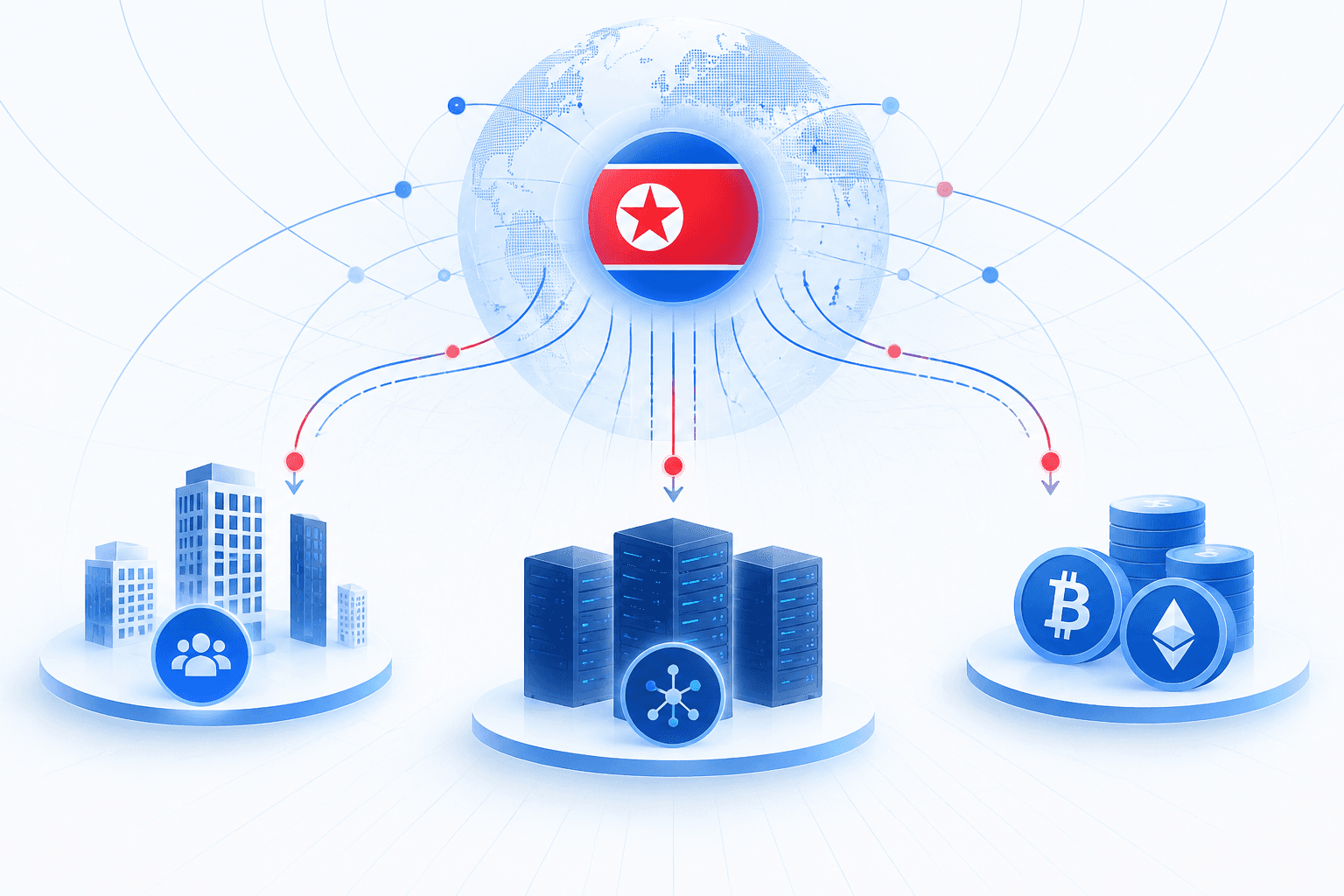
North Korean operators are expanding access and revenue-generation operations through fraudulent remote employment, targeted intrusions, and cryptocurrency theft. The DPRK-linked Famous Chollima group—also tracked as UNC5267 and Jasper Sleet—uses fabricated identities, falsified documents, AI-assisted communications, proxy interviewers, laptop farms, and payment fraud to secure remote IT roles at technology, aerospace, defense, software, blockchain, cryptocurrency, and DeFi organizations. The workers gain legitimate internal access by abusing recruiting, onboarding, payroll, and remote-work processes, with activity concentrated in the United States and increasingly observed in Europe.
Other DPRK-linked activity demonstrates a broader intrusion capability. Andariel has used watering-hole compromises, spearphishing attachments, malicious macros, and exploitation of client-side ActiveX vulnerabilities—including zero-days—to access targets, then deploys additional tools, enumerates systems and network connections, and collects files for exfiltration; it has also concealed executables in PNG files using steganography. Separately, the FBI, DC3, and Japan's National Police Agency attributed the theft of approximately $308 million from Bitcoin.DMM.com to North Korean actors tracked as TraderTraitor, underscoring the financial risk to cryptocurrency businesses and organizations with digital-asset exposure.
Why it matters
Impact assessment
DPRK-linked operations create both insider-risk and external-intrusion exposure for organizations employing remote technical staff or operating cryptocurrency services. The impact ranges from unauthorized access to source code, infrastructure, and sensitive data through fraudulent employment to direct financial theft; the Bitcoin.DMM.com incident attributed to TraderTraitor involved approximately $308 million.
Affected organizations and scope
- Primary fake-worker targets: technology, software development, aerospace, defense, blockchain, cryptocurrency, and DeFi organizations.
- Geographic focus: United States-based employers are the primary target; coordinated operations increased in European countries during 2025.
- Exposure spans startups through Fortune 500 organizations and includes direct hiring, staffing agencies, freelance marketplaces, contractor programs, payroll, and remote-work operations.
- Famous Chollima reportedly accounted for 47% of state-sponsored interactive intrusions against the technology sector from April 2025 through May 2026.
Business consequences
- Fraudulent employees obtain trusted, legitimate access, enabling access to internal systems, source code, data, and potentially privileged resources.
- Victims face financial loss from fraudulent payroll and payment arrangements, data theft, operational disruption, regulatory exposure, and reputational damage.
- Cryptocurrency businesses and organizations with digital-asset holdings face high-severity theft risk. The reported TraderTraitor theft demonstrates confirmed, large-scale financial impact.
- Andariel activity presents targeted compromise and data-exfiltration risk through watering holes, phishing, and client-side vulnerability exploitation.
Known exploitation
- The Bitcoin.DMM.com theft is a known incident attributed by the FBI, DC3, and Japan's National Police Agency to TraderTraitor.
- Andariel has used zero-day ActiveX exploitation and targeted watering-hole compromises. The supplied reporting does not identify specific CVEs or indicators for these operations.