Attackers Shift to LNK, ISO, and HTML Smuggling to Deliver QakBot and Other Malware
Malware Intelligence · 5 sources · Updated 4mo ago · First seen Jan 19, 2023
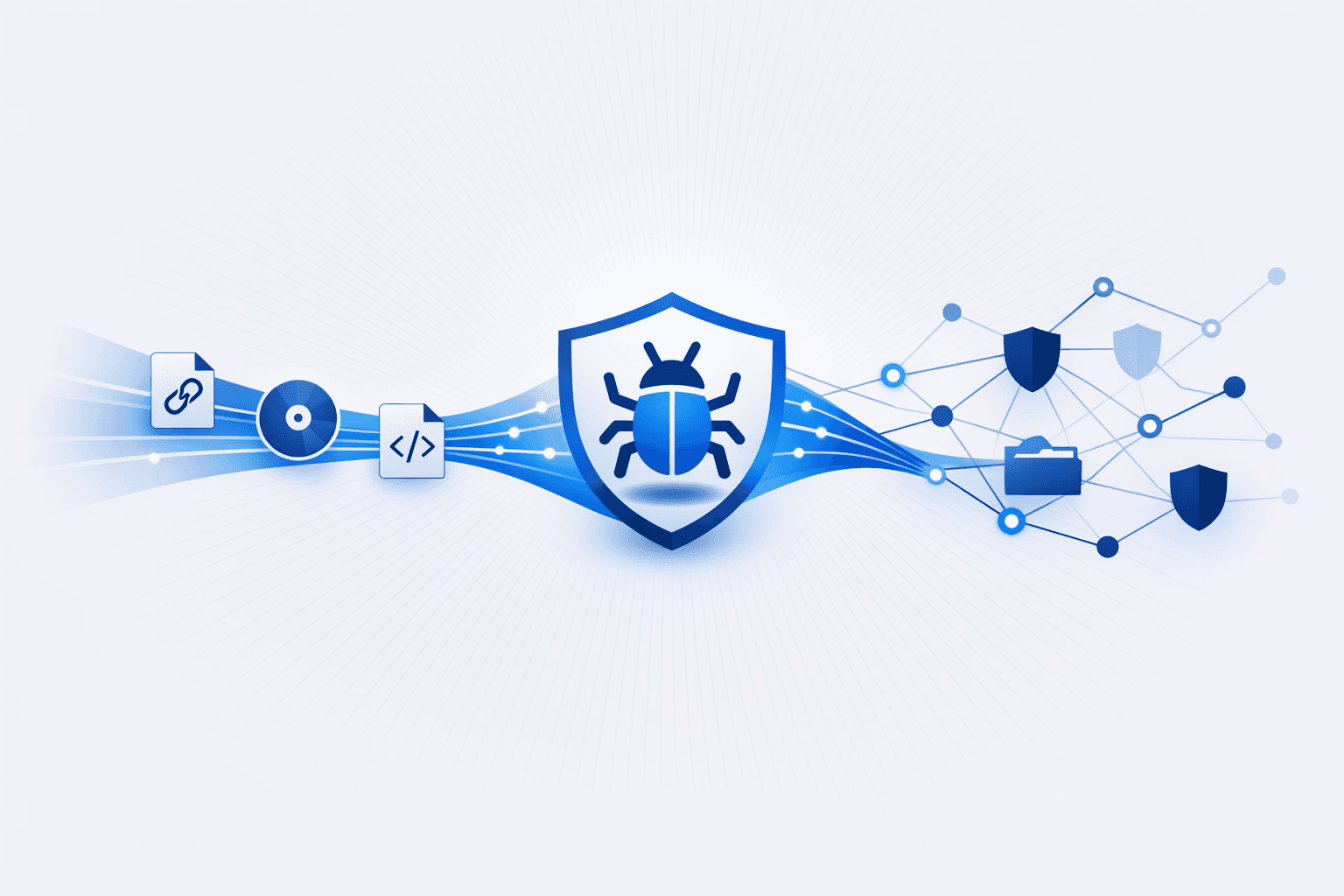
Threat actors increasingly replaced macro-enabled Office documents with Windows shortcut (.LNK) files, ISO images, and HTML smuggling to gain initial access on Windows systems after Microsoft tightened macro protections and as adversaries sought ways around Mark-of-the-Web controls, including CVE-2022-41049. Fortinet reported phishing campaigns in 2022 delivering Emotet, Qbot/QakBot, IcedID, and Bumblebee through Excel 4.0 macros early on, then shifting to LNK files, ISO containers, and browser-reconstructed payloads that launched malware via native tools such as
powershell
mshta.exe
regsvr32.exe
rundll32.exe
curl
cmd.exe
A separate Fortinet investigation detailed a QakBot campaign in which an attached HTML file dropped a ZIP archive containing a malicious LNK that fetched a loader DLL and executed the core malware filelessly inside a hollowed process.
Cisco Talos found that the growing use of malicious LNK files also created a forensic trail: embedded metadata such as Drive Serial Number, MachineID, DROID GUIDs, timestamps, paths, and SIDs can link campaigns and expose the systems used to build the shortcuts. Talos used Qakbot and Gamaredon examples to show how LNK metadata supports clustering and hunting, and identified metadata-based ties between Bumblebee, IcedID, and Qakbot, suggesting shared tooling or operational overlap. Earlier Fortinet reporting showed LNK-based phishing was already being used in espionage operations, including a campaign targeting Ukrainian government entities with ZIP archives containing malicious shortcuts, reinforcing that LNK files had become a versatile delivery mechanism for both financially motivated malware and state-linked intrusion activity.
Why it matters
Summary
Threat actors broadly shifted initial access from macro-enabled Office documents to LNK files, ISO containers, and HTML smuggling on Windows after Microsoft tightened macro protections in 2022. The impact is significant for enterprises because these delivery methods support commodity malware and follow-on intrusion activity, including QakBot, Emotet, IcedID, Bumblebee, and espionage-focused campaigns against Ukrainian government entities.
Affected organizations and severity
- Affected population: Microsoft Windows users and organizations that rely on email-delivered documents and archives.
- Most exposed sectors: enterprise environments broadly, with demonstrated impact across financially motivated crime targets and government targets.
- Malware families observed: QakBot/Qbot/Pinkslipbot, Emotet, IcedID, Bumblebee, Gamaredon-linked activity, AutoIT-based stealer, Saint_v3.
- Business impact: credential theft, host takeover, malware staging, process injection, data exfiltration, and potential delivery of additional payloads.
- Operational impact: phishing attachments and browser-reconstructed payloads can bypass user expectations and some attachment-based controls, increasing infection risk.
- Scope: widespread and opportunistic across Windows environments, with some targeted spearphishing cases such as Ukrainian government campaigns.
- Exploitation in the wild: yes. Multiple active campaigns were documented by Fortinet and Talos in 2021-2022.
Supporting details
- Fortinet observed active Q2 2022 phishing campaigns using Excel 4.0 macros, LNK files, ISO files, and HTML smuggling.
- Talos observed a major increase in malicious LNK usage beginning in early 2022, with spikes aligned to Microsoft macro-blocking changes.
- Fortinet documented a QakBot HTML-to-ZIP-to-LNK infection chain that executed filelessly inside a hollowed process.
- Fortinet also documented LNK-based spearphishing against Ukrainian government security entities, showing these techniques support both cybercrime and espionage operations.