
Loading story…
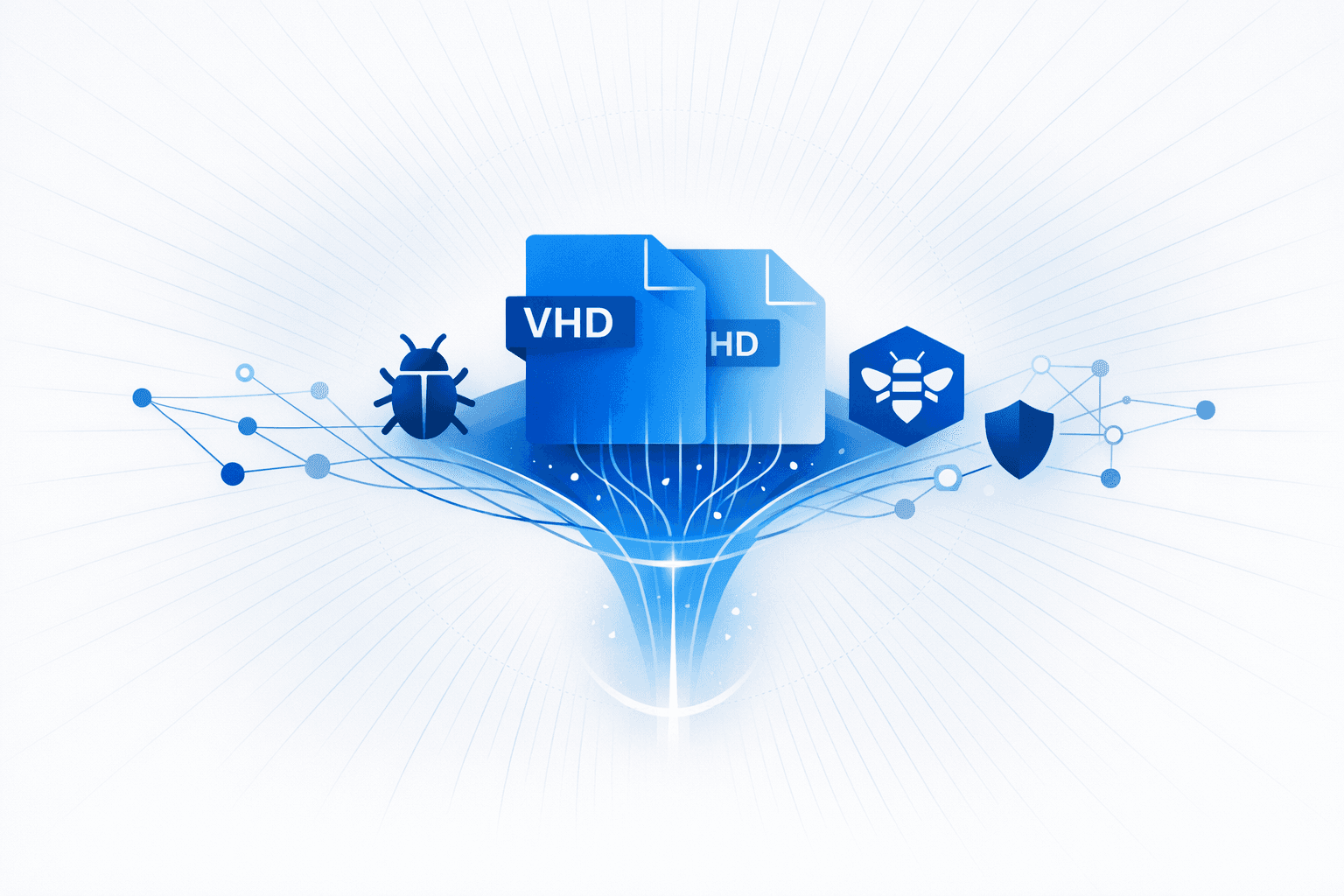
Threat actors increasingly used Virtual Hard Disk (.vhd) files in phishing and malware delivery chains, replacing earlier ISO and IMG containers to improve evasion and execution. AhnLab documented a Qakbot campaign in which an HTML attachment generated a password-protected archive containing a VHD; when mounted, the image exposed a malicious LNK and scripts that ultimately launched rundll32 to load a DLL, inject into wermgr.exe, contact command-and-control servers, and enable follow-on payload delivery and financial data theft. Check Point separately observed the Bumblebee loader adopting VHD-based delivery with PowerShell download logic before later alternating between ISO and VHD containers with embedded DLLs, while tailoring second-stage payloads to victim environments.
Forensic analysis of a malicious sample named invoice.vhd showed why the format is attractive to operators: the mounted image contained a lure file, invoice.pdf.lnk, that launched obfuscated PowerShell to fetch and execute an HTA payload from transfer[.]sh, and the VHD preserved deleted artifacts revealing repeated reuse of the same container for JavaScript, VBS, SCR, EXE, BAT, and PIF payload staging. Residual files in $RECYCLE.BIN and metadata such as an IndexerVolumeGuid linked the image to broader attacker tradecraft, including prior payload distribution through Discord CDN links and recurring VBS-to-PowerShell execution chains, underscoring how VHD files can both bypass Mark of the Web protections and serve as reusable malware delivery containers.
Pull IOCs and campaign context straight into your stack.
7 events from the most recent confirmed update back to the earliest known activity.
The visible lure file invoice.pdf.lnk inside the malicious VHD was timestamped 2023-05-01 10:39:50. The shortcut masqueraded with a Microsoft Edge icon and launched obfuscated PowerShell that downloaded and executed an HTA payload from transfer[.]sh.
Metadata in the analyzed invoice.vhd sample shows the VHD container was created on a Windows 10 system. The footer timestamp recorded the creation time as 2022-10-26 20:59:21.
Until early July 2022, Bumblebee command-and-control servers often accepted only the first unique client_id from a victim public IP address. Check Point observed that this behavior was later disabled, increasing successful victim connections and C2 traffic.
Check Point reported that in June 2022 the Bumblebee loader changed its delivery chain from ISO files to VHD files containing PowerShell download logic, before later reverting to embedded DLL delivery. The change marked an evolution in how the malware was packaged and delivered to victims.
The analyst created a YARA rule combining VHD magic bytes with the retained IndexerVolumeGuid value {BE882B07-1D3C-4C58-9D29-14A8C4AE35E5} to identify future related malware containers. The article recommended using the rule for retroactive and live hunting on platforms such as VirusTotal.
Analysis of deleted artifacts in $RECYCLE.BIN showed the same VHD had been reused across multiple dates from 2022 into 2023 to stage and delete payloads including JS, VBS, SCR, EXE, BAT, and PIF files. YARA matches on remnants also exposed historical Discord CDN payload links and repeated VBS-to-PowerShell tradecraft.
AhnLab reported that Qakbot was being distributed through phishing emails using HTML attachments that generated password-protected archives containing VHD files. When mounted, the VHD exposed LNK and script files that ultimately loaded a malicious DLL via rundll32.
Vulnerabilities, threat actors, malware, products, organizations, breaches, and observables Mallory has linked to this story. Indicator values are masked here and available in full in the app.
Indicator values are masked on this page. View all 59 in Mallory Domains, IPs, hashes, and URLs are exportable to your SIEM.
Pull the IOCs, campaigns, and victimology behind this family, ready to push into your SIEM and EDR.
4 references tracked. Mallory keeps watching after this page renders.
forensicitguy.github.io
Open sourceasec.ahnlab.com
Open sourceresearch.checkpoint.com
Open sourcebazaar.abuse.ch
Open sourceMap indicators from this story to your assets and identify affected systems in minutes.
Every observed campaign, victim, and pivot linked to actors named in this story.
Malware, exploits, and IOCs connected to the activity described here.
YARA, Sigma, and Snort rules deployed to your SIEM as soon as they’re published.
Get matching new stories delivered to your team as they break — not the next morning.
Ask questions about this story and take action on the answers.
Other stories Mallory is tracking that overlap on entities, sources, or topic labels.
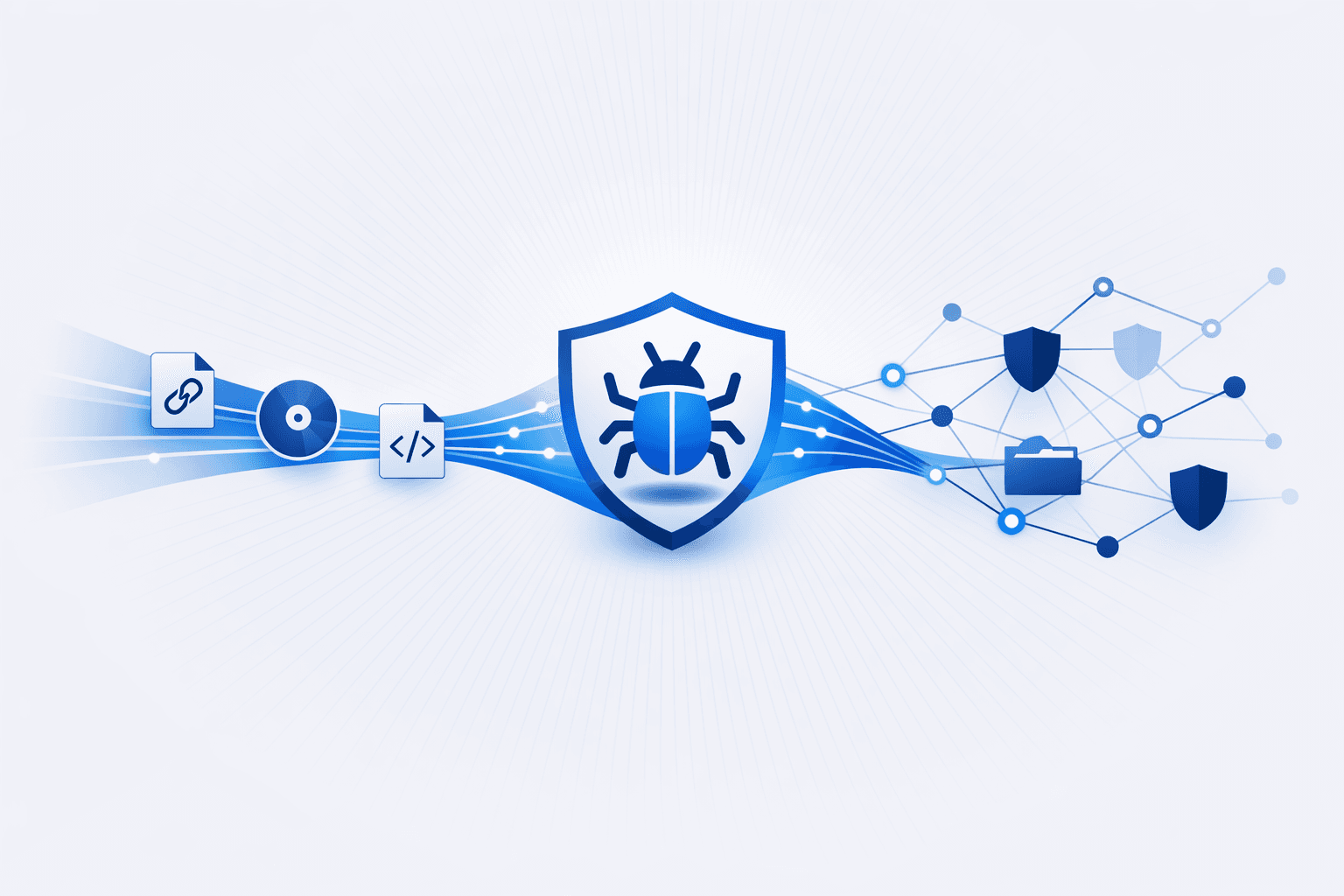
Threat actors increasingly replaced macro-enabled Office documents with **Windows shortcut (`.LNK`) files**, **ISO images**, and **HTML smuggling** to gain initial access on Windows systems after Microsoft tightened macro protections and as adversaries sought ways around Mark-of-the-Web controls, including **`CVE-2022-41049`**. Fortinet reported phishing campaigns in 2022 delivering **Emotet, Qbot/QakBot, IcedID, and Bumblebee** through Excel 4.0 macros early on, then shifting to LNK files, ISO containers, and browser-reconstructed payloads that launched malware via native tools such as ```cmd powershell mshta.exe regsvr32.exe rundll32.exe curl cmd.exe ``` A separate Fortinet investigation detailed a QakBot campaign in which an attached HTML file dropped a ZIP archive containing a malicious LNK that fetched a loader DLL and executed the core malware filelessly inside a hollowed process. Cisco Talos found that the growing use of malicious LNK files also created a forensic trail: embedded metadata such as **Drive Serial Number, MachineID, DROID GUIDs, timestamps, paths, and SIDs** can link campaigns and expose the systems used to build the shortcuts. Talos used Qakbot and Gamaredon examples to show how LNK metadata supports clustering and hunting, and identified metadata-based ties between **Bumblebee**, **IcedID**, and **Qakbot**, suggesting shared tooling or operational overlap. Earlier Fortinet reporting showed LNK-based phishing was already being used in espionage operations, including a campaign targeting Ukrainian government entities with ZIP archives containing malicious shortcuts, reinforcing that LNK files had become a versatile delivery mechanism for both financially motivated malware and state-linked intrusion activity.
Aug 15, 2026
Researchers reported that the **Dead#Vax** malware campaign delivers payloads through multi-stage **VHD** disk image files and heavily obfuscated batch scripts that parse themselves to reconstruct and launch shellcode directly in memory. The intrusion chain relies on **fileless execution** techniques in Windows, reducing on-disk artifacts and complicating detection, while the staged delivery mechanism helps operators evade traditional security controls. Public reporting said the malware uses self-parsing scripts and in-memory shellcode deployment to maintain stealth across infected systems, with Securonix warning that the campaign abuses native Windows functionality as part of its execution flow. The activity was described as a sophisticated, multi-stage operation designed to blend into normal system behavior, underscoring the need for defenders to monitor suspicious use of virtual disk images, script interpreters, and memory-resident execution patterns.
Jul 12, 2026
Qakbot operators repeatedly changed their intrusion chains between March and May 2023, using malspam and a rotating set of attachment and container formats including **PDF**, **HTML**, **ZIP**, **OneNote**, **WSF/HTA**, and **XLL** files to deliver the malware. Researchers observed HTML smuggling, obfuscated JavaScript, PowerShell, and DLL-based payload staging in March, followed by ZIP-to-XLL chains that rebuilt payloads from split `DAT` files and created scheduled tasks for persistence. By April and May, the malware’s operators had shifted from base64-encoded PowerShell toward hex-encoded `XMLHTTP` requests delivered through WSF files, and used a OneNote-to-MSI lure posing as a Microsoft Azure installer. Later campaigns added stronger defense evasion, including indirect command execution through **`conhost.exe`**, DLL side-loading, and `curl`-based payload retrieval. Researchers also noted that **Pikabot** samples seen in mid-May shared similar tradecraft, but said the available evidence did not support attributing both malware families to the same actor.
Aug 15, 2026