Mallory
← Back to News
phishing-campaign-intelligenceconsumer-discretionary-sector-threatidentity-impersonation-fraudremote-access-implant

Booking.com Impersonation Uses ClickFix and PureRAT to Target Hotels and Guests

Social Engineering & Fraud · 3 sources · Updated 23h ago · First seen Jan 20, 2026
Booking.com Impersonation Uses ClickFix and PureRAT to Target Hotels and Guests

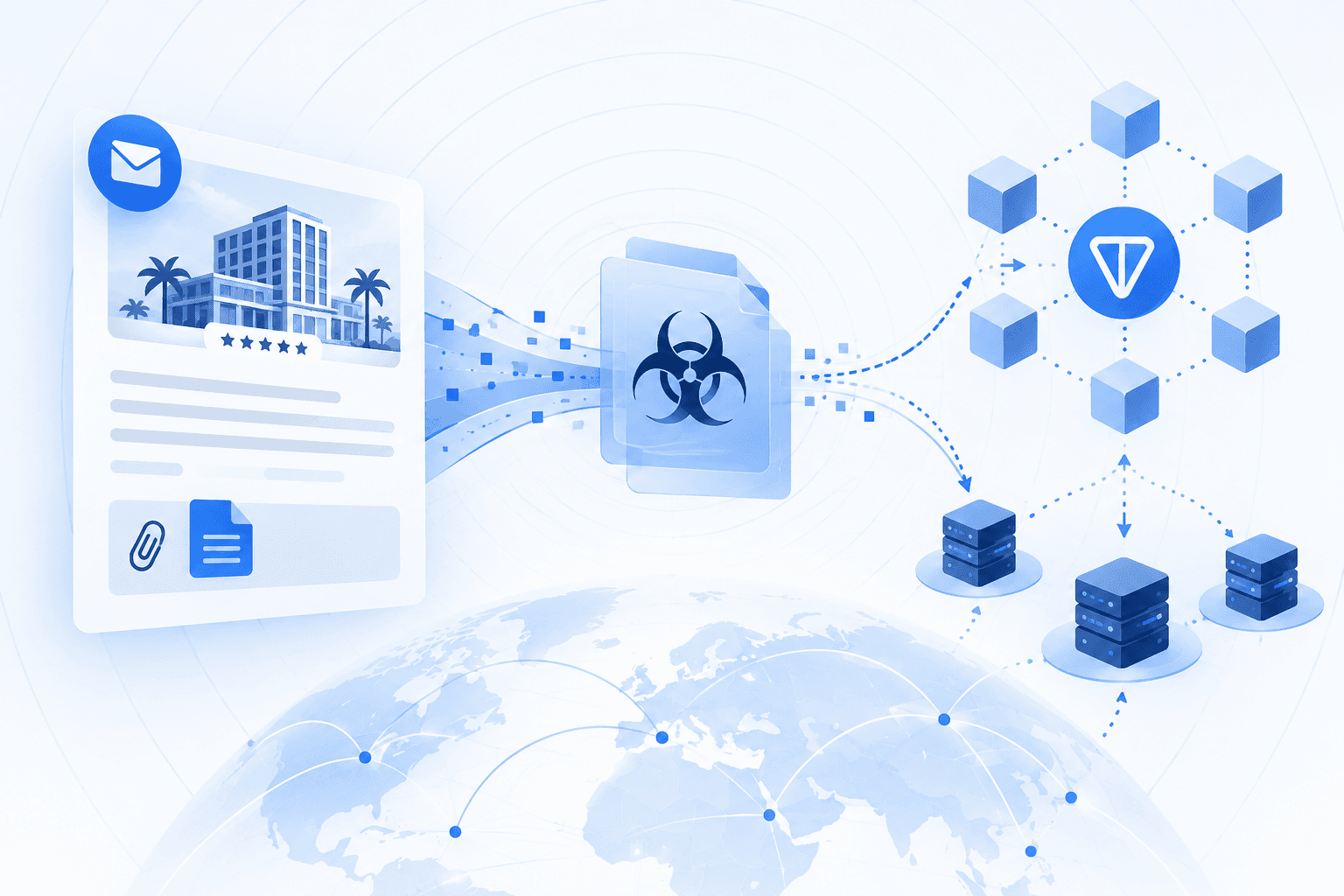
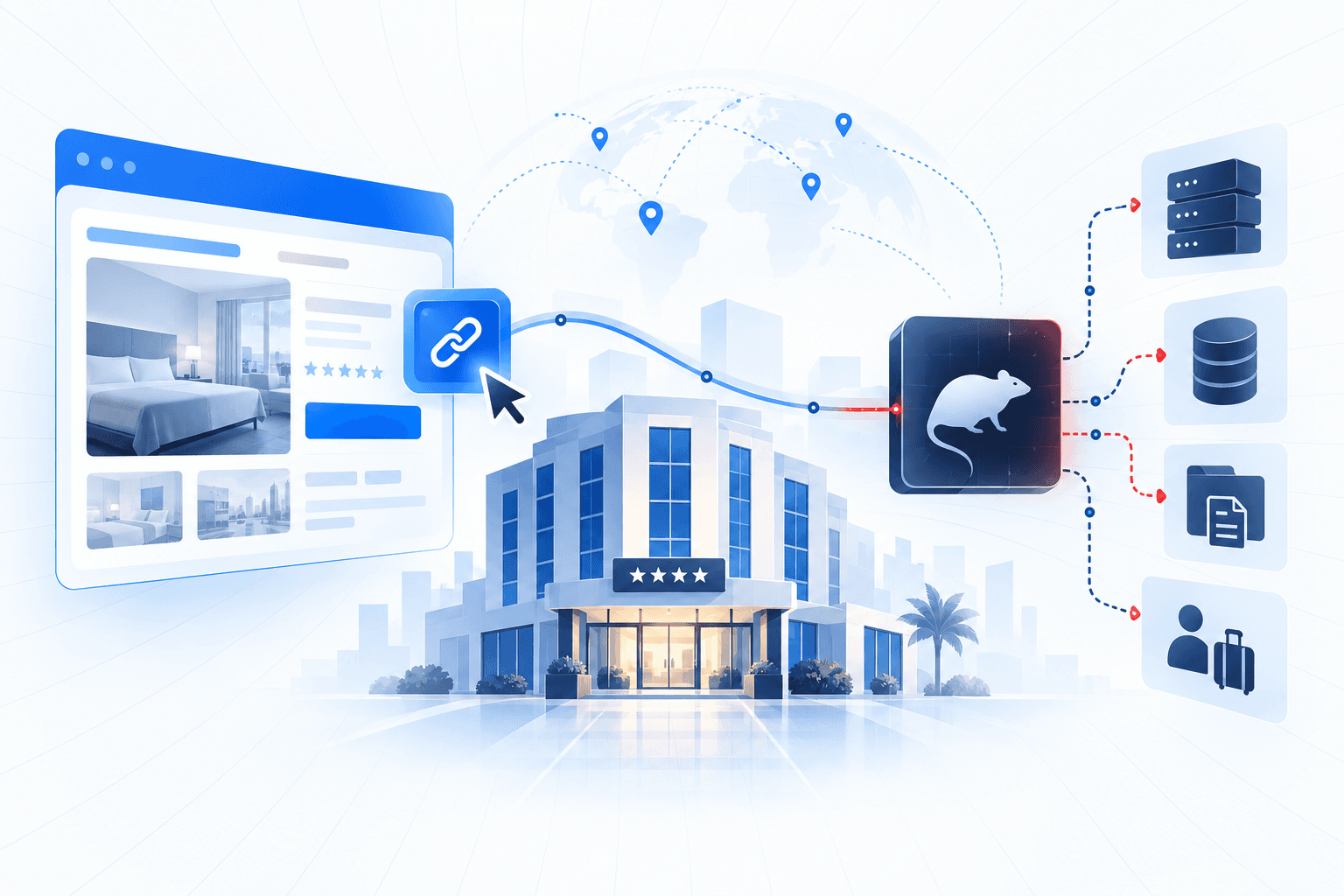
A hospitality-focused phishing operation dubbed “I Paid Twice” targeted hotels using Booking.com and then exploited compromised booking-management accounts to defraud guests. Sekoia documented activity from at least April through early October 2025 in which attackers used compromised corporate email accounts, layered redirects, and fake CAPTCHA prompts to persuade hotel administrators to execute malicious PowerShell commands through ClickFix social engineering. The resulting infections deployed PureRAT and enabled access to booking-management accounts. Attackers then used legitimate reservation details to send guests convincing messages directing them to fraudulent payment-verification pages impersonating Booking.com or Expedia. Microsoft separately documented a Booking.com impersonation campaign distributing credential-stealing malware in March 2025; the supplied references do not establish that it was the same operation.

Alpha Cyber’s subsequent examination described rotating redirect infrastructure and fraudulent payment, reservation, and document-review messages. Its static analysis identified obfuscation, anti-analysis features, and loader-like capabilities consistent with staging follow-on malware such as PureRAT, rather than independently confirming every payload’s execution. Sekoia also described a supporting criminal marketplace offering contact harvesting, malware distribution, stolen-account sales, and credential-checking services. Defenders should correlate activity across the full phishing and payload-delivery chain, rather than rely solely on individual URLs or file hashes. Priority monitoring areas include suspicious PowerShell execution, registry and Startup-folder persistence, DLL side-loading, and anomalous activity involving AddInProcess32.exe.

Why it matters

Hotels using Booking.com and their guests were targeted in a two-stage operation: malware compromised hotel administrators’ computers and booking accounts, then attackers used genuine reservation information to solicit fraudulent guest payments. Sekoia documented activity from at least April through early October 2025, including deployed PureRAT infections and a guest assessed with high confidence to have paid both the hotel and the criminals; exposure includes reservation-data theft, account takeover, financial fraud, and reputational harm. The supplied evidence does not establish continued activity as of November 2026 or quantify total victims and losses. Sekoia

  • Industry-specific impact: Consumer Discretionary, specifically hotels and hospitality, is established. Attackers explicitly targeted hotel reservation and administration teams, then exploited their access to target guests. Sekoia
  • Geography-specific impact is not established at country level. Sekoia reports targeted hotels across multiple countries but does not identify those countries in the supplied evidence. Russian hosting and Russian-speaking criminal forums do not establish victim geography. Sekoia

Is your org in this campaign?Get the infrastructure and lures behind it.
Hunt this campaign
Event timeline

How this story unfolded

Events from the most recent confirmed update back to the earliest known activity.

9 events · Mar 2021 – Oct 2025
  1. Reported Jan 20, 202610mo ago

    Alpha Cyber identifies packing and anti-analysis features in ClickFix payload

    Alpha Cyber's static analysis identified high-entropy overlays, XOR-encoded data handling, ZLIB capabilities, runtime API linking, and sandbox or virtual-environment checks in an analyzed campaign payload. The report characterized it as a delivery and staging component capable of preparing systems for follow-on malware such as PureRAT.

    The Booking.com Scam: ClickFix Phishing-as-a-Service | Alpha Cyber
  2. Reported Nov 6, 20251y ago

    Hotel guests receive fraudulent payment requests using genuine reservation details

    Partner-reported fraud involved WhatsApp messages or emails containing genuine reservation information and directing guests to payment-verification pages impersonating Booking.com or Expedia. Sekoia assessed with high confidence that one guest paid both the hotel and the criminals for the same reservation.

    Booking.com Phishing Campaign Targeting Hotels and Customers
  3. Reported Nov 6, 20251y ago

    Sekoia reveals ClickFix infection chain deploying PureRAT on hotel computers

    Sekoia documented fake CAPTCHA prompts that persuaded hotel staff to execute PowerShell, leading to ZIP downloads, persistence, DLL side-loading, and in-memory PureRAT execution through AddInProcess32.exe. The report published payload and command-and-control indicators and assessed that the infections enabled theft of booking-platform credentials.

    Booking.com Phishing Campaign Targeting Hotels and Customers
  4. Oct 2025

    Campaign remains operational as redirect infrastructure converges on one IP

    The campaign remained operational in early October 2025. As of October, all identified initial redirect domains resolved to one IP address, with passive DNS linking nearly 100 domains to that address; Sekoia assessed that the infrastructure might be a commercial traffic distribution service.

    Booking.com Phishing Campaign Targeting Hotels and Customers
  5. Apr 2025

    Hotel-targeting Booking.com impersonation campaign becomes active

    Sekoia tracked the campaign targeting hotels across multiple countries from at least April 2025. Attackers used apparently compromised corporate email accounts and booking-related lures to direct hotel staff toward Booking.com-themed ClickFix pages.

    Booking.com Phishing Campaign Targeting Hotels and Customers
  6. Reported Mar 13, 20252y ago

    Microsoft reports Booking.com impersonation delivering credential-stealing malware

    Microsoft reported a phishing campaign impersonating Booking.com that delivered a suite of credential-stealing malware.

    Phishing campaign impersonates Booking .com, delivers a suite of credential-stealing malware
  7. 2025

    Criminal buyer advertises purchases of stolen booking-platform credentials

    In 2025, moderator_booking advertised purchases of Booking.com logs for $30 to $5,000 on several criminal forums. The buyer also expanded purchasing to Expedia, Airbnb, and Agoda logs and claimed association with a team earning more than $20 million.

    Booking.com Phishing Campaign Targeting Hotels and Customers
  8. 2022

    Booking.com phishing services emerge on Russian-speaking criminal forums

    Sekoia observed Russian-speaking cybercrime-forum activity concerning Booking.com phishing and stolen data beginning in 2022, including hotel-administrator contact databases and outsourced malware delivery.

    Booking.com Phishing Campaign Targeting Hotels and Customers
  9. Mar 2021

    PureRAT distribution reportedly begins

    Distribution of PureRAT, also known as PureHVNC and ResolverRAT, reportedly began under the alleged developer PureCoder. The malware-as-a-service was later identified in the hotel-targeting campaign.

    Booking.com Phishing Campaign Targeting Hotels and Customers
Linked entities

Related entities

Vulnerabilities, threat actors, malware, products, organizations, breaches, and observables Mallory has linked to this story. Indicator values are masked here and available in full in the app.

Open in app →

Malware

2 linked

Affected products

2 linked
AirbnbBooking.Com

Organizations

3 linked
ExpediaAirbnbBooking.com

Observables

95 linked

Indicator values are masked on this page. View all 95 in Mallory Domains, IPs, hashes, and URLs are exportable to your SIEM.

Do you run this?Get the infrastructure, lures, and IOCs behind this campaign, ready to push into your email and identity stack.
Hunt This Campaign
Mallory platform

See the full picture, correlated to your attack surface.

This page covers what’s public. Mallory adds the parts that aren’t: which of your assets are affected, which threat actors are using it right now, and what to deploy next.

Exposure mappingMap indicators from this story to your assets and identify affected systems in minutes.
Threat actor evidenceEvery observed campaign, victim, and pivot linked to actors named in this story.
Associated malwareMalware, exploits, and IOCs connected to the activity described here.
Detection signaturesYARA, Sigma, and Snort rules deployed to your SIEM as soon as they’re published.
Scheduled alertsGet matching new stories delivered to your team as they break, not the next morning.
AI threadsAsk questions about this story and take action on the answers.