Fake Hotel Complaints Deliver EtherRAT and TONResolver With Blockchain-Based C2 Discovery
Attack Tradecraft · 3 sources · Updated 2mo ago · First seen Oct 7, 2026

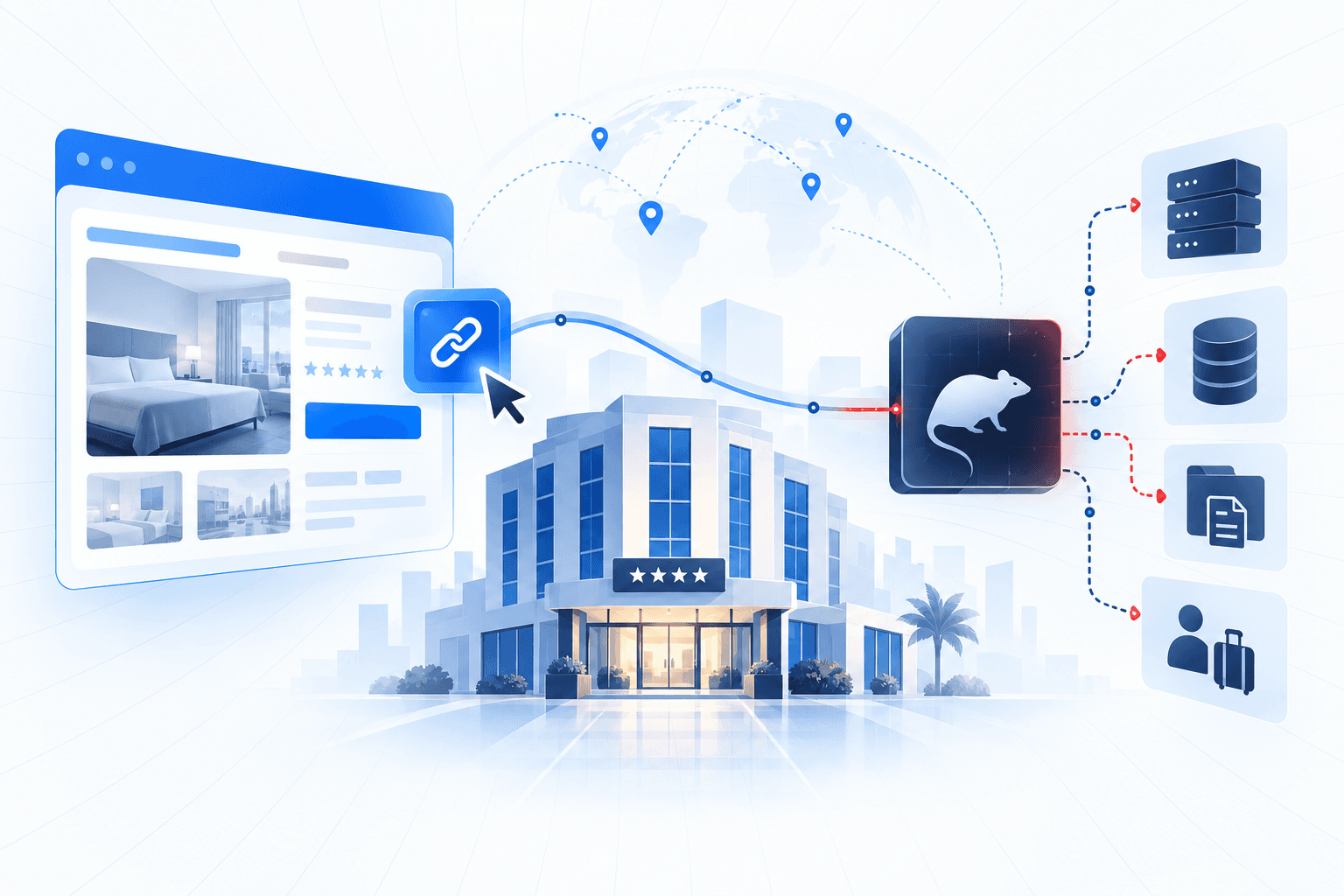
Attackers are targeting hotels and other accommodation businesses with fabricated guest complaints, negative reviews, and inquiries that lure staff into opening malicious Windows LNK shortcuts disguised as photographic evidence. The campaigns deliver EtherRAT or TONResolver, both of which run through Node.js and retrieve command-and-control addresses from public blockchains: Ethereum for EtherRAT and TON for TONResolver. This blockchain-based dead drop resolving lets operators redirect existing infections to replacement servers without redistributing malware, making conventional infrastructure takedowns insufficient on their own.
Cofense Intelligence assesses with moderate confidence that the activity is connected to earlier Booking.com-spoofing campaigns that used ClickFix fake CAPTCHAs to deliver conventional remote access trojans, although independent operators using a shared toolkit could explain the similarities. Varied email wording and changing file hashes weaken static detection. Defenders should train hotel staff to scrutinize unsolicited complaint links and purported photo evidence, and investigate unusual Node.js activity alongside associated emails and downloaded shortcuts.
Why it matters
Summary
Active phishing campaigns target hotel and accommodation staff with fabricated guest complaints that deliver EtherRAT or TONResolver, exposing Windows workstations to attacker-controlled malware. Blockchain-based C2 discovery allows infected systems to reconnect to replacement infrastructure after domain takedowns, increasing containment difficulty; Cofense does not confirm compromised booking accounts, wider fraud, or quantified losses.
- Affected populations: Front desk, reservations, and guest relations teams handling unsolicited complaints, inquiries, negative reviews, and legal threats.
- Business risk: Workstation compromise creates potential exposure of guest information and reservation workflows, with associated disruption, fraud, and reputational consequences. These downstream outcomes are risks, not reported findings.
- Scope: Observed targeting is hospitality-focused; public customer support, sales, and business development inboxes in other sectors face similar lure exposure. Campaign scale and victim counts are not provided.
- Attribution: Cofense assesses with moderate confidence that the activity connects to earlier Booking.com-spoofing campaigns. Independent actors using a shared toolkit remain an alternative explanation.