PureRAT Malware Campaign Targets Hotels and Guests via ClickFix Phishing
Social Engineering & Fraud · 5 sources · Updated 5mo ago · First seen Nov 7, 2025

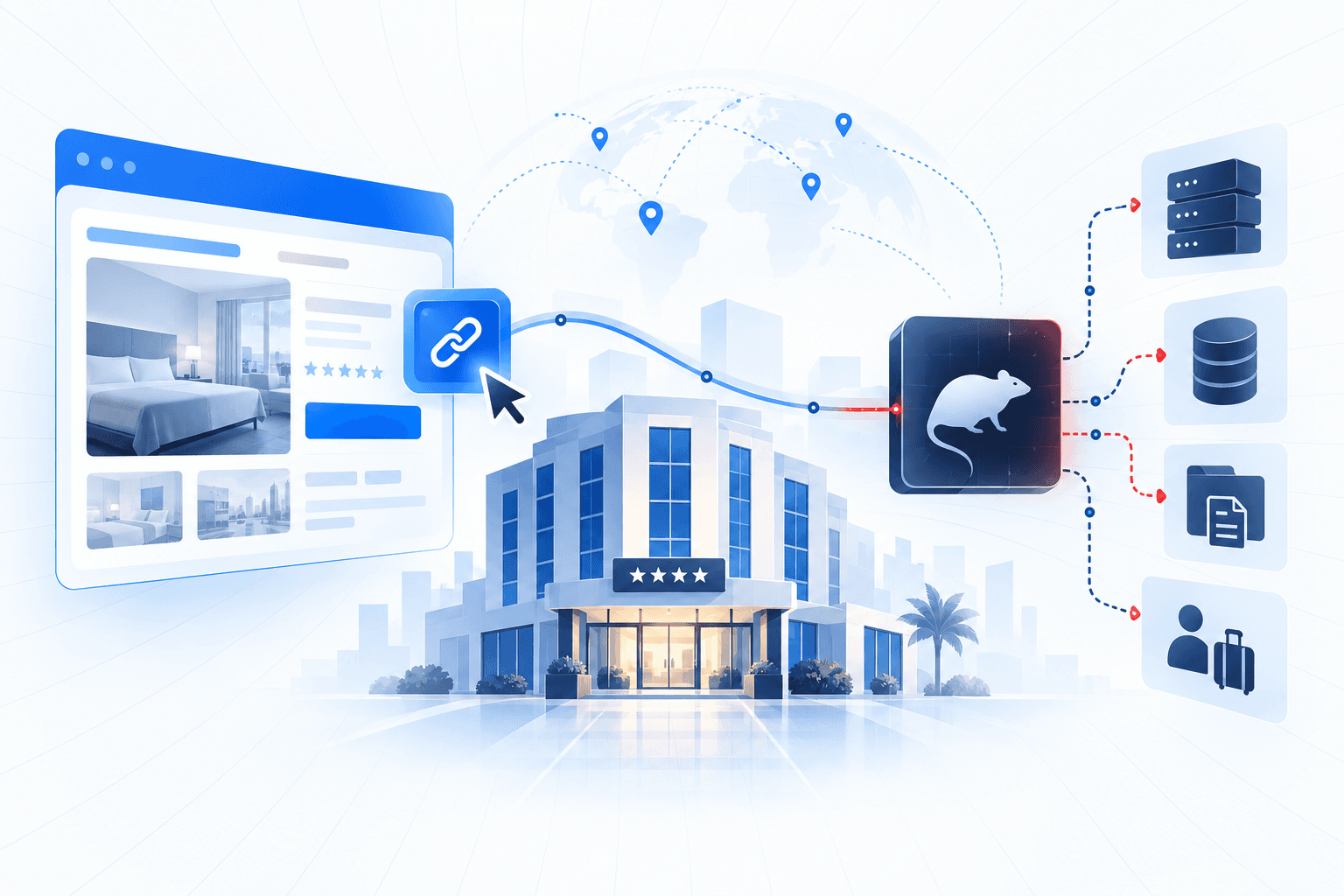
A sophisticated cybercrime operation has targeted the hospitality sector by compromising hotel systems through phishing emails that impersonate Booking.com communications. Attackers use the ClickFix social engineering technique to trick hotel staff into clicking malicious links or copying and pasting PowerShell commands, which results in the installation of PureRAT malware. Once installed, PureRAT provides attackers with full remote access to hotel systems, enabling them to steal professional login credentials for booking platforms and access sensitive guest reservation data. The campaign, active since April 2025, leverages both direct email phishing and drive-by downloads to infect hotel staff, with compromised hotel account access often sold on underground forums.
With access to genuine hotel Booking.com accounts, the attackers launch highly convincing phishing attacks against travelers, using stolen reservation and contact details to increase the credibility of their messages. Victims are contacted via WhatsApp or email and directed to spoofed Booking.com pages designed to harvest banking information. The PureRAT malware, delivered via a previously unobserved loader variant using DLL sideloading and persistence mechanisms like the Run registry key, enables a wide range of malicious activities, including keylogging, webcam and microphone capture, and data exfiltration. Security researchers have highlighted the organized nature of the operation and the use of malware-as-a-service infrastructure, underscoring the ongoing threat to both hotels and their guests.
Why it matters
Impact assessment
This campaign primarily affects the hospitality sector, especially hotels and hotel managers using Booking.com, Expedia, Airbnb, and Agoda workflows. Impact is high because the intrusion chain enables compromise of hotel endpoints, theft of booking-platform credentials and reservation data, and secondary fraud against travelers using trusted hotel accounts and real booking details.
The exposure is broad across multiple countries rather than a single targeted victim set, with activity observed from at least April 2025 through October 2025 and reporting continuing into November 2025. There are clear signs of active exploitation in the wild: hotel systems were compromised, booking-platform credentials were stolen and traded, and travelers were subsequently phished via email and WhatsApp.
Affected entities and populations
- Hospitality organizations, especially hotels and hotel managers
- Hotel staff handling Booking.com-style guest communications
- Travelers and hotel guests receiving follow-on phishing messages
- Organizations using Booking.com, Expedia, Airbnb, and Agoda account workflows
Severity and business impact
- Endpoint compromise through PureRAT provides full remote access to infected hotel systems
- Theft of professional credentials for booking platforms can enable account takeover and business fraud
- Exposure of guest reservation and contact data creates privacy, regulatory, and reputational risk
- Secondary phishing against guests can lead to direct financial theft via stolen banking or card details
- Operational disruption is likely if hotel booking operations or customer communications are abused or suspended
Scope and exploitation status
- Campaign active since at least April 2025; observed through early October 2025 and reported in November 2025
- Multiple hotels across several countries were targeted
- Malicious emails came from spoofed Booking.com senders and compromised legitimate-company accounts
- Stolen hotel account access and authentication cookies were advertised and sold on underground forums
Structured facts extracted
- Malware: PureRAT, also referred to as zgRAT
- Brands abused: Booking.com, Expedia
- Forums/entities: Exploit.in, LolzTeam, WWHClub, Telegram bot, actor handle moderator_booking, OPTIMA LLC
- User populations affected: hotel staff, hotel managers, travelers, hotel guests