Industrial Ransomware Incidents Rise 11% as Manufacturing Bears the Brunt
Threat Actor Intelligence · 4 sources · Updated 10d ago · First seen Sep 23, 2026
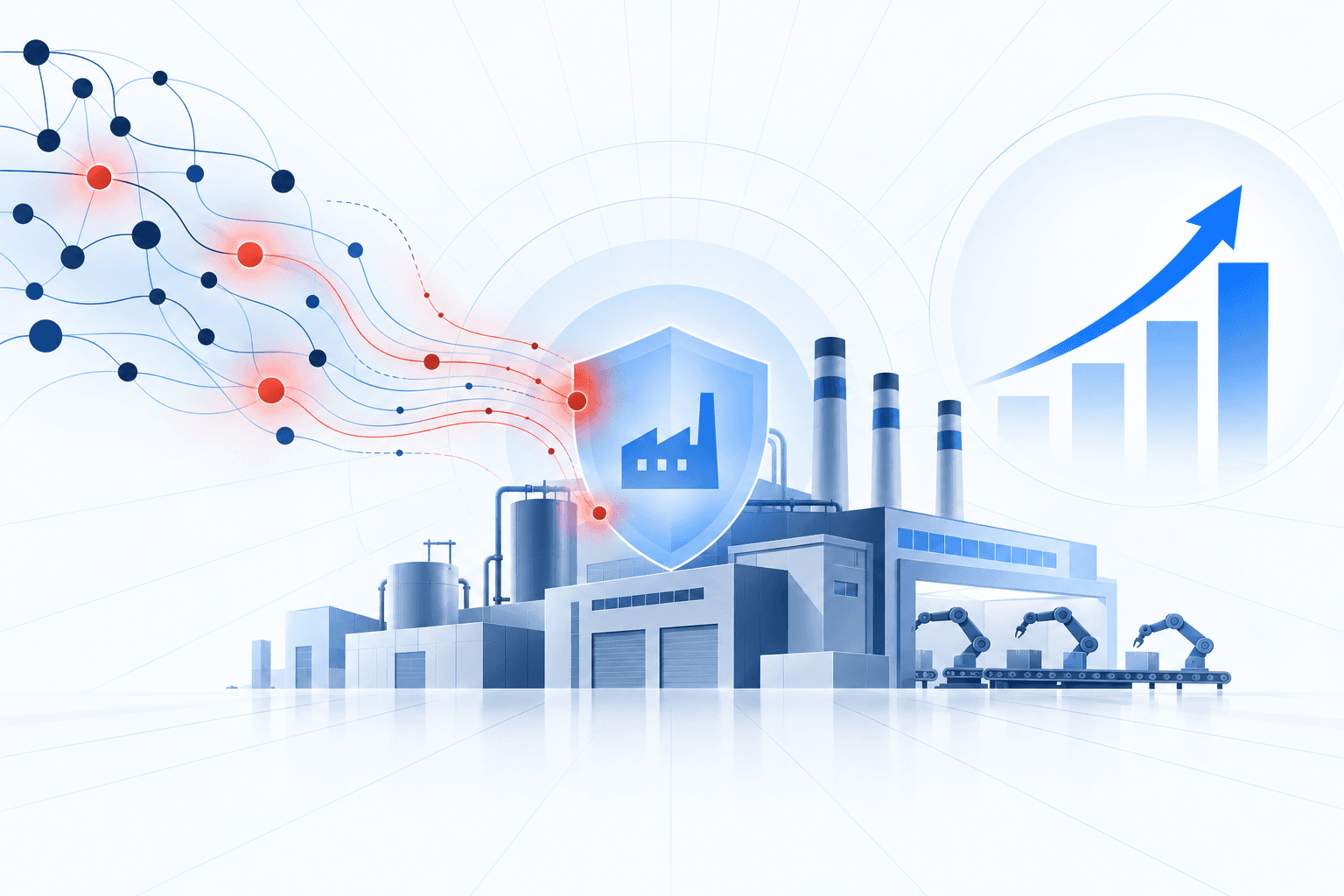
Dragos recorded 1,266 ransomware incidents affecting industrial organizations in Q3 2026, an 11% increase from the previous quarter, based on public disclosures and ransomware leak-site postings. Manufacturing accounted for 69% of incidents, while Qilin and The Gentlemen together claimed 362 industrial victims—approximately 29% of the total. Incidents at Fairlife and Boston Scientific illustrated how compromises of production-supporting IT can interrupt manufacturing, although Boston Scientific did not attribute its incident to ransomware.
Operators continued exploiting internet-facing applications and remote-access appliances, abusing stolen credentials, disabling endpoint protection, and increasingly stealing data without encryption. Flashpoint’s separate analysis of Qilin highlighted a custom Rust loader and a kernel-level endpoint detection and response killer, underscoring the threat to endpoint defenses. Dragos observed no ransomware operator directly manipulating industrial control systems or reaching Stage 2 of the ICS Cyber Kill Chain during the quarter, but warned that enterprise IT compromises can still trigger operational shutdowns and safety risks. Industrial organizations should prioritize securing exposed services and remote access, monitoring credential abuse and endpoint-defense tampering, and testing production continuity when supporting IT becomes unavailable.
Why it matters
Dragos recorded 1,266 publicly disclosed or leak-site-listed industrial ransomware incidents in Q3 2026, up 11% quarter over quarter; these are observed disclosures and claims, not a complete or independently verified census. Manufacturing represented 876 incidents (69%), with documented production interruptions demonstrating that compromised enterprise IT can cause substantial operational and financial harm without direct control-system compromise. No Q3 ransomware case observed by Dragos reached Stage 2 of the ICS Cyber Kill Chain, but data theft, supplier exposure, precautionary shutdowns, and safety risks remain material.
- Industry-specific impact: Established across Industrials (20: equipment manufacturing, engineering, transportation and logistics), Consumer Discretionary (25: automotive manufacturing), Consumer Staples (30: food and beverage), Health Care (35: pharmaceuticals and Boston Scientific), Information Technology (45: electronics manufacturing), Energy (10: oil and natural gas), Materials (15: mining), Utilities (55: electricity and water), and Government & Public Sector (90). Dragos reported affected subsectors and incident counts, including 105 transportation/logistics incidents, 47 oil-and-gas incidents, 19 mining incidents, and 47 government incidents. These are observed sector exposures, not evidence of exclusive targeting. Dragos
- Geography-specific impact: Established in the United States (473 incidents), Germany (66), and India (38), according to Dragos. The secondary summary additionally reports Italy (48), France (38), Taiwan (29), and South Korea (15); these country counts have lower source confidence. Argentina is supported by Oldelval's confirmed administrative-system incident, although crude transport continued without downtime. Regional exposure was worldwide; country codes are limited to specifically identified affected locations. Dragos, Cyberveille
- Operational examples: Fairlife suspended production at all four U.S. facilities for approximately 11 days; Coca-Cola confirmed data theft, while Anubis claimed encryption and theft of up to 1 TB. Boston Scientific experienced approximately two weeks of global manufacturing, order-processing, and shipping disruption, but its incident was not attributed to ransomware and investigators found no evidence of encryption or interactive manufacturing-system access. Dragos