Ransomware Surge Targets Manufacturers and Amplifies Supply-Chain Disruption
Threat Actor Intelligence · 3 sources · Updated 2mo ago · First seen Sep 17, 2026
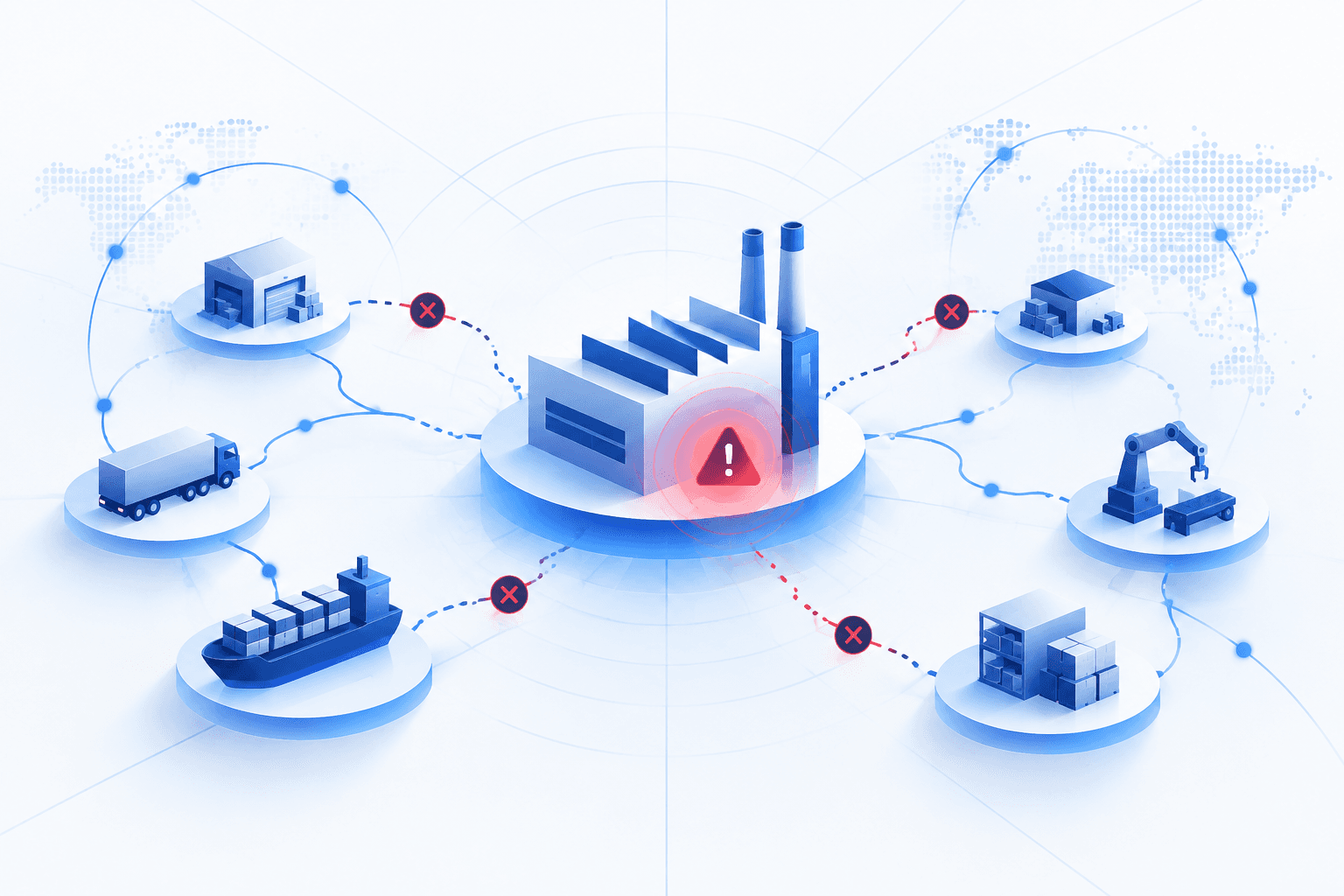
Manufacturing accounted for 22% of publicly disclosed ransomware victims from April 2025 through March 2026, retaining its position as the most-targeted sector for a fifth consecutive year. Recorded incidents rose about 40% year over year to 1,183 in the first seven months of 2026, with European victims increasing 85.4% and Germany facing particular pressure. Attackers target manufacturers because production stoppages, delayed deliveries, and supply-chain disruption increase leverage in extortion negotiations; the Jaguar Land Rover incident and Clop’s exploitation of Cleo illustrate the potentially broad downstream impact.
New and established ransomware-as-a-service operations are driving the increase. Qilin claimed the most victims during the reporting period, while SafePay focused heavily on German manufacturers and The Gentlemen expanded rapidly; in Japan, The Gentlemen led observed activity with 14 of 90 ransomware incidents from January through July, where manufacturing was also the most affected sector and 78% of victims were small and medium-sized organizations. Talos identified The Gentlemen infrastructure consistent with reconnaissance, Active Directory compromise, credential theft, lateral movement, backup theft, and exfiltration to Wasabi cloud storage, while Qilin-linked endpoint-wiping and Veeam-backup destruction scripts showed signs of likely LLM-assisted development.
Why it matters
Impact assessment
Manufacturing is experiencing a sustained and accelerating ransomware threat: it represented 22% of publicly disclosed ransomware victims from April 2025 through March 2026 and recorded 1,183 incidents in the first seven months of 2026, up about 40% year over year. The primary consequence is operational disruption: encrypted IT and potentially connected OT environments can halt production, delay deliveries, interrupt suppliers, and create material extortion leverage.
- Manufacturing has been the most-targeted ransomware sector for five consecutive years.
- European exposure rose sharply: disclosed manufacturing victims increased 85.4%, from 199 to 369 in the comparable first-seven-month periods of 2025 and 2026.
- Germany is under elevated pressure, with 77 incidents in the first seven months of 2026; SafePay has concentrated activity against German manufacturers.
- Japan recorded 90 ransomware incidents from January through July 2026; manufacturing represented 34% of victims and organizations with capital below JPY 1 billion accounted for 78% of victims.
- Small and medium-sized manufacturers face disproportionate risk because limited recovery capacity, exposed remote services, and insufficiently segmented IT/OT networks can turn an intrusion into a prolonged outage.
- Supply-chain consequences can extend far beyond the direct victim. The reported 2025 Jaguar Land Rover incident shut down UK production, affected more than 5,000 companies, and was estimated by the UK Cyber Monitoring Centre to cause £1.9 billion in impact.
- Exploitation in the wild is established. Qilin, The Gentlemen, SafePay, Akira, DragonForce, INC Ransom, and other ransomware operations are actively targeting manufacturers; The Gentlemen activity includes observed reconnaissance, Active Directory compromise, backup theft, data exfiltration, and ransomware targeting Windows and ESXi environments.
Supporting entities and targeting facts
- Qilin: 178 claimed victims in the first seven months of 2026, the highest reported total in this reporting set.
- The Gentlemen: 142 claimed victims in the first seven months of 2026; accounted for 12% of manufacturing attacks and 14 of 90 reported Japanese ransomware incidents.
- SafePay: accounted for 22% of ransomware attacks against German manufacturing targets in 2025 and remained active against German manufacturers in 2026.
- Clop: its campaign against Cleo reportedly resulted in nearly 400 publicly disclosed downstream victims, demonstrating supplier-concentration risk.
- Other groups reported against manufacturing: Akira, DragonForce, and INC Ransom.