Mallory
← Back to News
privacy-surveillance-policy

Schrems II Guidance Highlights US Surveillance Risks in EU Data Transfers

Regulatory & Policy · 7 sources · Updated 25d ago · First seen Jul 16, 2020
Schrems II Guidance Highlights US Surveillance Risks in EU Data Transfers

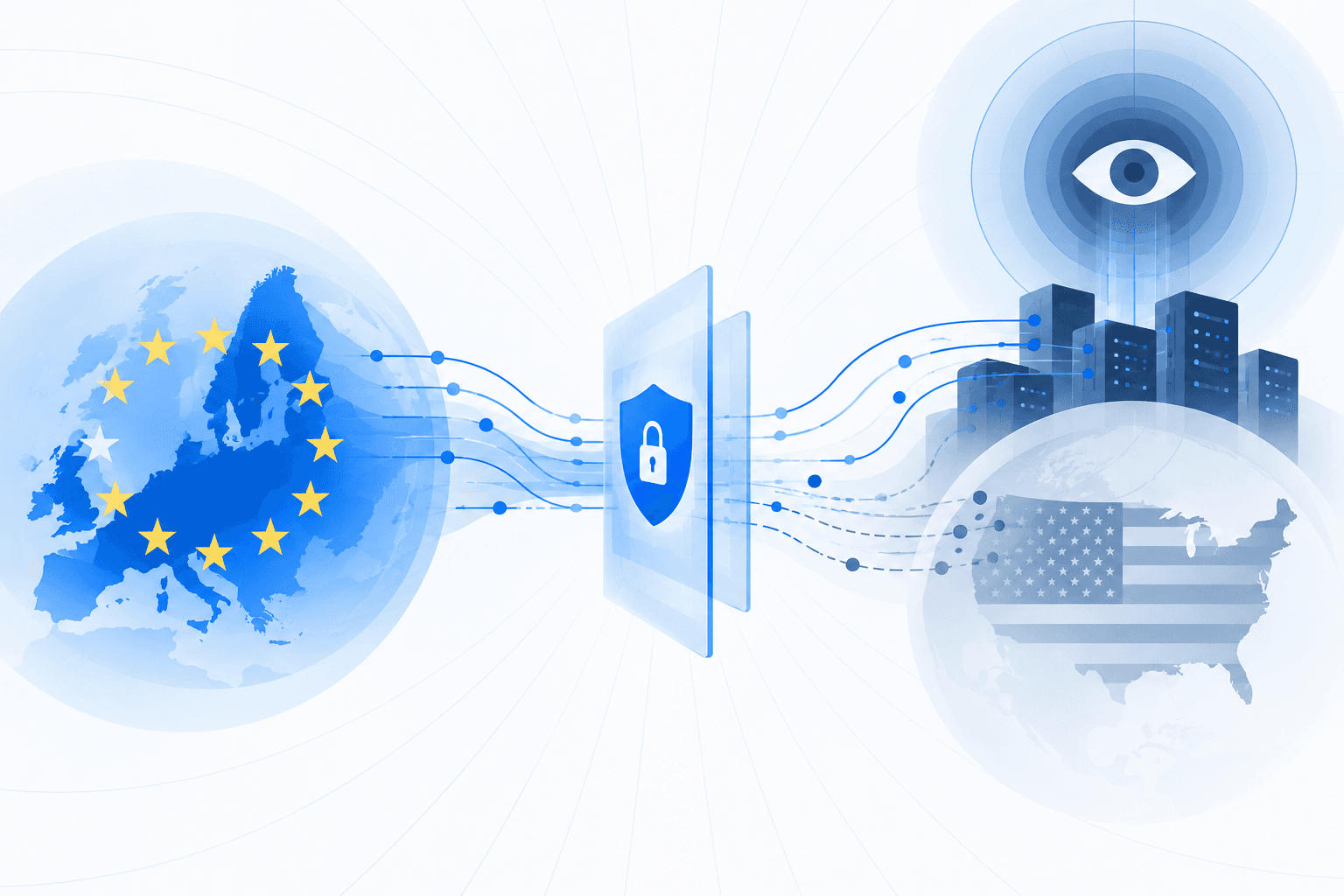
The Court of Justice of the European Union’s Schrems II judgment invalidated the EU–US Privacy Shield in July 2020, prompting privacy organization noyb to publish guidance for individuals and companies on transfers exposed to US surveillance laws. Noyb provided templates for information requests, transfer-suspension requests and complaints to data protection authorities. Its guidance argued that Standard Contractual Clauses cannot resolve conflicting surveillance obligations and urged organizations to assess recipients, subcontractors and interception risks. It distinguished discretionary outsourcing from certain necessary transfers or transfers based on explicit, informed consent. These materials describe the judgment-era legal position, not the current legality of any particular transfer.

Provider transparency reports illustrate the government-access issues underlying those concerns without documenting a breach. Cloudflare reported 78 US court orders and three search warrants for July–December 2019, while stating it had never surrendered encryption or authentication keys or weakened encryption at a third party’s request. Apple reported 31,778 government device requests and 6,480 account requests worldwide in the first half of 2019, providing data in 82% and 85% of cases, respectively. Amazon described different disclosure requirements for subpoenas, warrants and national-security demands; Dropbox highlighted legal restrictions on reporting national-security requests and notifying affected users. For security and privacy teams, the combined lesson is to assess transfer mechanisms alongside providers’ disclosure obligations, encryption capabilities and notification limits—not treat transparency commitments alone as proof of lawful transfers.

Why it matters

The historical Schrems II guidance concerns EU/EEA organizations transferring personal data to US recipients, with potential consequences including compelled government access, transfer suspension, processing relocation, and regulatory penalties. The supplied materials describe systemic legal and privacy exposure rather than a cyberattack or confirmed unauthorized disclosure; the 2019 transparency statistics and judgment-era guidance do not establish any transfer’s legality as of November 2026.

  • Industry-specific impact: Information Technology and Communication Services are specifically implicated through surveillance-related obligations on electronic communication service providers and compliance responsibilities for cross-border processing. Noyb explicitly discusses US cloud providers and transfers by Google Ireland, Microsoft Luxembourg, Amazon Luxembourg, and Facebook Ireland to US affiliates; this is provider-specific regulatory exposure, not evidence that all their customers suffered harm. Reference
  • Geography-specific impact: The EU/EEA and United States are specifically implicated by obligations governing EU/EEA personal-data exports and US recipients’ surveillance-law exposure. The supplied guidance identifies FISA Section 702 and Executive Order 12333 as relevant US authorities; EU/EEA regional scope does not justify assigning individual European country codes. Reference
  • Severity and scope: Exposure depends on actual data flows, recipient obligations, safeguards, and applicable transfer mechanisms. Noyb cites potential penalties of up to €20 million or 4% of global turnover, but the materials establish neither a specific enforcement outcome nor a breach.

What this changes for youSee the reporting duties and controls this puts on the clock.
Get the context
Event timeline

How this story unfolded

Events from the most recent confirmed update back to the earliest known activity.

14 events · 2013 – Jul 16, 2020
  1. Reported Jul 24, 20206y ago

    noyb provides post-Schrems II guidance and transfer-complaint templates

    noyb provided guidance on assessing international transfers after Schrems II, including the limitations of contractual safeguards where U.S. surveillance obligations conflict with EU protections. It supplied templates for information requests, transfer-suspension requests, and complaints to Data Protection Authorities.

    Next Steps for users & FAQs
  2. Jul 16, 20206y ago

    CJEU invalidates the EU–US Privacy Shield in Schrems II

    The Court of Justice of the European Union invalidated Privacy Shield in case C-311/18, removing it as a basis for EU–US personal-data transfers without a grace period. The judgment addressed concerns about U.S. surveillance and insufficient legal redress.

    Next Steps for users & FAQs
  3. Reported Feb 24, 20207y ago

    Cloudflare stops caching an infringing domain under a Japanese settlement

    A settlement with Japanese publishers required Cloudflare to clear cached content and stop caching qualifying infringing websites in Japan. Cloudflare acted on one domain, while proceedings concerning two additional domains remained incomplete.

    Assets Ctfassets
  4. Oct 3, 20197y ago

    United States and United Kingdom sign CLOUD Act agreement

    The United States and United Kingdom signed a CLOUD Act executive agreement. Cloudflare stated that it intended to comply with appropriately scoped UK requests once the agreement became effective.

    Assets Ctfassets
  5. Jul 2019

    Cloudflare geoblocks 22 domains in Italy

    Cloudflare geoblocked 22 domains then using its service in response to the June 2019 Italian copyright order.

    Assets Ctfassets
  6. Jun 2019

    Italian copyright order targets domains using Cloudflare

    An Italian copyright order involved 131 domains and 15 Cloudflare accounts. The order led to subsequent geographic blocking of domains still using Cloudflare's service.

    Assets Ctfassets
  7. 2019

    Cloudflare answers a DMCA request and domain-dispute verification requests

    During July–December 2019, Cloudflare answered one DMCA takedown request concerning content stored on its network, affecting one domain and one account. It also answered two valid domain-dispute verification requests affecting three domains and two accounts.

    Assets Ctfassets
  8. 2019

    Cloudflare handles government and civil demands in the second half of 2019

    During July–December 2019, Cloudflare received 78 U.S. court orders, 27 civil subpoenas, nine criminal subpoenas, five pen register/trap and trace orders, and three search warrants. It also answered one emergency data request and reported having no customer content to provide in response to search warrants processed during 2019.

    Assets Ctfassets
  9. 2019

    Apple removes apps following government takedown requests

    During January–June 2019, Apple removed 217 apps from requesting countries' or regions' storefronts in response to legal-violation requests. It separately removed 97 apps worldwide following 25 government requests alleging platform-policy violations.

    Apple
  10. 2019

    Apple restricts and deletes accounts following government requests

    During January–June 2019, Apple received 12 government account restriction or deletion requests covering 15 accounts. It restricted accounts in response to eight requests and deleted accounts in response to three.

    Apple
  11. 2019

    Apple preserves account data and responds to emergency requests

    During January–June 2019, Apple received 2,616 government preservation requests covering 6,689 accounts and preserved data for 4,749 accounts. It also received 598 emergency requests and provided data in 536 cases.

    Apple
  12. 2019

    Apple handles government requests for device, financial, and account data

    During January–June 2019, Apple received 31,778 government device requests, 4,664 financial identifier requests, and 6,480 account requests. It provided data in 82%, 74%, and 85% of those requests, respectively.

    Apple
  13. Dec 2016

    Nondisclosure restriction on Cloudflare's National Security Letter ends

    The nondisclosure restriction associated with NSL-12-358696 ended in December 2016. Cloudflare subsequently disclosed receiving the letter.

    Assets Ctfassets
  14. 2013

    Cloudflare receives and challenges a National Security Letter

    Cloudflare received National Security Letter NSL-12-358696 in 2013 and subsequently challenged its nondisclosure requirement. It provided no customer information under the letter.

    Assets Ctfassets
Linked entities

Related entities

Vulnerabilities, threat actors, malware, products, organizations, and breaches Mallory has linked to this story.

Open in app →

Organizations

5 linked
CloudflareDropboxApplenoyb – European Center for Digital RightsCourt of Justice of the European Union
Do you run this?See what this changes for your reporting obligations and which controls it puts on the clock.
Get the Regulatory Context
Mallory platform

See the full picture, correlated to your attack surface.

This page covers what’s public. Mallory adds the parts that aren’t: which of your assets are affected, which threat actors are using it right now, and what to deploy next.

Exposure mappingMap indicators from this story to your assets and identify affected systems in minutes.
Threat actor evidenceEvery observed campaign, victim, and pivot linked to actors named in this story.
Associated malwareMalware, exploits, and IOCs connected to the activity described here.
Detection signaturesYARA, Sigma, and Snort rules deployed to your SIEM as soon as they’re published.
Scheduled alertsGet matching new stories delivered to your team as they break, not the next morning.
AI threadsAsk questions about this story and take action on the answers.