Mallory
← Back to News
privacy-surveillance-policy

noyb Plans Challenge to EU–US Data Privacy Framework Over Surveillance Safeguards

Regulatory & Policy · 6 sources · Updated 1mo ago · First seen Mar 25, 2022

noyb Plans Challenge to EU–US Data Privacy Framework Over Surveillance Safeguards

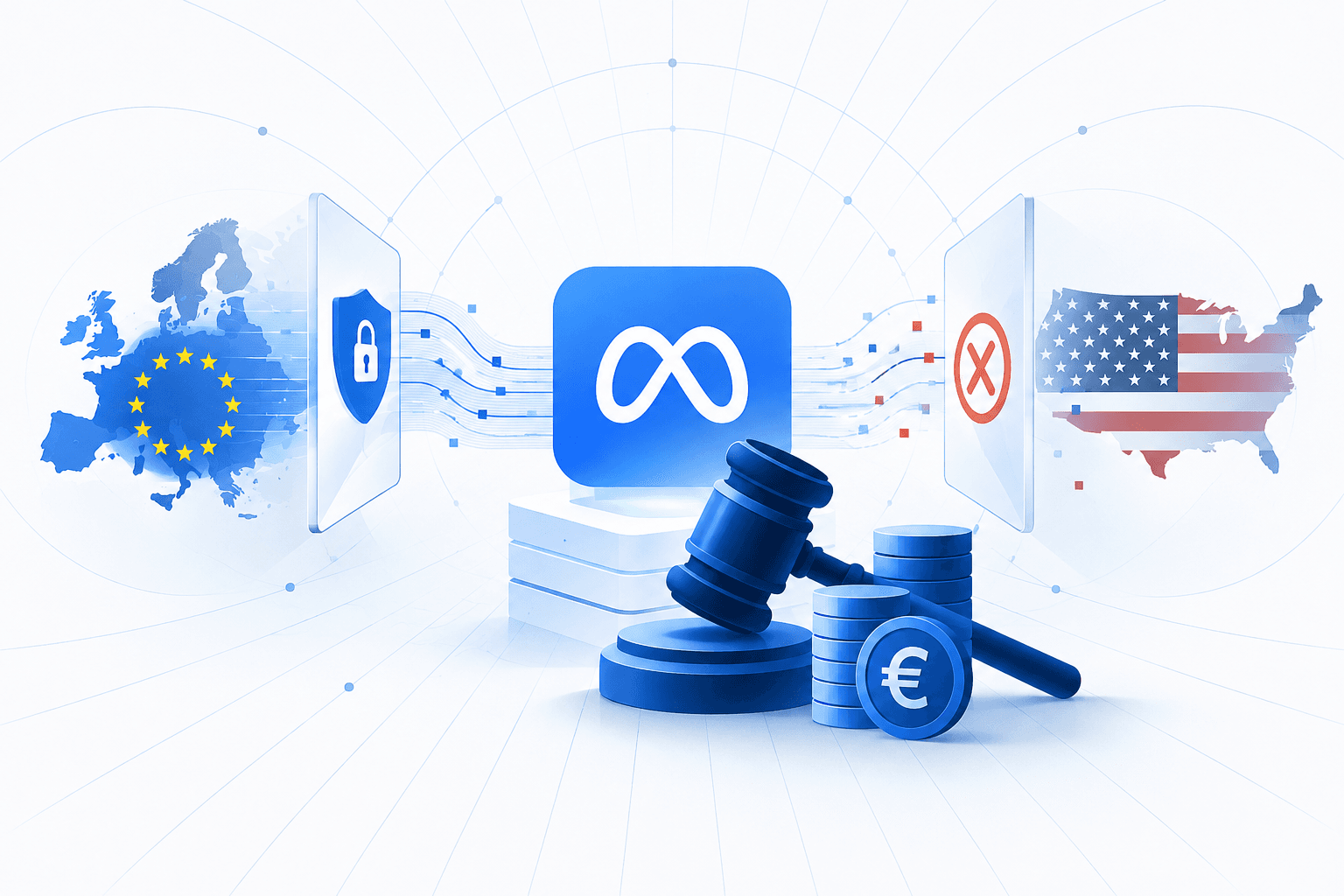
Privacy advocacy group noyb and its honorary chairman Max Schrems announced plans to challenge the EU–US Data Privacy Framework, arguing that it fails to remedy surveillance and redress deficiencies behind two previous court defeats. The European Commission and United States announced the framework in principle in March 2022 to support transfers to participating US companies. Its safeguards include limits on US intelligence access, oversight procedures and a two-tier complaints mechanism incorporating a Data Protection Review Court, alongside company self-certification through the US Department of Commerce.

noyb argues that Executive Order 14086 does not sufficiently change surveillance powers under FISA Section 702 and Executive Order 12333, protect non-US persons or provide effective judicial redress. It also contends that the framework’s commercial privacy principles fall short of GDPR requirements. The group warned that an inadequate Commission adequacy decision could face a challenge before the Court of Justice of the European Union and a request for suspension, following the invalidation of Safe Harbor in 2015 and Privacy Shield in 2020. The announced challenge highlights legal-continuity risk for organizations relying on transatlantic data transfers; the supplied statements establish litigation intentions, not a subsequent court ruling.

Why it matters

EU organizations transferring personal data to participating US companies face legal-continuity risk if the EU–US Data Privacy Framework is suspended or invalidated. Potential consequences include transfer restrictions, vendor changes, contractual remediation, compliance costs, and disruption to cloud and outsourced services; the supplied material reports litigation intentions, not a subsequent court ruling or a cybersecurity incident.

  • Affected populations: EU data subjects, EU data exporters, participating US service providers, and organizations dependent on transatlantic processing across industries.
  • Scope: Cross-sector dependency risk rather than a targeted attack. The Commission’s March 2022 factsheet associated transatlantic data flows with €900 billion in annual commerce; this is economic context, not an estimated loss.
  • Principal concern: noyb disputes whether US surveillance safeguards, individual redress, and commercial privacy principles provide protection essentially equivalent to EU requirements. These are the challenger’s legal arguments, not findings established by the supplied material.
  • Timing limitation: Several references labeled September 2025 discuss pre-adoption negotiations and forecasts for 2023–2025. They do not establish the framework’s legal status as of October 23, 2026.

What this changes for youSee the reporting duties and controls this puts on the clock.
Get the context
Event timeline

How this story unfolded

Events from the most recent confirmed update back to the earliest known activity.

14 events · 2000 – Mar 25, 2022
  1. Reported Sep 3, 20251y ago

    noyb announces prepared legal routes to challenge the adopted framework

    noyb announced that it had prepared procedural options to challenge the framework before the CJEU, including a possible request for suspension. Its announcement described anticipated litigation, not an already-filed challenge or a court ruling.

    European Commission gives EU-US data transfers third round at CJEU
  2. Reported Sep 3, 20251y ago

    European Commission adopts the replacement data-transfer framework

    The European Commission adopted the Trans-Atlantic Data Privacy Framework. noyb criticized the arrangement as largely repeating Privacy Shield without sufficient changes to US surveillance law.

    European Commission gives EU-US data transfers third round at CJEU
  3. Reported Sep 3, 20251y ago

    noyb responds to the draft EU adequacy decision

    In a statement addressing the draft adequacy decision, noyb characterized the changes under Executive Order 14086 as minimal and questioned whether the decision could withstand CJEU scrutiny. The draft still awaited review by the European Data Protection Board and EU Member States.

    Statement on EU Comission adequacy decision on US
  4. Reported Sep 3, 20251y ago

    noyb challenges the executive order's adequacy under EU law

    noyb and Max Schrems argued that the executive order had not resolved the core surveillance and privacy issues affecting non-US persons. The organization announced plans for a detailed legal assessment and indicated that an incompatible adequacy decision would likely face another CJEU challenge.

    New US Executive Order unlikely to satisfy EU law
  5. Reported Sep 3, 20251y ago

    Executive Order 14086 introduces revised US surveillance safeguards

    Executive Order 14086 replaced Presidential Policy Directive 28 and introduced a proportionality principle and a redress mechanism involving a Civil Liberties Protection Officer and a Data Protection Review Court.

    European Commission gives EU-US data transfers third round at CJEU
  6. Reported Sep 3, 20251y ago

    Schrems sends open letter warning negotiators of another invalidation

    Max Schrems authored an open letter arguing that the proposed surveillance safeguards, review body, and commercial privacy principles would not resolve the previous frameworks' legal deficiencies. noyb said it was prepared to challenge an inadequate final decision and potentially request its suspension.

    Open Letter on the Future of EU-US Data Transfers
  7. Reported Sep 3, 20251y ago

    noyb questions the agreement's reliance on executive assurances

    In its initial reaction, noyb said no legal text existed and questioned whether executive assurances without changes to US surveillance statutes could satisfy the CJEU. Max Schrems said a noncompliant final framework would likely face a legal challenge.

    "Privacy Shield 2.0"? - First Reaction by Max Schrems
  8. Mar 25, 20225y ago

    Biden and von der Leyen announce a new data-transfer agreement in principle

    US President Joe Biden and European Commission President Ursula von der Leyen announced an agreement in principle on the Trans-Atlantic Data Privacy Framework. Official factsheets outlined proposed intelligence safeguards and a two-tier redress mechanism, while legal documents and an adequacy decision remained outstanding.

    European Commission gives EU-US data transfers third round at CJEU
  9. 2020

    CJEU invalidates Privacy Shield in Schrems II

    The CJEU invalidated Privacy Shield in case C-311/18, known as Schrems II. The ruling identified deficiencies involving US surveillance and effective judicial redress.

    European Commission gives EU-US data transfers third round at CJEU
  10. 2018

    GDPR begins applying in the European Union

    The GDPR began applying, establishing the privacy standards against which noyb subsequently criticized the largely unchanged commercial principles underpinning EU–US transfer arrangements.

    New US Executive Order unlikely to satisfy EU law
  11. 2016

    European Commission adopts Privacy Shield

    The European Commission adopted Privacy Shield as the replacement framework for EU–US personal-data transfers.

    European Commission gives EU-US data transfers third round at CJEU
  12. 2015

    CJEU invalidates Safe Harbor in Schrems I

    The Court of Justice of the European Union invalidated Safe Harbor in case C-362/14, known as Schrems I.

    European Commission gives EU-US data transfers third round at CJEU
  13. 2013

    Snowden disclosures expose US surveillance programs

    Edward Snowden disclosed US surveillance activities involving technology companies and programs including PRISM and Upstream, which became central to disputes over EU–US data transfers.

    European Commission gives EU-US data transfers third round at CJEU
  14. 2000

    European Commission adopts Safe Harbor

    The European Commission adopted the Safe Harbor adequacy decision to support transfers of personal data from the EU to the United States.

    European Commission gives EU-US data transfers third round at CJEU
Linked entities

Related entities

Vulnerabilities, threat actors, malware, products, organizations, and breaches Mallory has linked to this story.

Open in app →

Organizations

5 linked
United States GovernmentEuropean UnionEuropean Commissionnoyb – European Center for Digital RightsEuropean Center for Digital Rights
Do you run this?See what this changes for your reporting obligations and which controls it puts on the clock.
Get the Regulatory Context
Mallory platform

See the full picture, correlated to your attack surface.

This page covers what’s public. Mallory adds the parts that aren’t: which of your assets are affected, which threat actors are using it right now, and what to deploy next.

Exposure mappingMap indicators from this story to your assets and identify affected systems in minutes.
Threat actor evidenceEvery observed campaign, victim, and pivot linked to actors named in this story.
Associated malwareMalware, exploits, and IOCs connected to the activity described here.
Detection signaturesYARA, Sigma, and Snort rules deployed to your SIEM as soon as they’re published.
Scheduled alertsGet matching new stories delivered to your team as they break, not the next morning.
AI threadsAsk questions about this story and take action on the answers.