ESET Reports Belarus-Linked Wiper Attack in Ukraine and Closer Alignment With Russia
Active Exploitation · 10 sources · Updated 26d ago · First seen Oct 28, 2026
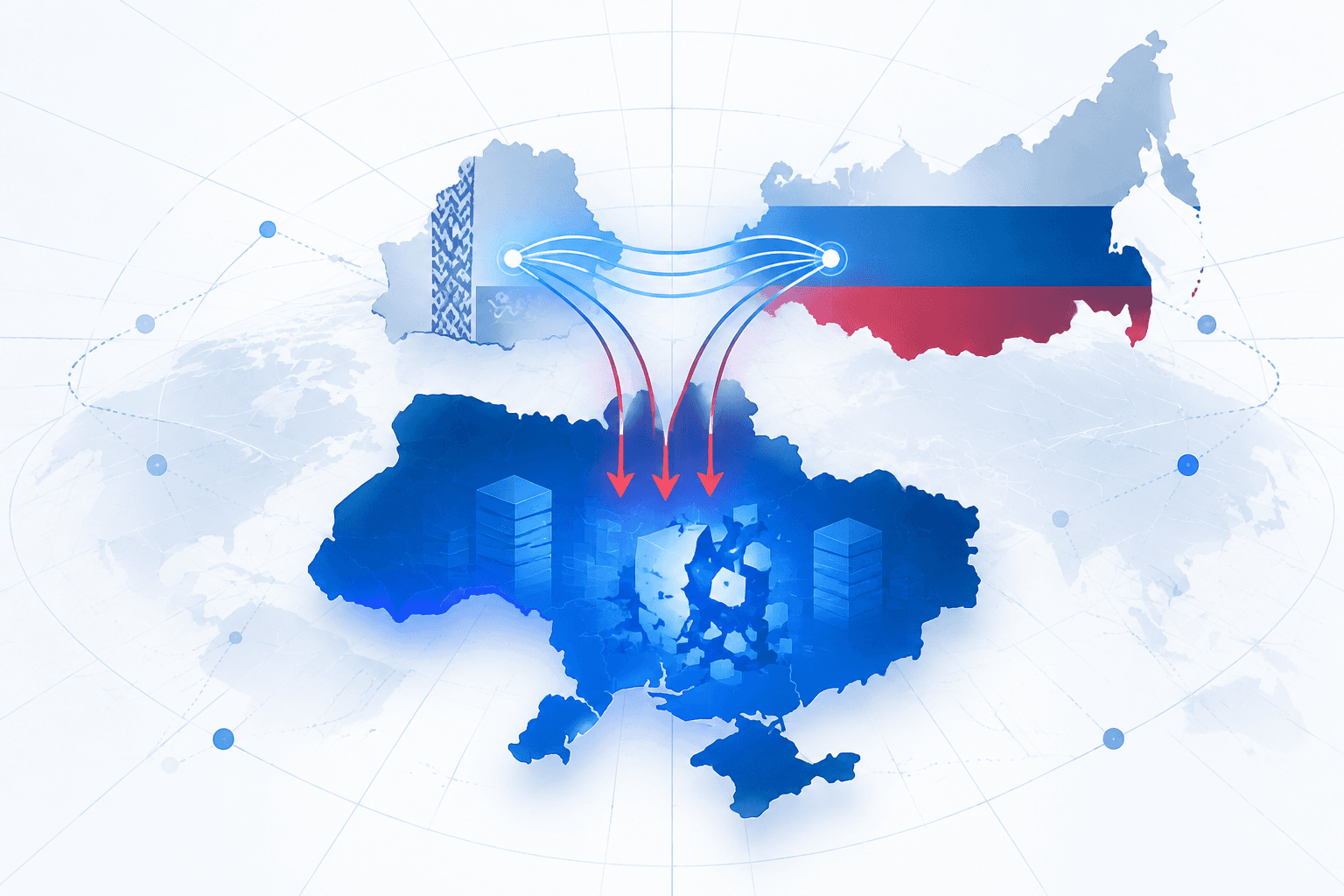
ESET reported increasingly close alignment between Belarus-linked cyber operations and Russian intelligence priorities in its review of advanced persistent threat activity from April through September 2026. In late May, GhostWriter deployed data-wiping malware against a Ukrainian manufacturer believed to be important to the transportation sector—the first destructive attack by a Belarus-aligned group that ESET had documented in Europe. Researchers could not determine whether the wiping was intended to cause damage or conceal espionage. ESET warned that Belarusian groups could increasingly serve as Russian proxies, potentially sharing tools and infrastructure or collaborating on attacks.
The report also documented broader espionage, software supply-chain compromises, and destructive operations. China-aligned actors targeted government entities and Taiwan’s semiconductor industry; Iran-aligned groups resumed operations primarily against Israeli entities; and North Korea-aligned actors continued targeting technology companies, cryptocurrency businesses, and developers while expanding their attention to Ukraine, including drone-related interests. Evidence that North Korean activity directly supported Russia’s war remained less definitive. Other findings included exploitation of MDaemon mail servers in Ukraine and attempted deployment of PrincessSpy Android spyware. ESET observed AI use for malware development, decoy creation, and attempts to obstruct automated security analysis, but found no substantial shift toward fully autonomous operations.
Why it matters
ESET documented a late-May 2026 destructive attack by Belarus-aligned FrostyNeighbor against a Ukrainian manufacturer important to transportation, establishing an observed wiper incident rather than merely a potential threat. Data destruction creates significant recovery and operational-continuity risk, but the supplied reporting does not quantify losses, downtime, or downstream transportation disruption, and investigators could not determine whether destruction or concealment of espionage was the objective. The broader April–September report describes targeted espionage, developer and software supply-chain compromise, and exploitation of mail servers; closer Belarus–Russia alignment is ESET’s assessment, not proof of shared operational command.
- Industry-specific impact: Established. Industrials (20) includes the Ukrainian transportation-linked manufacturer; Consumer Discretionary (25) includes targeted hotels in Palau; Financials (40) includes targeted cryptocurrency businesses; Information Technology (45) includes Taiwanese semiconductor organizations, technology companies, and developer repositories; Communication Services (50) includes the targeted Uzbek cellular-data provider; Government & Public Sector (90) includes government espionage targets and the suspected Palestinian Authority foreign-affairs victim; Military & Defense (92) includes targeted defense organizations, military entities, and drone-sector companies. These are reported targets, not evidence that every organization in these sectors is exposed (ESET). Health Care (35) is additionally supported by reported PhantomCaptcha targeting of Ukrainian healthcare institutions (Cyberveille).
- Geography-specific impact: Established. Ukraine (UA) experienced the manufacturer wiper attack and mail-server exploitation; Taiwan (TW) had semiconductor targets; Israel (IL) was the principal focus of resumed Iranian operations, with some US (US) companies also affected; Uzbekistan (UZ) had the cellular-provider target; Palestinian territory (PS) is supported by targeting of the suspected Palestinian Authority ministry; Sri Lanka (LK) had targeted Chinese-speaking individuals; Palau (PW) had hotel targets; and South Korea (KR) was identified among North Korean actors’ targets (ESET). Poland (PL) and Lithuania (LT) are supported by reported GhostWriter targeting of manufacturing, healthcare, pharmacy, and logistics organizations (TechTimes). European defense targeting and African infrastructure targeting are also reported, but those regional descriptions do not establish additional country codes.