Mallory
← Back to News
phishing-campaign-intelligenceinitial-access-methodremote-access-implantransomware-group-operation

Phishing Campaigns Deploy Legitimate RMM Tools for Attacker-Controlled Remote Access

Social Engineering & Fraud · 3 sources · Updated 2mo ago · First seen Jun 4, 2025
Phishing Campaigns Deploy Legitimate RMM Tools for Attacker-Controlled Remote Access

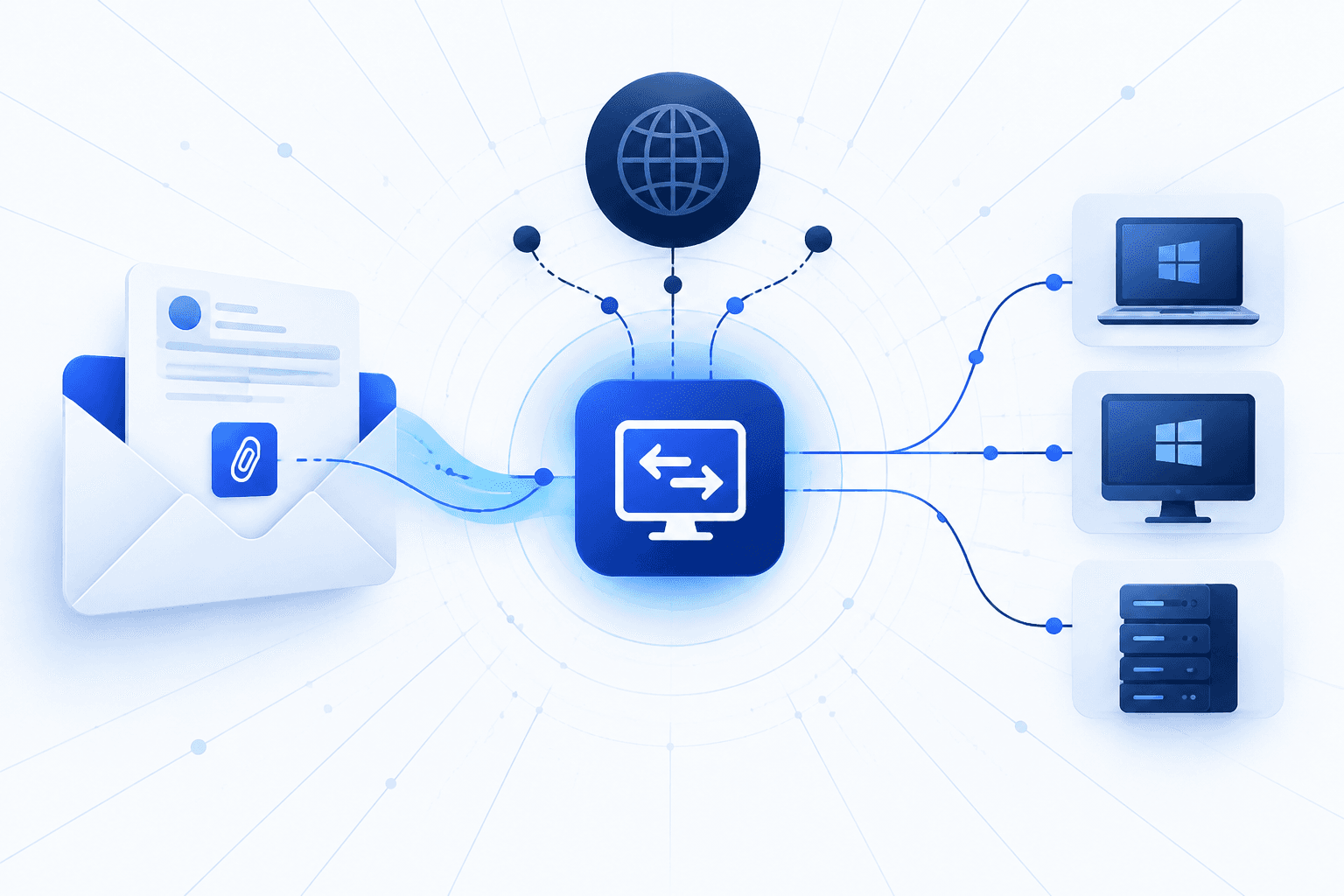
AhnLab’s ASEC reported phishing campaigns distributing legitimate remote monitoring and management (RMM) tools, including ConnectWise ScreenConnect, FleetDeck, Datto RMM, SimpleHelp, JumpCloud, and N-able. Attackers used document-themed attachments, PDF links, phishing pages, and scripts to persuade users to install agents configured for attacker-controlled remote access. The report identifies deployment identifiers, configuration fields, and associated infrastructure that can support detection. Because these tools also serve legitimate administrative purposes, malicious installations can complicate security monitoring and blocking. ASEC did not attribute the newly identified campaigns to a specific threat actor.

Separate government advisories illustrate how remote-access capabilities fit into ransomware intrusions, without establishing a connection to these phishing campaigns. The FBI, CISA, and HHS documented ALPHV/BlackCat affiliates using social engineering, remote-access and tunneling tools, credential theft, and cloud-based data exfiltration; healthcare was the most frequently victimized sector among nearly 70 leaked victims after mid-December 2023. An updated Play ransomware advisory reported approximately 900 allegedly affected entities known to the FBI as of May 2025 and described access through valid accounts and vulnerable public-facing applications, including activity exploiting SimpleHelp vulnerability CVE-2024-57727. Defenders should scrutinize unexpected RMM installations and their deployment configurations, secure remote access with phishing-resistant MFA, rapidly patch exploited vulnerabilities, segment networks, and maintain offline or immutable backups.

Why it matters

ASEC documented phishing campaigns that install legitimate RMM agents configured for attacker-controlled remote access, exposing organizations whose users execute document-themed attachments or installers. Unauthorized agents enable endpoint control and script execution, creating opportunities for data theft, lateral movement, and operational disruption; the newly reported campaigns are not attributed to a specific actor or linked to confirmed ransomware deployment.

  • ASEC, September 30, 2026: Observed abuse involves ConnectWise ScreenConnect, FleetDeck, Datto RMM, SimpleHelp, JumpCloud, and N-able. Organizations using these products legitimately face additional difficulty distinguishing authorized management from attacker-controlled installations. The supplied report does not quantify victims or identify a targeted industry.
  • Play advisory, updated June 4, 2025: Historical ransomware activity affected businesses and critical infrastructure across North America, South America, and Europe. As of May 2025, the FBI knew of approximately 900 allegedly affected entities. Double extortion and an ESXi-targeting variant demonstrate potential exposure of both business data and virtualized operations.
  • ALPHV/BlackCat advisory, updated February 27, 2024: Healthcare was the most frequently victimized sector among nearly 70 leaked victims since mid-December 2023. Documented impacts include data extortion and encryption of Windows, Linux, and VMware systems.
  • Attribution boundary: The government advisories provide historical context, not evidence that Play, ALPHV/BlackCat, or Scattered Spider conducted the newly reported phishing campaigns.

Is your org in this campaign?Get the infrastructure and lures behind it.
Hunt this campaign
Event timeline

How this story unfolded

Events from the most recent confirmed update back to the earliest known activity.

17 events · Apr 19, 2022 – 2026
  1. Reported Sep 30, 20262mo ago

    ASEC reveals additional phishing campaigns installing legitimate RMM agents

    ASEC documented phishing cases installing FleetDeck, Datto RMM, SimpleHelp, JumpCloud, and N-able through PDF links, Adobe-themed pages, HTML scripts, and a DocuSign-themed lure. The report disclosed deployment identifiers, agent configuration details, and infrastructure indicators without attributing the newly identified cases to a specific threat actor.

    RMM tools currently being distributed through phishing attacks (ScreenConnect, FleetDeck, Datto, SimpleHelp, JumpCloud, N-able) - ASEC
  2. 2026

    ScreenConnect is distributed through document- and software-themed scripts

    In the second half of 2026, ScreenConnect was distributed through LNK, BAT, and VBS files with filenames suggesting phishing email attachments. Examples impersonated a Dropbox shared PDF, a Zoom installer, and a wire receipt.

    RMM tools currently being distributed through phishing attacks (ScreenConnect, FleetDeck, Datto, SimpleHelp, JumpCloud, N-able) - ASEC
  3. Jan 2026

    ASEC reports RMM distribution through video files and phishing attachments

    ASEC reported attackers distributing Syncro, ConnectWise ScreenConnect, NinjaOne, and SuperOps through video files and phishing email attachments.

    RMM tools currently being distributed through phishing attacks (ScreenConnect, FleetDeck, Datto, SimpleHelp, JumpCloud, N-able) - ASEC
  4. Reported Jun 4, 20251y ago

    Play-linked access brokers exploit the disclosed SimpleHelp vulnerability

    After disclosure of CVE-2024-57727, multiple ransomware groups, including initial access brokers with ties to Play operators, exploited the vulnerability to achieve remote code execution using PowerShell.

    #StopRansomware: Play Ransomware | CISA
  5. Jun 4, 20251y ago

    Joint Play advisory adds new tactics and refreshed indicators

    The FBI, CISA, and ACSC updated the Play ransomware advisory with newly observed tactics and refreshed indicators, removing outdated indicators and adding current ones. The update incorporated FBI investigative findings through January 2025.

    #StopRansomware: Play Ransomware | CISA
  6. May 2025

    FBI identifies approximately 900 entities affected by Play

    By May 2025, the FBI was aware of approximately 900 affected entities allegedly exploited by Play ransomware actors.

    #StopRansomware: Play Ransomware | CISA
  7. Jan 16, 20252y ago

    SimpleHelp vulnerability CVE-2024-57727 is disclosed

    CVE-2024-57727 in SimpleHelp remote monitoring and management software was disclosed. The Play advisory subsequently linked post-disclosure exploitation to multiple ransomware groups and initial access brokers with ties to Play operators.

    #StopRansomware: Play Ransomware | CISA
  8. Reported Feb 27, 20243y ago

    ALPHV administrator urges affiliates to target hospitals

    Following the operational action against ALPHV, an administrator posted encouragement for affiliates to target hospitals. The subsequent federal advisory assessed that this likely influenced increased healthcare targeting.

    #StopRansomware: ALPHV Blackcat | CISA
  9. Feb 27, 20243y ago

    Federal agencies update ALPHV advisory with healthcare targeting findings

    The FBI, CISA, and HHS updated the ALPHV/BlackCat advisory with investigative findings observed through February 2024, including victim-specific notification emails and updated indicators. The update reported that healthcare had been the most commonly victimized sector among nearly 70 leaked victims since mid-December 2023.

    #StopRansomware: ALPHV Blackcat | CISA
  10. Dec 19, 20233y ago

    Initial joint ALPHV/BlackCat advisory is published

    The initial version of the joint #StopRansomware cybersecurity advisory on ALPHV/BlackCat was published, expanding on the FBI's earlier FLASH report.

    #StopRansomware: ALPHV Blackcat | CISA
  11. Dec 18, 20233y ago

    FBI, CISA, and ACSC publish the initial Play ransomware advisory

    The FBI, CISA, and Australia's ACSC published a joint #StopRansomware advisory covering Play ransomware and its associated indicators and tactics.

    #StopRansomware: Play Ransomware | CISA
  12. Dec 2023

    Operational action targets ALPHV and its infrastructure

    Operational action was taken against the ALPHV/BlackCat group and its infrastructure in early December 2023.

    #StopRansomware: ALPHV Blackcat | CISA
  13. Nov 2023

    Another Play ransomware incident is observed in Australia

    A further Play ransomware incident was observed in Australia in November 2023.

    #StopRansomware: Play Ransomware | CISA
  14. Apr 2023

    First Australian Play ransomware incident is observed

    The first observed Play ransomware incident in Australia occurred in April 2023.

    #StopRansomware: Play Ransomware | CISA
  15. Feb 2023

    ALPHV administrators announce the Sphynx ransomware update

    ALPHV/BlackCat administrators announced “ALPHV Blackcat Ransomware 2.0 Sphynx,” a rewritten version with improved defense evasion and additional tooling. The update supports encryption of Windows and Linux devices and VMware instances.

    #StopRansomware: ALPHV Blackcat | CISA
  16. Jun 2022

    Play ransomware begins affecting businesses and critical infrastructure

    Play ransomware activity began affecting businesses and critical infrastructure across North America, South America, and Europe.

    #StopRansomware: Play Ransomware | CISA
  17. Apr 19, 20225y ago

    FBI releases ALPHV/BlackCat indicators of compromise

    The FBI released its FLASH report, “BlackCat/ALPHV Ransomware Indicators of Compromise,” documenting indicators associated with the ransomware operation.

    #StopRansomware: ALPHV Blackcat | CISA
Linked entities

Related entities

Vulnerabilities, threat actors, malware, products, organizations, breaches, and observables Mallory has linked to this story. Indicator values are masked here and available in full in the app.

Open in app →

Affected products

3 linked
SimplehelpScreenconnectJumpcloud

Observables

76 linked

Indicator values are masked on this page. View all 76 in Mallory Domains, IPs, hashes, and URLs are exportable to your SIEM.

Do you run this?Get the infrastructure, lures, and IOCs behind this campaign, ready to push into your email and identity stack.
Hunt This Campaign
Mallory platform

See the full picture, correlated to your attack surface.

This page covers what’s public. Mallory adds the parts that aren’t: which of your assets are affected, which threat actors are using it right now, and what to deploy next.

Exposure mappingMap indicators from this story to your assets and identify affected systems in minutes.
Threat actor evidenceEvery observed campaign, victim, and pivot linked to actors named in this story.
Associated malwareMalware, exploits, and IOCs connected to the activity described here.
Detection signaturesYARA, Sigma, and Snort rules deployed to your SIEM as soon as they’re published.
Scheduled alertsGet matching new stories delivered to your team as they break, not the next morning.
AI threadsAsk questions about this story and take action on the answers.