Mallory
← Back to News
phishing-campaign-intelligenceremote-access-implantcybercrime-service-ecosystemdefense-evasion-method

Phishing Campaigns Weaponize Remote Monitoring and Management Tools

Social Engineering & Fraud · 5 sources · Updated 3mo ago · First seen Jun 5, 2026

Phishing Campaigns Weaponize Remote Monitoring and Management Tools

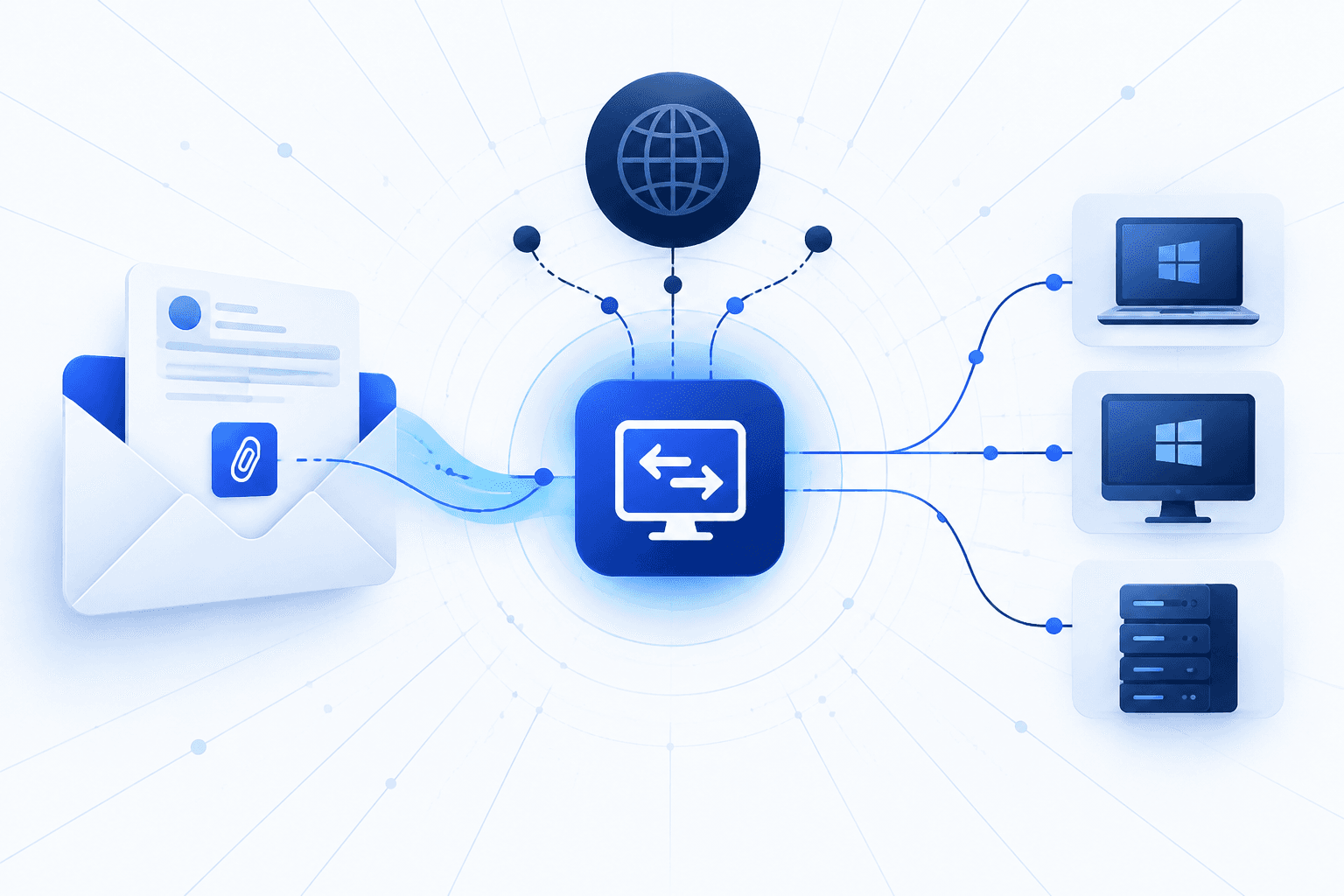
Threat reporting has highlighted phishing-led intrusions in which attackers use legitimate remote monitoring and management (RMM) software to gain and retain access to victim environments. The approach can obscure malicious activity within approved administrative tooling, creating a material visibility gap for security teams and enabling adversaries to operate without deploying obviously malicious remote-access malware.

The activity includes a U.S.-targeted phishing campaign and broader organized-cybercrime tradecraft that pair social engineering with RMM abuse. Organizations should treat unexpected RMM installation, new unattended-access configurations, and remote-control sessions initiated after phishing activity as high-priority signals; enforce application allowlisting and least privilege for RMM tools; and require strong authentication, centralized logging, and alerting for all remote-management access.

Why it matters

Impact assessment

Phishing recipients in U.S.-targeted campaigns are susceptible to persistent endpoint compromise through rogue ScreenConnect installations masquerading as Adobe Reader updates. Impact is high because adversaries gain interactive remote control using legitimate RMM software, which can bypass malware-centric controls and enable follow-on credential theft, data access, lateral movement, and operational disruption.

  • Scope: Huntress documented two August incidents; the reporting also states RMM abuse rose 277% year over year and occurred in nearly one-quarter of Huntress-investigated incidents. This indicates a broad and growing tradecraft pattern rather than an isolated malware family.
  • Affected populations: Any organization whose users receive phishing messages and whose endpoints permit user-driven installation or execution of unauthorized RMM software, especially ScreenConnect.
  • Confirmed in-the-wild activity: Yes. Huntress contained two phishing-led intrusions, including one where a rogue ScreenConnect client completed installation despite partial Microsoft Defender detection.
  • Business risk: Redundant installations of remote-control agents create resilient attacker access, increasing the likelihood of prolonged unauthorized access, sensitive-data exposure, incident-response cost, and reputational damage.

Reference-specific facts

  • Huntress / IT Security Guru: Two active phishing incidents used fake Adobe pages and unauthorized ScreenConnect clients.
  • Netlas, ANY.RUN, and Huntress press-release references: No additional technical facts were supplied in the story content for these references.
Is your org in this campaign?Get the infrastructure and lures behind it.
Hunt this campaign
Event timeline

How this story unfolded

Events from the most recent confirmed update back to the earliest known activity.

2 events
  1. Reported Sep 9, 20263mo ago

    Second Adobe lure installs rogue ScreenConnect via AT&T Office@Hand

    Huntress identified a second August phishing incident delivered through AT&T Office@Hand that used the same fake Adobe Reader update lure. Two unauthorized ScreenConnect instances were installed, and one session ran HideUL.exe; although Microsoft Defender detected some activity, a rogue client installed before Huntress contained the attack.

    Huntress Uncovers Phishing Attacks Using Fake Browser Pages and Rogue RMM Tools - IT Security Guru
  2. Reported Sep 9, 20263mo ago

    Huntress stops Adobe-themed phishing attack deploying rogue ScreenConnect

    Huntress detected a phishing attack in August in which a victim was sent from a fake CAPTCHA page to a browser-in-the-browser Adobe Reader lure. The fake installer deployed two rogue ScreenConnect clients and ran HideCursor.exe before Huntress stopped the attack.

    Huntress Uncovers Phishing Attacks Using Fake Browser Pages and Rogue RMM Tools - IT Security Guru
Linked entities

Related entities

Vulnerabilities, threat actors, malware, products, organizations, breaches, and observables Mallory has linked to this story. Indicator values are masked here and available in full in the app.

Open in app →

Malware

1 linked

Affected products

1 linked
Screenconnect

Observables

11 linked

Indicator values are masked on this page. View all 11 in Mallory Domains, IPs, hashes, and URLs are exportable to your SIEM.

Do you run this?Get the infrastructure, lures, and IOCs behind this campaign, ready to push into your email and identity stack.
Hunt This Campaign
Mallory platform

See the full picture, correlated to your attack surface.

This page covers what’s public. Mallory adds the parts that aren’t: which of your assets are affected, which threat actors are using it right now, and what to deploy next.

Exposure mappingMap indicators from this story to your assets and identify affected systems in minutes.
Threat actor evidenceEvery observed campaign, victim, and pivot linked to actors named in this story.
Associated malwareMalware, exploits, and IOCs connected to the activity described here.
Detection signaturesYARA, Sigma, and Snort rules deployed to your SIEM as soon as they’re published.
Scheduled alertsGet matching new stories delivered to your team as they break, not the next morning.
AI threadsAsk questions about this story and take action on the answers.