
Loading story…
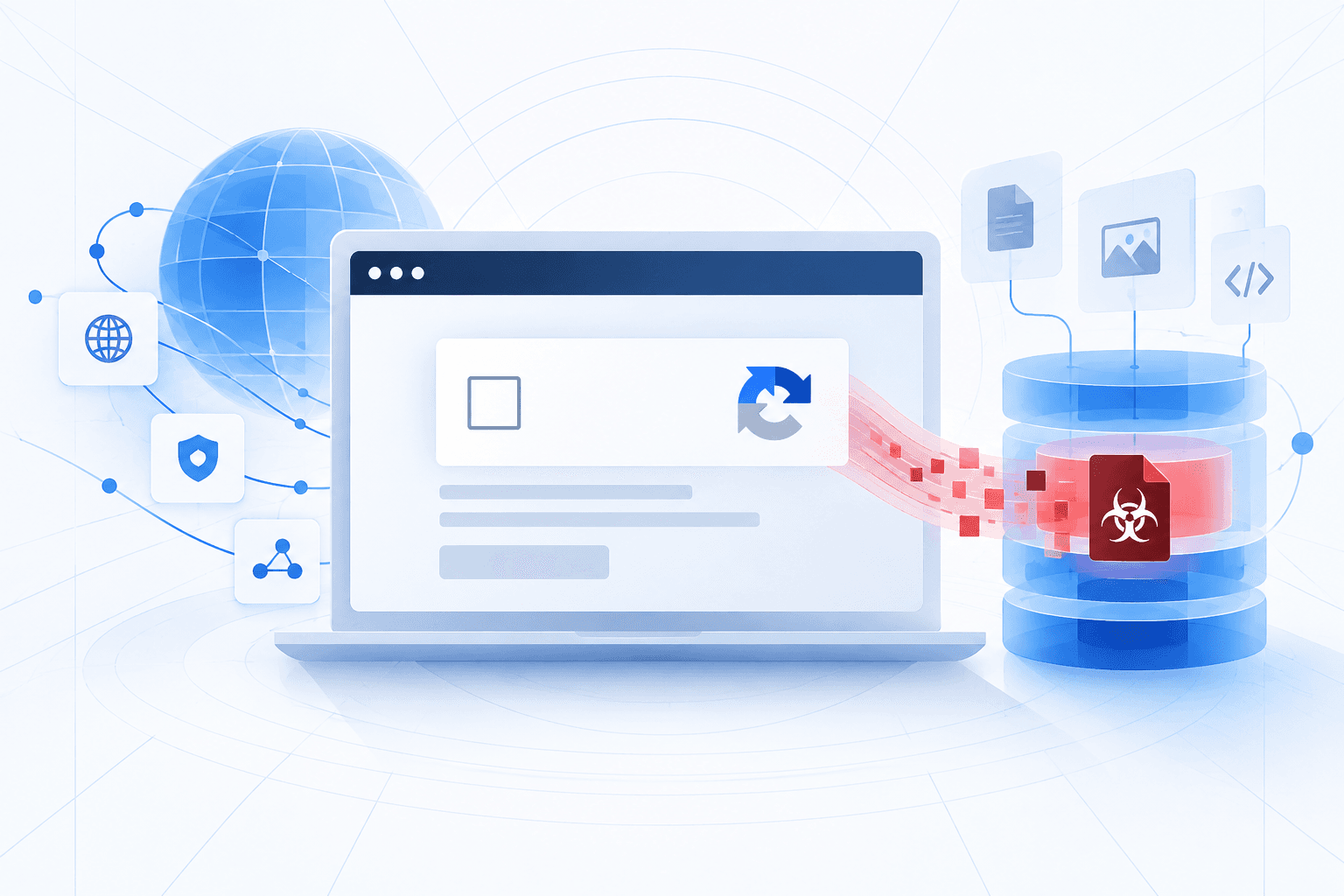
Microsoft Threat Intelligence reported a ClickFix attack that uses compromised websites and fake CAPTCHA or repair prompts to persuade visitors to execute attacker-supplied commands through the Windows Run dialog. The websites first cache a malicious VBScript payload disguised as a PNG, allowing the command to launch a locally staged script rather than visibly download it at execution time. The technique also circumvents the Run dialog’s approximately 260-character input limit. Subsequent stages use PowerShell, .NET compilation and in-memory loading, and code injection into timeout.exe to target browser-stored and device credentials. Persistence relies on unpacked Python components and a scheduled task invoking a windowless Python interpreter. Microsoft did not identify the operators or disclose a victim count.
Separate research illustrates the broader potential of ClickFix delivery. Expel analyzed a cache-smuggling chain, later identified as an Intrinsec red-team engagement, that repurposed a digitally signed Greenshot executable as a fake FortiClient compliance checker. A malicious plugin enabled DLL sideloading, decrypted shellcode from an icon file, established scheduled-task persistence, and used evasive execution techniques and disguised HTTPS command-and-control traffic; no final payload was observed. CloudSEK separately warned that attackers could potentially weaponize AI summarizers with CSS-based ClickFix attacks. These findings do not establish shared attribution with Microsoft’s reported activity. Defenders should prioritize application control, PowerShell logging, and monitoring of unusual browser-to-script execution, process injection, outbound connections, and scheduled tasks. Users should never execute commands supplied by CAPTCHA or verification prompts.
Get the actors, campaigns, and ATT&CK mapping behind it.
10 events from the most recent confirmed update back to the earliest known activity.
Flare researcher Assaf Morag presented findings on a CrocoRat campaign using a fake verification page to trick victims into executing PowerShell. The initial command queried an attacker-controlled DNS server for TXT records containing further instructions, concealing the next-stage download chain from the copied command.
Researchers reported that CrocoRat attacker infrastructure became unusable in late September 2026. A takedown was suggested as a possible cause but was not confirmed.
CrowdStrike observed North Korea-aligned Stardust Chollima likely targeting a financial-services employee through a fake video-conferencing website. A fabricated technical problem prompted execution of a command that initiated a PowerShell and VBScript chain delivering the previously undocumented GeniexLoader and GeniexRAT families.
ReversingLabs reported that ClickFix campaigns exposed fewer conventional malware signals and rapidly rotated infrastructure, weakening detection based on historical indicators.
Expel documented a ClickFix browser-cache-smuggling chain whose second stage used a renamed, digitally signed Greenshot executable and a malicious plugin for DLL sideloading. The loader displayed a fake FortiClient compliance check, established scheduled-task persistence, and executed encrypted shellcode that contacted an HTTPS command-and-control server.
CloudSEK demonstrated how hidden HTML content and prompt injection could manipulate AI summarizers into presenting attacker-controlled ClickFix instructions. The proof of concept showed a potential route to ransomware delivery through manipulated summaries.
Microsoft Threat Intelligence disclosed activity across compromised websites that cached a VBScript payload disguised as a PNG and used fake CAPTCHA or repair prompts to induce its execution. Subsequent stages used PowerShell, in-memory .NET loading, injection into timeout.exe, and Python scheduled-task persistence to pursue browser and device credentials.
Russian state-sponsored Sandworm used ClickFix against suspected Ukrainian employees at organizations in France, the United States, and Canada. The lures induced PowerShell execution to download VBScript payloads, with delivery through compromised Ukrainian websites suspected.
CTM360 identified more than 3,000 actively compromised websites hosting fake pages in ClickFix attack chains delivering Vidar Stealer. The campaign exploited WordPress plugin vulnerabilities, including CVE-2026-6854, and used EtherHiding to rotate lure infrastructure through a blockchain-based mechanism.
Intrinsec stated that the cache-smuggling activity analyzed by Expel was part of its red team operations, changing the interpretation of the apparent malware campaign.
Vulnerabilities, threat actors, malware, products, organizations, breaches, and observables Mallory has linked to this story. Indicator values are masked here and available in full in the app.
Indicator values are masked on this page. View all 21 in Mallory Domains, IPs, hashes, and URLs are exportable to your SIEM.
Get the adversaries, campaigns, and ATT&CK mapping behind this technique, with detections ready to deploy.
7 references tracked. Mallory keeps watching after this page renders.
darkreading.com
Open sourceinfosecurity-magazine.com
Open sourceflare.io
Open sourcethehackernews.com
Open sourcecybersecuritynews.com
Open sourceexpel.com
Open sourcecloudsek.com
Open sourceMap indicators from this story to your assets and identify affected systems in minutes.
Every observed campaign, victim, and pivot linked to actors named in this story.
Malware, exploits, and IOCs connected to the activity described here.
YARA, Sigma, and Snort rules deployed to your SIEM as soon as they’re published.
Get matching new stories delivered to your team as they break — not the next morning.
Ask questions about this story and take action on the answers.
Other stories Mallory is tracking that overlap on entities, sources, or topic labels.
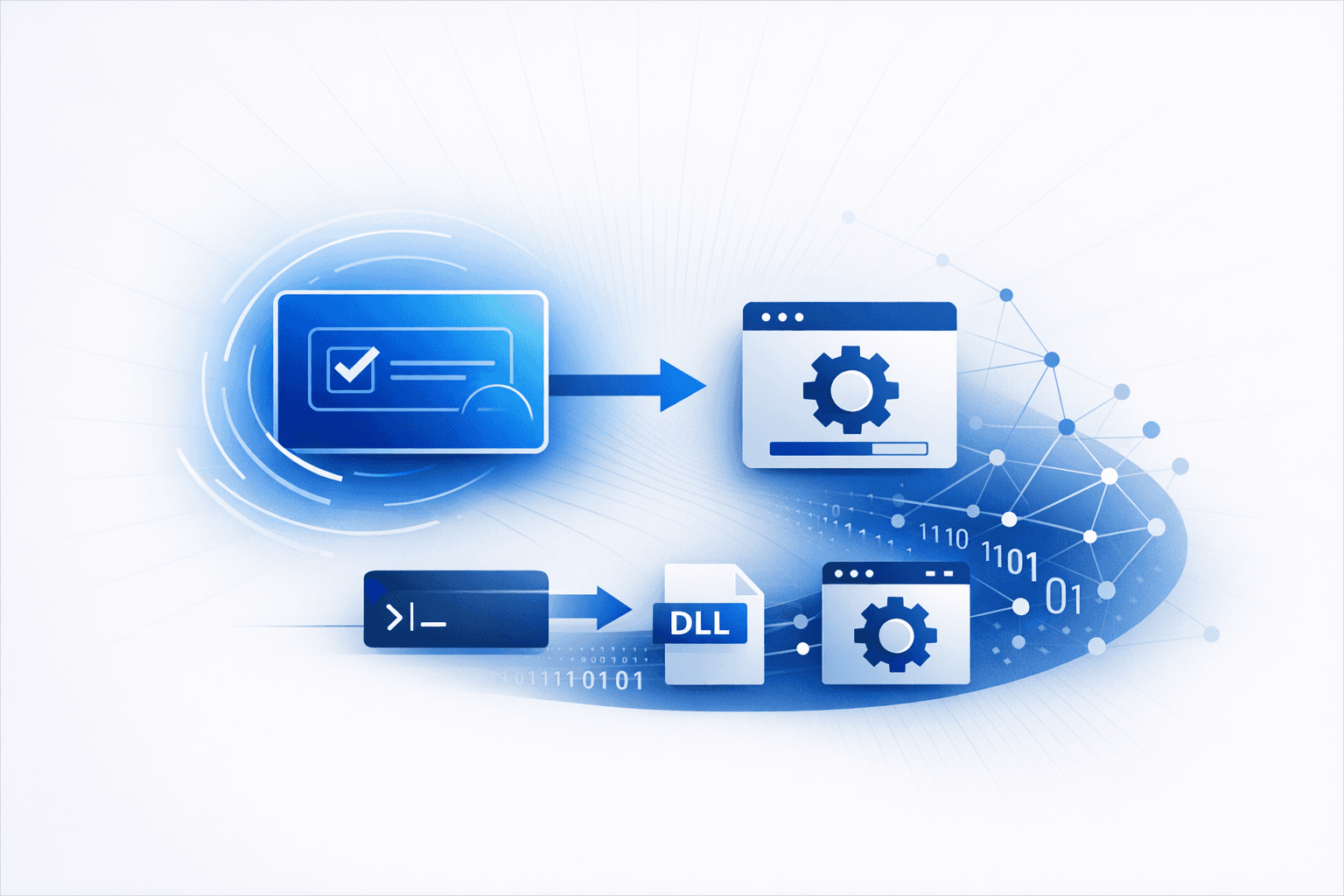
Security researchers reported multiple **ClickFix** campaigns that compromise endpoints by tricking users into manually executing attacker-provided commands rather than exploiting a software vulnerability. CERT Polska documented an incident response at a large Polish organization where a **fake CAPTCHA** prompt led a user to run a malicious snippet via *Win+R*, resulting in malware execution and suspected **DLL side-loading** from `%APPDATA%\Intel` (legitimate `igfxSDK.exe`/`version.dll` alongside a suspicious `wtsapi32.dll`). Investigators also identified additional suspicious DLLs in the user’s local AppData and recovered an execution trail consistent with a one-liner that fetched remote content and piped it into PowerShell (e.g., `cmd /c curl ... | powershell`). Separately, threat hunting research described a macOS-focused ClickFix operation using **typosquatted Homebrew** lookalike sites to present a “copy/paste” install command that runs in Terminal. The first-stage script repeatedly prompted for a password and validated it using `dscl authonly` to harvest working credentials before deploying a second-stage infostealer dubbed **Cuckoo Stealer**, which was reported to establish **LaunchAgent** persistence, remove quarantine attributes, and communicate over encrypted HTTPS C2 while targeting browser credentials/session tokens, Keychain data, notes/messaging artifacts, VPN/FTP configs, and cryptocurrency wallets. Both reports highlight ClickFix as an increasingly common, opportunistic initial access technique that scales by abusing trusted user workflows on Windows and macOS.
Jun 29, 2026
Attackers are leveraging ClickFix-style phishing pages to deliver malware by exploiting browser cache mechanisms and social engineering tactics. In these campaigns, malicious websites masquerade as Captcha tests and prompt users to execute clipboard-injected commands via the Windows Run dialog, enabling the execution of arbitrary code. A notable evolution of this technique involves using cache smuggling, where the initial loader extracts the second-stage payload directly from the browser's cache, bypassing the need for direct web requests and evading some detection mechanisms. Recent campaigns have combined these methods with the deployment of remote access tools such as NetSupport RAT, using ClickFix lures to infect hosts and establish covert access. Multiple threat clusters have been observed utilizing remote monitoring and management (RMM) software for persistent, stealthy access to compromised systems. These developments highlight the increasing sophistication of social engineering and technical delivery mechanisms in modern malware campaigns, emphasizing the need for heightened user awareness and advanced detection strategies.
Jun 29, 2026
Security researchers reported multiple active campaigns using **ClickFix** social engineering—fake error dialogs or verification prompts that trick users into manually running attacker-supplied commands—to bypass browser and download protections and establish an initial foothold. In one enterprise case investigated by **CERT Polska (cert.pl)**, victims were lured via compromised websites showing a fake CAPTCHA/“fix” prompt that instructed them to paste and run a **PowerShell** command via `Win+R`; the script then downloaded a dropper and enabled rapid follow-on activity that can scale to **enterprise-wide compromise**, including deployment of secondary malware such as **Latrodectus** and **Supper** for data theft, lateral movement, and potential ransomware staging. A separate ClickFix operation targeted **macOS developers** by cloning the *Homebrew* site on typosquatted infrastructure; the “install” command was subtly altered to fetch content from `raw.homabrews.org` instead of `raw.githubusercontent.com`, leading to **Cuckoo Stealer** deployment and credential harvesting via repeated password prompts using macOS Directory Services, with related domains tied to shared hosting at **`5.255.123.244`**. ClickFix was also observed as the initial execution mechanism for the resurfaced **Matanbuchus 3.0** MaaS loader, which uses deceptive copy/paste prompts and **silent MSI** execution (via `msiexec`) to deliver a new payload, **AstarionRAT**, enabling capabilities including credential theft and **SOCKS5** proxying; operators were reported to move laterally quickly (including toward domain controllers), consistent with ransomware or data-exfiltration objectives.
Jul 2, 2026