Phishing Campaigns Abuse ITarian and ScreenConnect for Persistent Remote Access
Social Engineering & Fraud · 1 source · Updated 2mo ago · First seen Sep 23, 2026

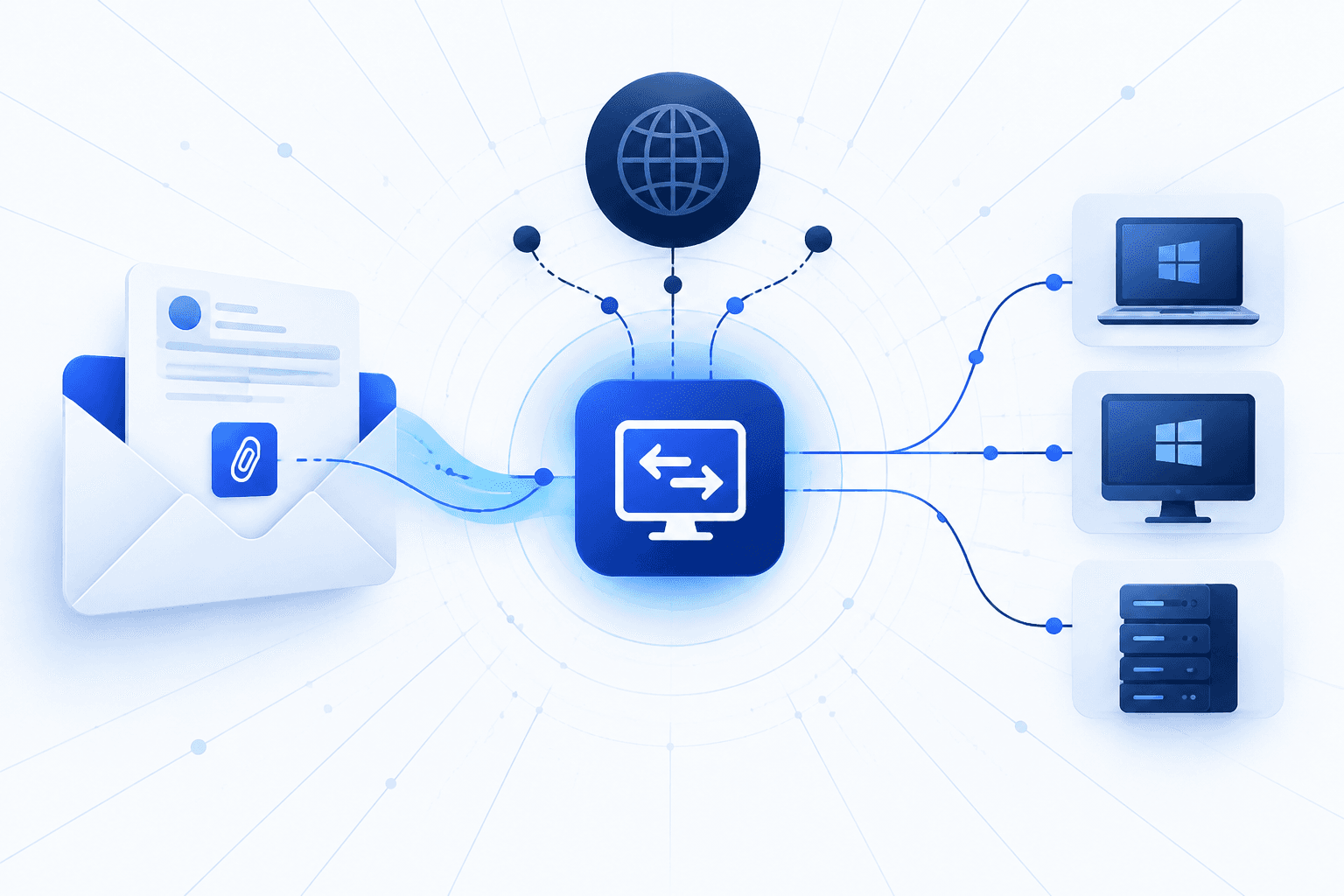
Huntress investigated three phishing-led intrusions in which attackers abused legitimate remote monitoring and management (RMM) tools to gain persistent access. One campaign used a TransferXL-hosted ZIP archive and malicious PDF lure to prompt installation of ITarian, then deployed ScreenConnect; two others used fraudulent document-sharing emails branded as ScreenConnect to install multiple ScreenConnect clients.
The attackers configured rogue RMM agents for SYSTEM-level persistence, created redundant remote-access channels, and used defense-evasion tooling including HideUL_x64.exe. Huntress reported RMM abuse rose 277% during 2025 and appeared in nearly 40% of incidents investigated by its Tactical Response team, underscoring the need to restrict, inventory, and monitor authorized remote-management software.
Why it matters
Impact assessment
Attackers are targeting organizations whose users can be persuaded to install remote-management software through document-sharing phishing lures. Any enterprise permitting or using ITarian, ScreenConnect, TransferXL, or similar remote monitoring and management (RMM) tools faces elevated risk because legitimate signed tooling can provide durable, high-privilege interactive access while blending into normal administration.
The impact is severe: the reported intrusions established SYSTEM-level persistence and redundant remote-access channels, enabling long-term unauthorized control, follow-on payload deployment, credential and data theft, mailbox compromise, and potential ransomware staging. Huntress observed a 277% rise in RMM abuse during 2025 and reported RMM abuse in nearly 40% of Tactical Response investigations, indicating a widespread and growing technique rather than a narrowly targeted campaign.
Supporting facts
- Three phishing-led intrusions resulted in attacker-controlled RMM deployment.
- Rogue ITarian and ScreenConnect clients were configured to persist with SYSTEM privileges.
- Two ScreenConnect-themed cases each resulted in two rogue ScreenConnect installations, creating redundant access paths.
- A separate cited case involved an undetected ScreenConnect client used for five months before the attacker accessed a browser and created malicious mailbox rules.
- No confirmed ransomware, data exfiltration, or exploitation of a software vulnerability was reported in these three incidents.