North Korean Fake Job Campaign Compromises 30,000 Devices and DevOps Access
Threat Actor Intelligence · 25 sources · Updated 2mo ago · First seen Jun 1, 2026
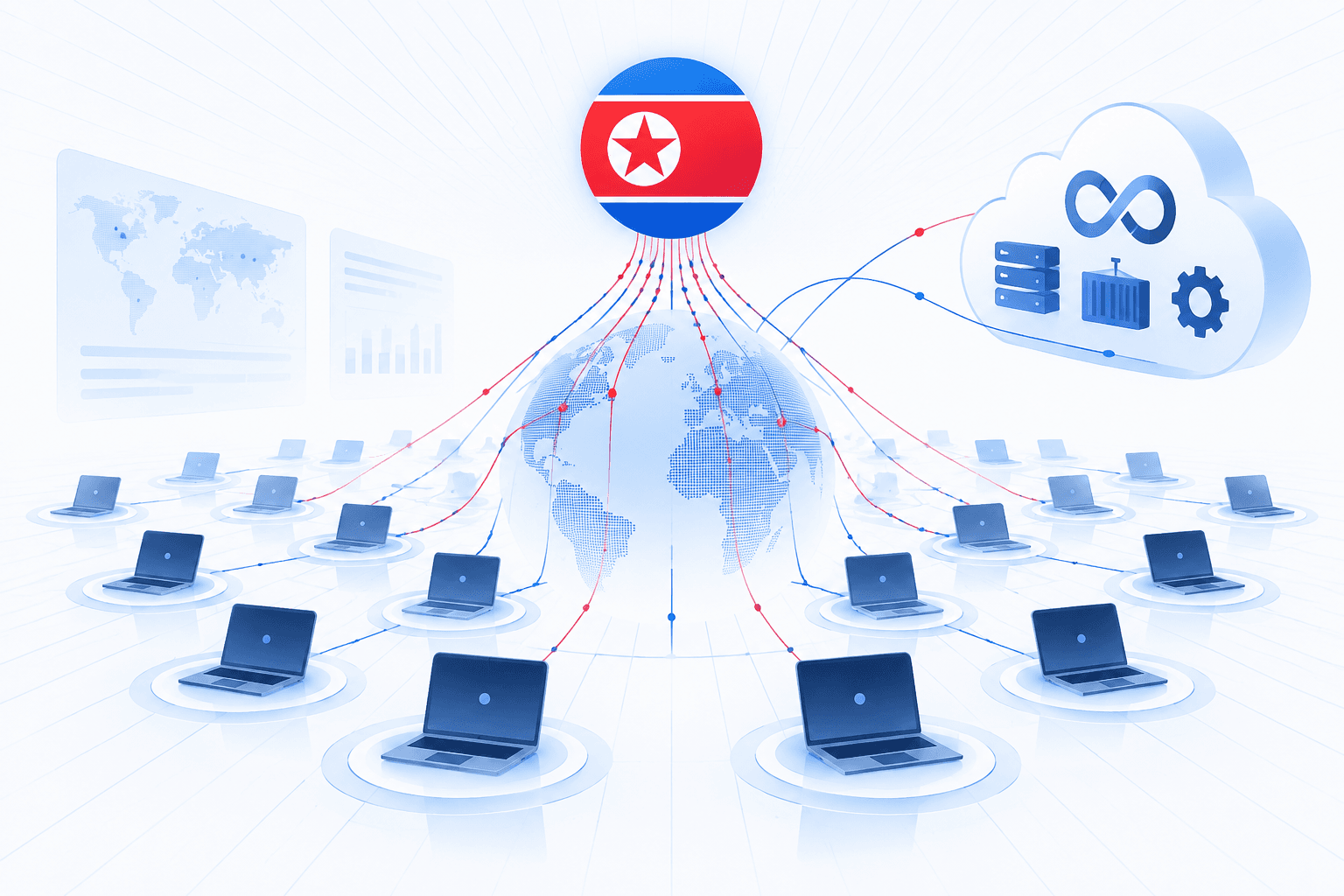
An international advisory from Australian, German, Japanese, and US agencies says the North Korea-linked WaterPlum campaign has infected more than 30,000 devices, compromised over 7,000 cryptocurrency wallets, and stolen at least $10.71 million. Operators posing as recruiters target engineers, web designers, and cryptocurrency/Web3 professionals with fraudulent interviews and coding assignments that deploy backdoors, remote-access trojans, and information stealers. Stolen credentials and identity data can support cryptocurrency theft, espionage, extortion, corporate intrusion, and fraudulent North Korean IT-worker activity.
SentinelOne separately found DPRK-aligned TraderTraitor expanding the same job-lure tradecraft beyond cryptocurrency targets, compromising an Indian IT services provider through a weaponized Terraform repository. A typosquatted provider registry referenced in .terraform.lock.hcl enabled malicious modules to execute when a DevOps engineer ran Terraform; the engineer's Apple Silicon MacBook was subsequently infected with the FLATROOF and ROOFDECK macOS backdoors. The implants enabled credential theft, persistent remote command execution, reconnaissance, file transfer, and lateral movement, underscoring that developer endpoints with cloud, source-control, and CI/CD access are high-value targets regardless of their employer's industry.
Why it matters
Impact assessment
WaterPlum/Contagious Interview is a global DPRK campaign targeting developers, DevOps personnel, Web3 practitioners, and freelance IT workers. The campaign creates direct cryptocurrency-loss risk and a material enterprise intrusion risk because compromised developer endpoints commonly hold cloud, source-control, CI/CD, VPN, browser, and API credentials.
- Scope: Government reporting assesses at least 30,000 compromised devices across more than 100 countries from December 2025 through July 2026.
- Confirmed financial impact: More than 7,000 cryptocurrency wallets had funds or access credentials stolen; at least JPY 1.7 billion (USD 10.71 million) was transferred for the DPRK.
- Enterprise impact: Theft of credentials, source code, identity documents, API tokens, wallet keys, and cloud access can enable espionage, intellectual-property theft, fraud, extortion, lateral movement, and destructive actions.
- Affected populations: Software engineers, web designers, DevOps engineers, blockchain/Web3 and cryptocurrency personnel, contractors, and organizations that hire remote technical staff.
- Known exploitation: WaterPlum activity is confirmed in the wild. Separately, DPRK-aligned TraderTraitor compromised an Indian IT-services provider through a malicious Terraform repository, demonstrating that non-cryptocurrency organizations with high-value engineering access are targets.
- Insider/access risk: DPRK IT-worker operations use stolen identities, AI-assisted interview deception, facilitators, and laptop farms to obtain legitimate employment. Reported outcomes include source-code publication for extortion and website defacement after hiring disputes.
Key entities
- WaterPlum / Contagious Interview: Also tracked as CL-STA-0240, DeceptiveDevelopment, DEV#POPPER, Famous Chollima, Gwisin Gang, PurpleBravo, Tenacious Pungsan, UNC5342, and Void Dokkaebi.
- TraderTraitor: Also tracked as UNC4899, PUKCHONG, and Jade Sleet; a DPRK-aligned Lazarus subgroup.
- Assessed DPRK organizational link: 313 General Bureau of the Munitions Industry Department.