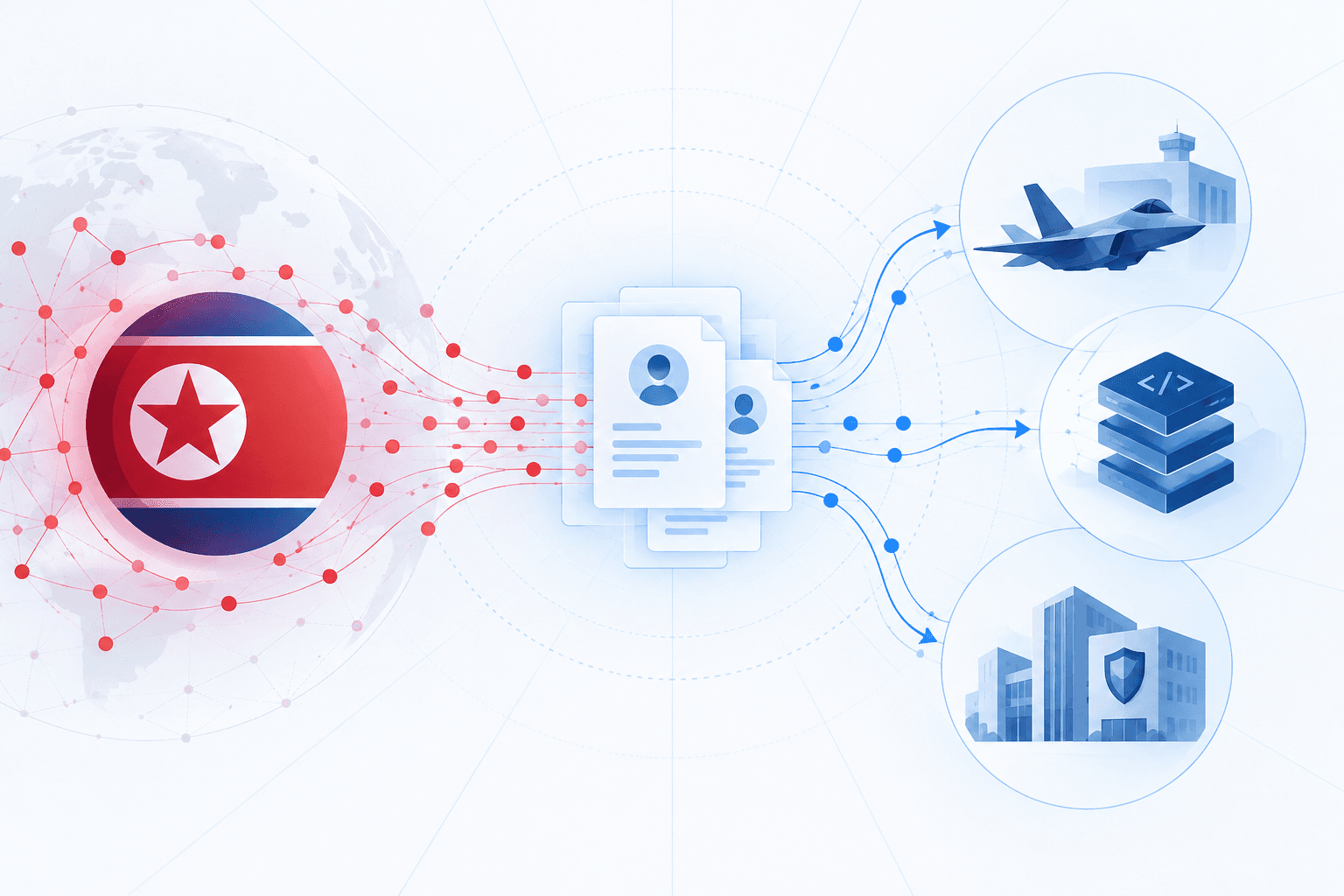
North Korea-linked Social Engineering Campaigns Targeting Developers and Defense Supply Chains
Threat Actor Intelligence · 4 sources · Updated 5mo ago · First seen Jan 26, 2026

North Korea–aligned operators, including Lazarus (aka HIDDEN COBRA), are running multiple social-engineering-led intrusion campaigns aimed at stealing sensitive technology and establishing durable access. Reporting on Operation DreamJob describes fake job-offer lures used to compromise European drone manufacturers and defense contractors, with tooling and infrastructure designed to evade traditional defenses and support cyber-espionage against UAV-related intellectual property. Separately, a developer-focused operation dubbed “Fake Font” uses fake recruiter outreach and malicious GitHub repositories to trick engineers into opening projects that abuse Visual Studio Code automation (via .vscode/tasks.json) and disguised payloads (e.g., .woff2 “font” files) to execute multi-stage malware that ultimately deploys the InvisibleFerret Python backdoor for credential and crypto-wallet theft and long-term access.
A distinct DPRK-linked campaign reported by Darktrace targets South Korean users with spear-phishing that delivers a JSE script masquerading as an HWPX document and then abuses VS Code tunnels as a covert C2 channel over trusted Microsoft infrastructure, complicating detection in developer-heavy environments. Other items in the set describe unrelated activity: phishing abuse of Vercel to deliver remote-access tooling, exploitation of CVE-2025-51683 (blind SQLi) in the Mjobtime time-tracking app to reach MSSQL xp_cmdshell, a hospitality-focused DCRat campaign using ClickFix and MSBuild.exe, a generic CSS exfiltration technique write-up, and Trend Micro research on the PeckBirdy LOLBins framework used by China-aligned intrusion sets—none of which are part of the DPRK developer/defense recruitment-themed operations above.
Why it matters
Impact assessment
North Korea-linked campaigns are actively targeting two high-value populations: software developers and European defense/UAV organizations. The impact is severe because the operations support both credential and cryptocurrency theft at the individual level and long-term espionage and intellectual property theft at the enterprise level, with confirmed targeting of at least three European drone and defense-related firms.
Summary
These campaigns are targeted rather than indiscriminate, but they affect widely used workflows and trusted platforms including LinkedIn, GitHub, Visual Studio Code, and Microsoft infrastructure. There are reported incidents in the wild, including active Lazarus operations tracked as Fake Font and Operation DreamJob, plus a DPRK-linked South Korea-focused phishing campaign abusing VS Code tunnels.
Affected entities
- Software engineers and developers, especially those using GitHub, Node.js, and Visual Studio Code
- Cryptocurrency and fintech job seekers targeted through fake recruiter outreach
- European drone manufacturers and defense contractors
- Organizations developing UAV technology in Central and Southeastern Europe
- South Korean users targeted with government-themed spear phishing
- Developer-heavy environments where VS Code usage is common
Severity and business risk
- Credential theft from browsers and more than a dozen cryptocurrency wallet extensions
- Keystroke logging and durable backdoor access via InvisibleFerret
- Theft of proprietary manufacturing information and UAV-related intellectual property
- Persistent remote access through ScoringMathTea RAT and VS Code tunnels
- Increased detection difficulty due to trusted tooling, DLL side-loading, in-memory decryption, and Microsoft-hosted tunnel traffic
- Potential financial loss, espionage exposure, operational disruption, and reputational damage
Scope and observed activity
- Fake Font is an active Lazarus campaign with 19 malicious GitHub repositories identified
- Operation DreamJob has targeted at least three European companies
- DreamJob activity was first observed in late March 2025 and continued into 2026 reporting
- Fake Font reportedly began more than 100 days before publication and intensified recently
- Darktrace reported active DPRK-linked spear phishing against South Korean users
Key entities
- Lazarus
- HIDDEN COBRA
- InvisibleFerret
- ScoringMathTea
- BinMergeLoader
- Microsoft Visual Studio Code
- GitHub
- TightVNC Viewer
- MuPDF Reader
- WinMerge plugins