North Korean Recruitment Lures Target Defense Firms and Software Supply Chains
Threat Actor Intelligence · 3 sources · Updated 18d ago · First seen Nov 10, 2026
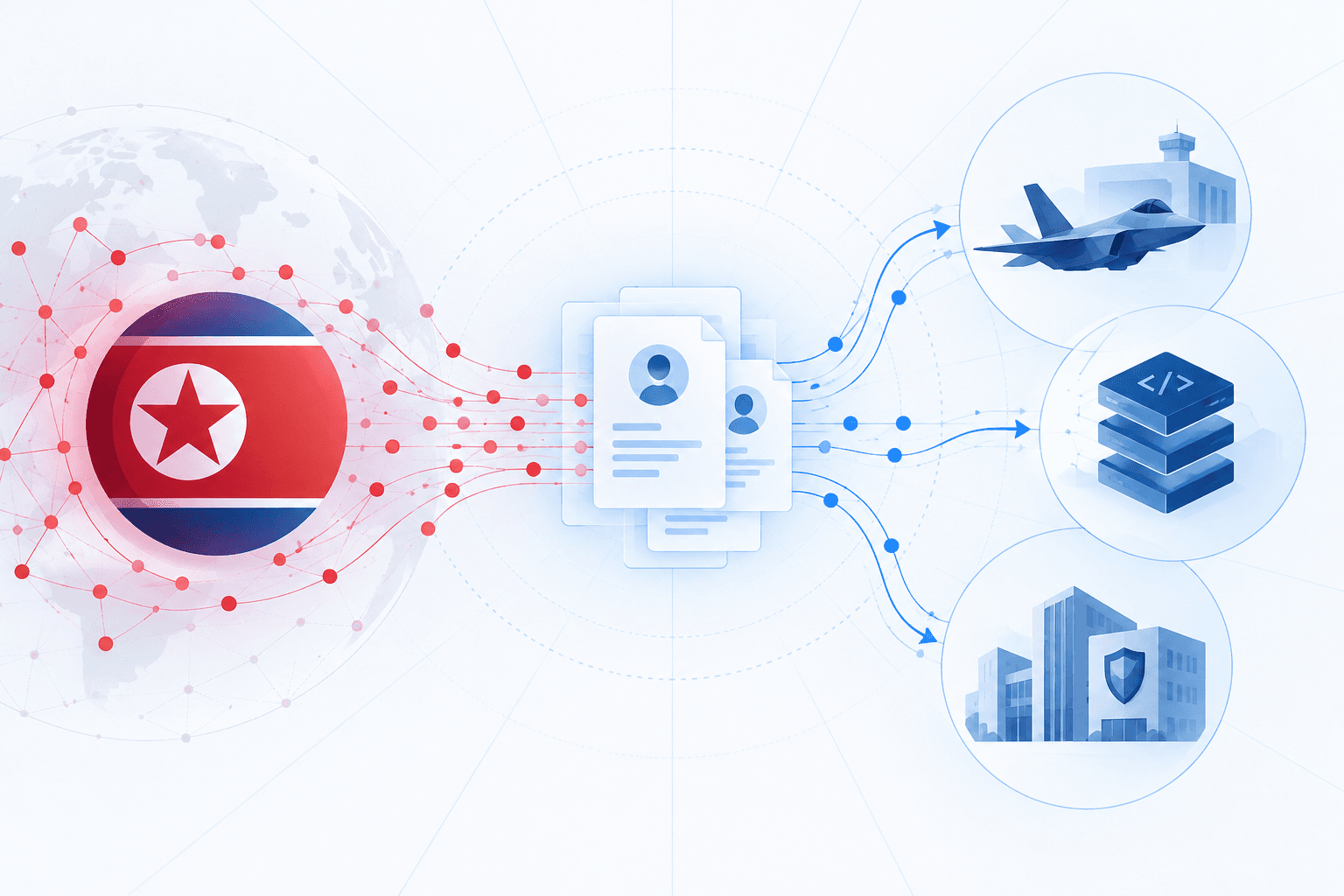
North Korean cyberespionage campaigns targeted European defense and drone companies and compromised software supply chains, according to ESET observations from April through September 2026. Lazarus resumed Operation DreamJob around June, using fraudulent recruitment approaches, trojanized applications, and updated malware to pursue sensitive systems and technical knowledge. DeceptiveDevelopment used malicious recruitment tasks to steal developer credentials, then poisoned repositories and software packages to reach downstream users. Its tooling included Ethereum-based NullReceiver command-server discovery, OmniStealer for stealing secrets, and updated DEV#POPPER remote-access malware. ESET assessed that drone-related espionage could support North Korean capabilities, but the specific information sought and any direct coordination with Russia remain unproven.
Separately, JFrog uncovered AccuraSoftHire, a fabricated recruiting operation delivering malware through poisoned coding assignments, look-alike Tailwind plugins executed during CSS builds, and fake camera-driver installers. Shared email addresses, verified GitHub commits, and synchronized npm publishing connected recruiting personas with malicious repositories and packages. A cross-platform installer retrieved a blockchain-directed JavaScript loader; researchers also found unauthorized repository modifications and a browser-extension delivery mechanism whose final malware execution was not established. JFrog compared the techniques with North Korea-linked interview campaigns but did not establish a connection to a reported Binance theft. Security teams should isolate recruitment exercises from corporate credentials and development environments, and scrutinize interview-related dependencies and installer requests.
Why it matters
Lazarus targeted European defense and drone manufacturers and suppliers, while DeceptiveDevelopment compromised developer credentials, repositories, and packages to expose downstream users beyond the original recruitment targets. Observed activity creates risks of sensitive technical-information theft, credential and wallet theft, and software supply-chain compromise; the supplied reporting does not quantify losses or establish what defense information was stolen. AccuraSoftHire separately delivered malicious interview dependencies and installers, but JFrog did not establish its specific actor attribution.
- Industry-specific impact: Military & Defense is supported by targeting of unmanned-aircraft manufacturers and key suppliers; Information Technology is supported by compromised software projects, developer accounts, and published packages; Government & Public Sector is supported by compromised government-institution Roundcube servers used for command and control. These are observed targeting or compromises, not evidence that impact is exclusive to those sectors. ESET activity reporting
- Geography-specific impact: Europe, including an employee at a Central European defense company, was specifically targeted. Academic and government institutions in South America also had compromised Roundcube servers. No individual affected country is identified, so no country codes are assigned; North Korean attribution and discussion of Russia or Ukraine do not establish affected-country impact. Corroborating ESET coverage
- Scope and uncertainty: Recruitment lures were targeted, but poisoned packages expanded potential exposure to unrelated downstream users. AccuraSoftHire collected applicant identity information and verification videos; JFrog found eighteen public assignment solutions, but that does not establish eighteen infections. Its browser-extension path's final malware execution was unconfirmed, and no link to the reported Binance intrusion was established. JFrog research