SynkLoader Malware Delivered via Microsoft Teams IT Helpdesk Phishing
Social Engineering & Fraud · 10 sources · Updated 3mo ago · First seen Aug 20, 2026

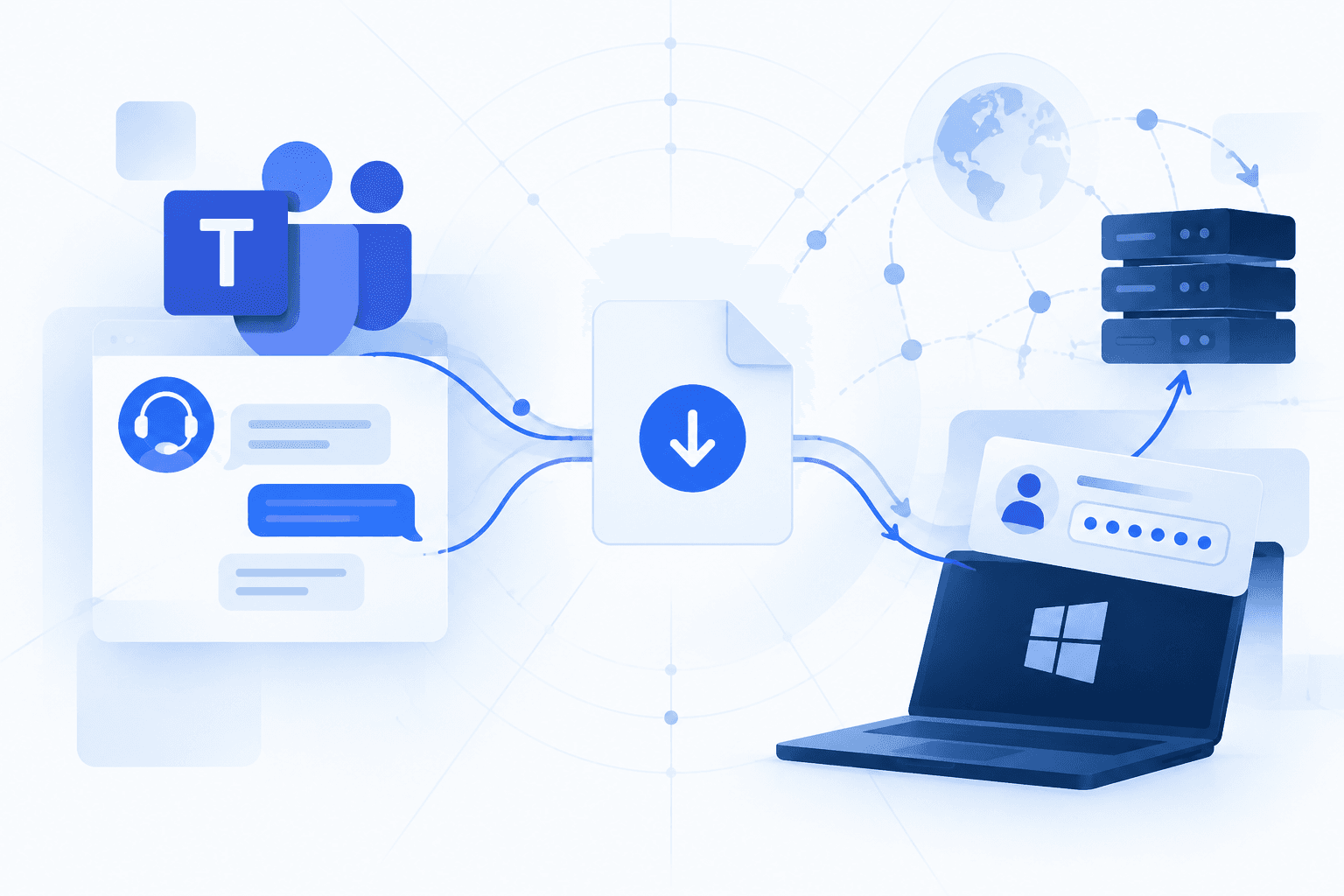
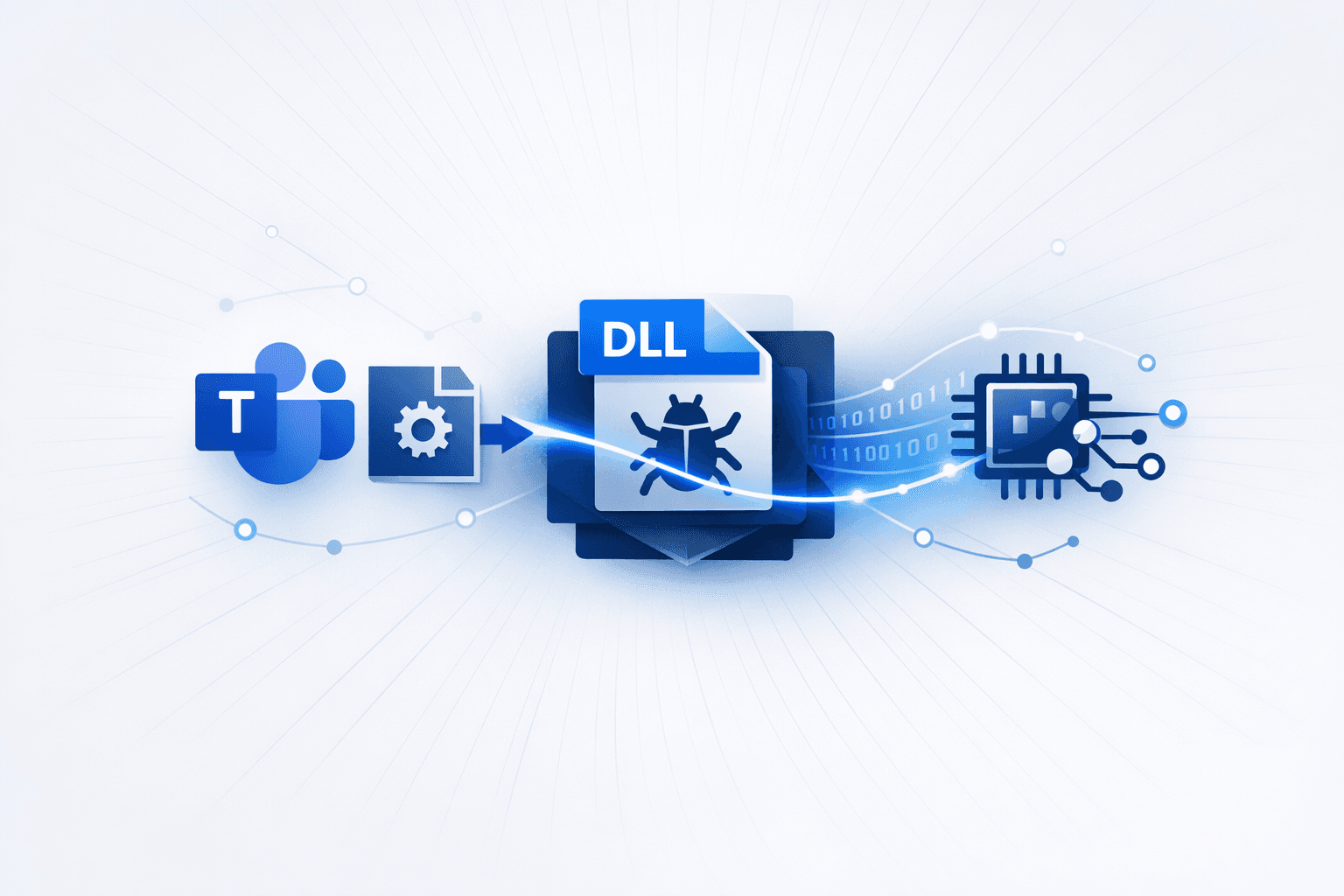
A newly identified modular malware family dubbed SynkLoader is being deployed through Microsoft Teams phishing messages that impersonate corporate IT help desks and direct users to install a fake "PowerShell Cleaner" MSI hosted on Azure Blob Storage. Researchers found the infection chain uses in-memory PowerShell execution and a bundled Python runtime to launch a multi-language framework spanning PowerShell, Python, C#, and native C/C++ DLLs, allowing the malware to remain largely memory-resident while profiling infected systems and establishing persistence through a scheduled task created via COM.
SynkLoader supports credential theft and hands-on-keyboard intrusion through several modules, including a fake Windows lock screen component known as PhishLocker that captures user passwords, traffic tunneling through the victim host, interactive PowerShell access, and VNC-style desktop streaming for remote control. By emulating the malware's command-and-control protocol and supplying decoy enterprise telemetry, researchers observed operators deploy additional tooling and conduct Active Directory-focused reconnaissance, leading to a low-to-medium confidence assessment that the activity is tied to a ransomware group or an initial access broker supporting ransomware operations.
Why it matters
Impact assessment
SynkLoader targets Windows enterprise users through Microsoft Teams helpdesk impersonation and can provide an operator with credentials, persistent remote control, and a network pivot point. The operational impact can escalate from a single user executing a fake MSI to Active Directory reconnaissance, lateral movement, identity compromise, and ransomware-enabling access.
- Affected population: Windows endpoints whose users can receive external Teams messages or vishing calls and are able to install MSI packages from Azure Blob Storage.
- Highest-risk environments: enterprises using SSO, Active Directory, IP allow-listing, and broadly trusted internal helpdesk workflows.
- Credential impact: PhishLocker captures plaintext Windows passwords via a fake lock screen. Combined with TrafficRedirector, operators may use the compromised host and its corporate IP address to access internal or IP-restricted services.
- Operational impact: The malware supports interactive PowerShell, VNC-style mouse/keyboard control, reverse proxying, endpoint profiling, and persistent execution. These capabilities support hands-on-keyboard intrusion and follow-on ransomware activity.
- Scope: Targeted social-engineering activity rather than a software vulnerability. Expel observed SynkLoader during a client incident and observed operator interaction with an emulated environment; broad exploitation volume is not established.
- Attribution: No named actor is confirmed. Researchers assess, at low-to-medium confidence, that the activity is linked to an initial-access broker or ransomware affiliate.
Extracted entities
- Malware family: SynkLoader
- Modules: PhishLocker, TrafficRedirector, StreamMaster, System Profiler, Interactive Shell
- Researcher/organization: Expel; Marcus Hutchins
- Suspected operator type: ransomware affiliate or initial-access broker
- Delivery services: Microsoft Teams, Microsoft 365
onmicrosoft.comtenant domains, Azure Blob Storage