Malspam Campaigns Abuse Excel XLL Add-ins to Deliver Buer Loader and Hancitor
Malware Intelligence · 4 sources · Updated 4mo ago · First seen Jul 8, 2021
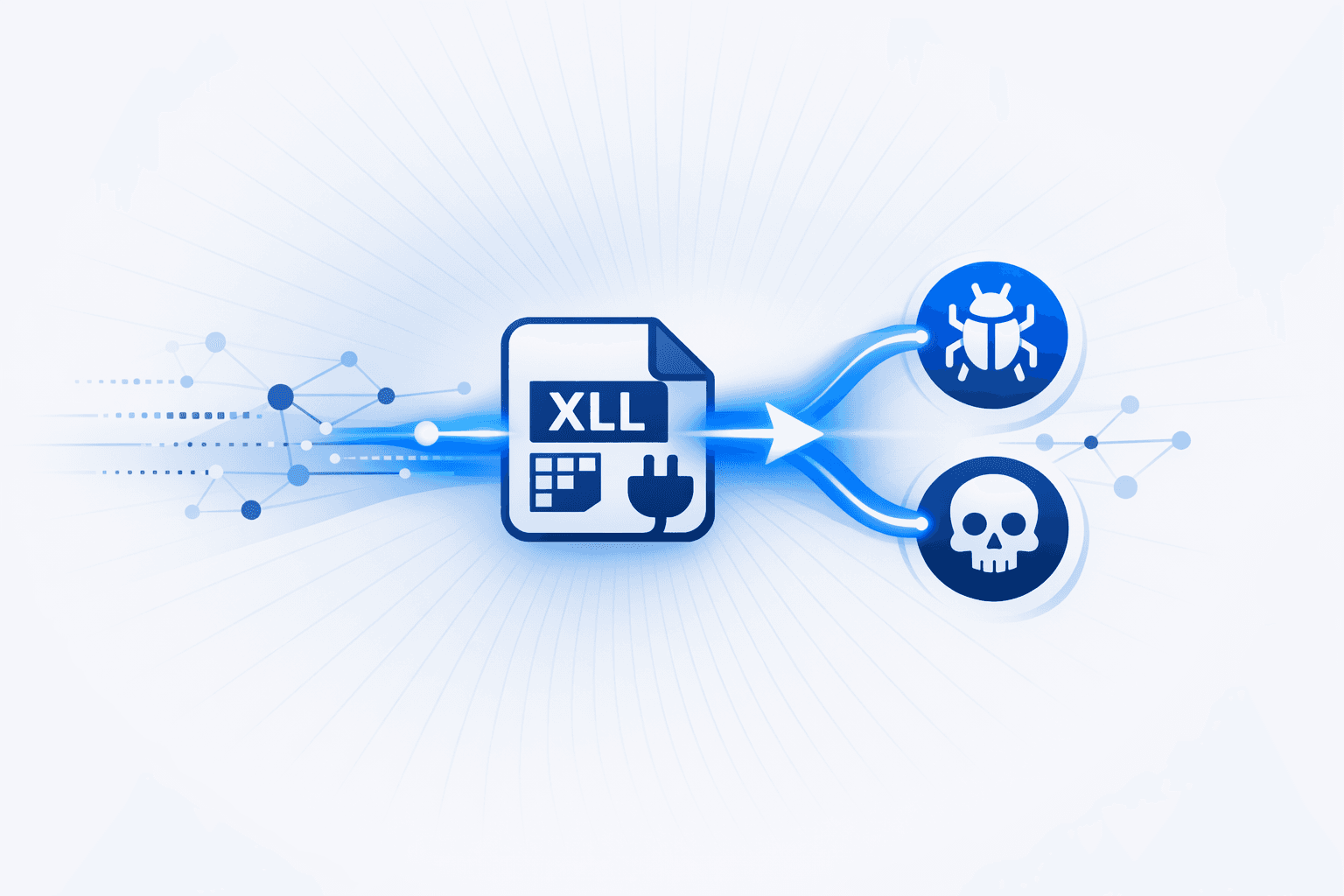
Threat researchers reported that attackers increasingly used malicious Microsoft Excel add-in files with the .xll extension as an initial access vector, exploiting Excel's xlAutoOpen behavior to run code with a single user action. HP Wolf Security said the technique was being used to deliver malware including Dridex, Agent Tesla, Raccoon Stealer, and Formbook, and noted that some samples were built with the legitimate Excel-DNA framework while others were custom downloaders that decrypted embedded configuration data, resolved APIs dynamically, fetched payloads, and executed them. Researchers also observed underground promotion of XLL dropper builders, indicating the method was becoming commoditized.
Fortinet and SANS documented active spam operations using the format in the wild. One campaign used DHL and Amazon-themed lures to distribute a signed malicious XLL that downloaded csrsc.exe from dmequest[.]com, saved it as %PUBLIC%\srtherhaeth[.]eXe, and installed a Rust-based Buer Loader variant that communicated with shipmentofficedepot[.]com; the file was signed with a certificate assigned to HORUM, likely to reduce detection. Separately, SANS observed a Hancitor malspam wave using DocuSign-themed emails and Google feedproxy links that redirected victims through compromised sites to an XLL payload, which then retrieved an HTA file and a Hancitor executable from srand04rf[.]ru, followed by activity linked to Cobalt Strike and Ficker Stealer. Defenders were advised to block inbound XLL attachments, restrict add-ins to trusted signed files, or disable proprietary Excel add-ins where possible.
Why it matters
Impact assessment
Malspam campaigns abusing Excel XLL add-ins create a broad initial-access risk for Windows users and organizations that rely on Microsoft Excel, especially where email-delivered attachments or links can reach end users. The impact is high because a single user action can trigger code execution, leading to credential theft, malware staging, follow-on ransomware risk, and broader endpoint compromise.
The exposure is widespread rather than narrowly targeted. Multiple reports documented active in-the-wild delivery of Buer Loader, Hancitor, Dridex, Agent Tesla, Raccoon Stealer, Formbook, Ficker Stealer, and Cobalt Strike-related activity through XLL files, and underground builder promotion indicates the technique is becoming commoditized.
Supporting details
- Affected population: Windows users opening Microsoft Excel
.xlladd-ins delivered by email attachment or link. - Affected industries: cross-sector; campaigns used opportunistic DHL, Amazon, and DocuSign lures rather than sector-specific targeting.
- Severity drivers:
- Single-click execution via Excel add-in activation lowers user-friction compared with macro-based delivery.
- Payloads include loaders, stealers, banking malware, and post-exploitation tooling.
- Buer Loader has prior association with Ryuk-linked intrusion chains.
- Scope:
- Broad spam distribution documented by Fortinet and SANS.
- Technique also observed across multiple malware families by HP Wolf Security.
- Known exploitation in the wild: yes.
- Fortinet documented a signed XLL campaign delivering Buer Loader.
- SANS documented a Hancitor malspam wave using XLL delivery.
Extracted entities
- Malware families: Buer Loader, Hancitor, Dridex, Agent Tesla, Raccoon Stealer, Formbook, Ficker Stealer, Cobalt Strike
- Social engineering themes: DHL, Amazon, DocuSign
- Organizations referenced: HP Wolf Security, FortiGuard Labs, SANS ISC, Excel-DNA, HORUM