Hermes Agent Used DeepSeek to Automate Attacks on Exposed Servers
Emerging Technology Risk · 10 sources · Updated 4mo ago · First seen Jul 31, 2026

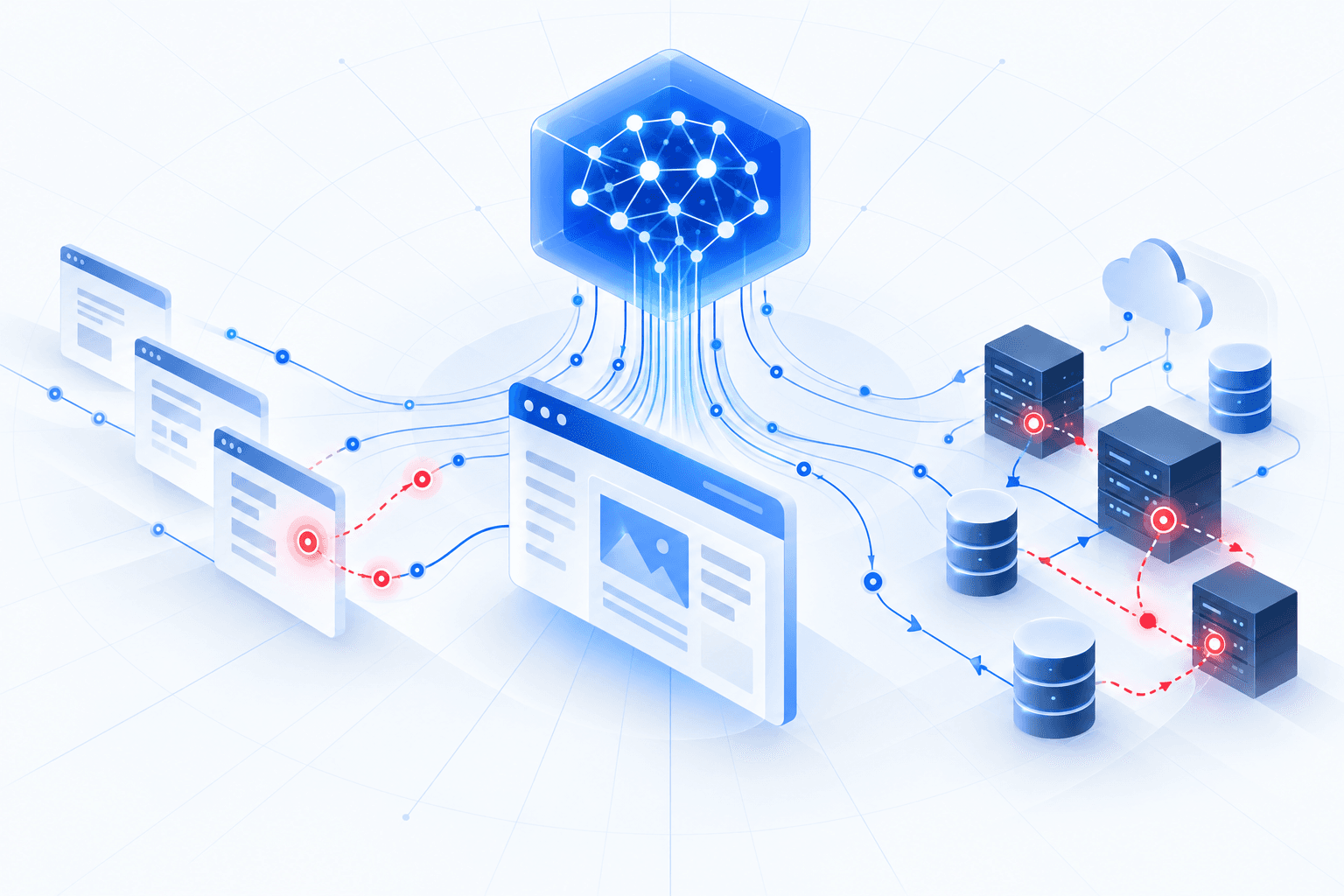
Palo Alto Networks Unit 42 reported that a Chinese-speaking threat actor used an AI-enabled offensive workflow built around Hermes Agent and the DeepSeek model to autonomously scan the internet, identify vulnerable systems, evaluate exploit paths, and launch attacks against exposed services. The activity initially targeted Langflow instances and later shifted to n8n servers after unsuccessful exploitation attempts, showing a repeatable machine-driven cycle of reconnaissance, exploit research, and attack execution with limited human intervention.
Researchers said the campaign did not achieve full compromise through the autonomous workflow alone, but the same actor also conducted manual intrusions that successfully exploited Citrix NetScaler devices, obtained command execution on Marimo notebook instances, and attempted reverse-shell access against Apache Tomcat and VPN targets. Unit 42 gained rare visibility into the operation after Hermes accidentally exposed the operator’s home directory through a public HTTP file server, revealing scripts, target lists, API settings, shell history, and autonomous session logs that showed AI-assisted cyberattacks are already operationally viable against internet-facing infrastructure.
Why it matters
Impact assessment
AI-assisted offensive operations are already being used against internet-facing infrastructure, with observed targeting of Langflow, n8n, Citrix NetScaler, Marimo Notebook, Apache Tomcat, and Windows IKE VPN endpoints. The autonomous workflow did not achieve confirmed compromise in the observed Langflow and n8n runs, but the same actor separately achieved confirmed exploitation of Citrix NetScaler and Marimo systems, demonstrating real operational impact beyond experimentation.
Business impact
- Affected organizations include enterprises and SMBs exposing workflow automation, notebook, application server, VPN, and ADC/Gateway infrastructure to the internet.
- Government entities are also in scope; one repeatedly targeted victim was reported as a Malaysian government body.
- Confirmed impact includes data exfiltration from three Citrix NetScaler targets and command execution on 11 Marimo instances.
- NetScaler post-exploitation activity included memory extraction and hunting for authentication cookies, creating risk of session hijacking and downstream account compromise.
- Jesta separately reported an AI-driven proxyjacking campaign aimed at deploying MicroSocks SOCKS5 proxies on weakly secured servers, indicating risk of infrastructure abuse even when data theft is not the primary objective.
Scope and exposure
- Exposure is broad for internet-facing products, especially n8n, where FOFA results cited more than 647,000 exposed instances globally and 25,209 in China.
- The actor manually attacked more than 460 systems across multiple exploit paths.
- Autonomous targeting appeared opportunistic and internet-scale, while some manual activity showed more deliberate victim selection.
- Exploitation in the wild is confirmed for CVE-2026-3055 on Citrix NetScaler and CVE-2026-39987 on Marimo Notebook.
Key entities
- Threat actor aliases: knaithe, KnYuan
- Suspected location: Zhuhai, China
- Reporting organizations: Palo Alto Networks Unit 42, Jesta Security
- Tools/models: Hermes Agent, DeepSeek, FOFA, Telegram, MicroSocks