Mallory
← Back to News
ai-enabled-threat-activitygovernment-diplomatic-threatcritical-infrastructure-threatstate-sponsored-espionage

AI Agents Automated Intrusions Against Taiwan Government and Critical Sectors

Emerging Technology Risk · 13 sources · Updated 4mo ago · First seen Aug 11, 2026
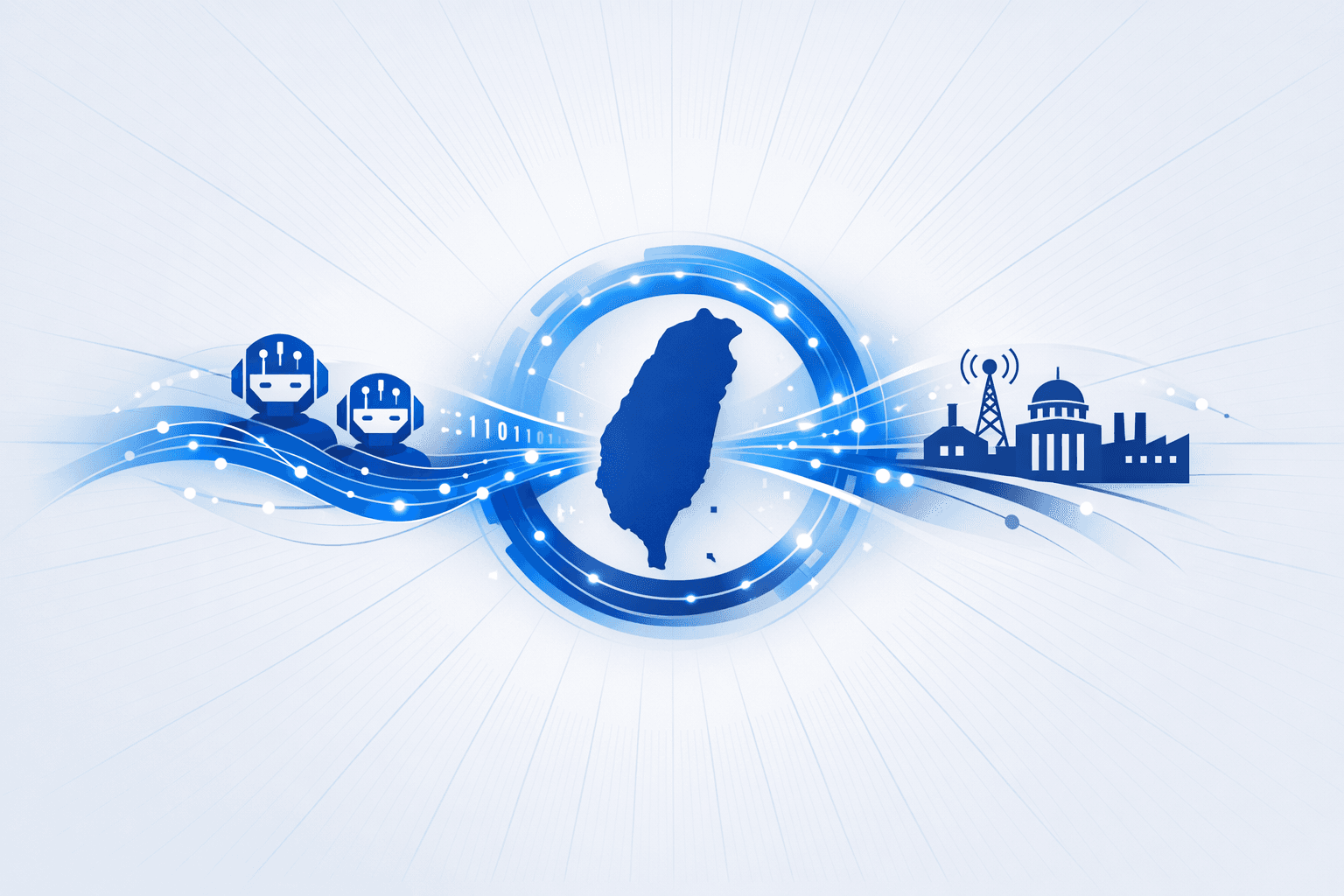
AI Agents Automated Intrusions Against Taiwan Government and Critical Sectors

Security researchers reported that suspected China-linked operators used open-source AI agent frameworks and multiple large language models to automate cyber intrusions against internet-exposed targets in Taiwan and elsewhere in Asia. Palo Alto Networks Unit 42 said a Chinese-speaking actor tracked as "knaithe" and "KnYuan" used Hermes Agent connected to a DeepSeek model to perform reconnaissance, vulnerability research, and parts of exploitation, while also falling back to manual exploitation when autonomous attempts failed. The actor also tested other Chinese and Western models, including Qwen, GLM, Kimi, MiniMax, Claude Code, and OpenAI Codex, indicating active evaluation of AI tooling for offensive operations.

Dream said a related campaign in early July used a platform built from the open-source Hermes and OpenClaw frameworks to carry out what it described as the first observed end-to-end autonomous cyberattack on a government target in Taiwan. According to the firm, the operation ran for four days, deployed up to eight agents in parallel, mapped 21 government systems, compromised at least 85 user accounts, and stole more than 2,500 personnel records before expanding to Taiwan’s nuclear safety agency, at least seven energy companies, government suppliers, and other government systems. Researchers said the activity showed AI agents can continuously adapt attack paths in real time and materially increase the speed and scale of intrusion activity, even without custom malware or highly specialized operators.

Why it matters

Impact assessment

This activity affected Taiwanese government entities and critical infrastructure, with confirmed spillover into a nuclear safety agency, government email systems, IT supply-chain vendors, and at least seven energy companies. The impact is high because the campaign achieved account compromise, credential theft, and personnel-record exfiltration at machine speed, demonstrating that open-source AI agents can materially accelerate intrusion scale and persistence.

The exposure appears targeted rather than indiscriminate, centered on Taiwan and broader Asia-facing internet-exposed systems, with suspected China-linked operators. There are reported real-world compromises and data theft in the wild: at least 85 accounts were compromised, more than 2,500 personnel records were exfiltrated, and multiple downstream organizations were targeted after the initial government intrusion.

Supporting facts

  • Primary affected sectors: government, nuclear regulation/safety, energy, and government IT supply chain.
  • Confirmed victim geography: Taiwan; broader targeting referenced across Asia.
  • Reported operational scope: 12 attack waves from July 1 to July 4, 2026, using up to eight agents in parallel.
  • Reported compromise scale: 21 government systems mapped, 85 accounts compromised, 2,564 personnel records exfiltrated.
  • Additional stolen data reportedly included a full JSON export of department users, seven SSO client secrets, six internal database credentials, and internal network IP ranges.
  • Researchers and officials characterize the incident as one of the first publicly known near-autonomous or autonomous AI-enabled attacks against a government target.
  • Separate Unit 42 reporting shows similar AI-enabled offensive workflows by a Chinese-speaking actor tracked as knaithe / KnYuan against internet-exposed infrastructure in Asia, though that campaign had limited impact and no full target compromise.

Entities

  • Dream
  • Taiwan Ministry of Digital Affairs
  • Taiwan National Security Bureau
  • Palo Alto Networks Unit 42
  • Threat actor aliases: knaithe, KnYuan
  • Suspected nexus: China-linked / Chinese-speaking operators
New surface, new adversariesTrack how attackers are adapting to this technology.
Track this risk
Event timeline

How this story unfolded

Events from the most recent confirmed update back to the earliest known activity.

8 events · Jan 2026 – Jul 30, 2026
  1. Reported Aug 12, 20264mo ago

    Taiwan ministry confirms AI-assisted cyberattack on government agencies

    Taiwan’s Ministry of Digital Affairs officially confirmed an AI-assisted cyberattack targeting government agencies and described it as an abnormal incident and a world first of its kind. The confirmation concerned the July 2026 intrusion previously reported by Dream, which involved compromised government accounts and data theft.

    Taïwan victime d'une cyberattaque assistée par IA ciblant des agences gouvernementales | CyberVeille
  2. Reported Jul 31, 20264mo ago

    Autonomous exploit attempts fail against Langflow and n8n

    In the same campaign, Hermes Agent autonomously attempted exploitation of CVE-2026-33017 in Langflow and CVE-2026-21858 and CVE-2025-68613 in n8n Workflow Automation. These attempts failed because target configurations disabled auto_login or required authentication.

    Chinese Hacker Uses DeepSeek AI to Orchestrate Vulnerability Exploits - Infosecurity Magazine
  3. Reported Jul 31, 20264mo ago

    Threat actor manually exploits several 2026 vulnerabilities

    During the Asia-focused campaign, the actor manually exploited CVE-2026-3055 on Citrix NetScaler ADC and Gateway and exfiltrated data, confirmed command execution via CVE-2026-39987 on Marimo Notebook, and attempted reverse shells via CVE-2026-34486 on Apache Tomcat and CVE-2026-33824 on Windows IKE Extensions. The actor also cloned but did not execute a proof of concept for CVE-2026-0300 affecting the PAN-OS User-ID Authentication Portal.

    Chinese Hacker Uses DeepSeek AI to Orchestrate Vulnerability Exploits - Infosecurity Magazine
  4. Reported Jul 31, 20264mo ago

    AI-enabled intrusion campaign targets infrastructure in Asia

    A Chinese-speaking threat actor using the aliases "knaithe" and "KnYuan" conducted a campaign against internet-exposed infrastructure in Asia using Hermes Agent with multiple LLMs to automate reconnaissance, vulnerability research, and parts of exploitation. The activity targeted organizations in three countries, including China and Malaysia, and had limited impact without fully compromising intended targets.

    Chinese Hacker Uses DeepSeek AI to Orchestrate Vulnerability Exploits - Infosecurity Magazine
  5. Jul 30, 20264mo ago

    Unit 42 publishes report on AI-assisted exploit campaign

    Palo Alto Networks Unit 42 published a report describing the Chinese-speaking actor's use of DeepSeek and Hermes Agent to orchestrate vulnerability exploitation and evaluate multiple AI tools for offensive operations. Researchers said the campaign demonstrated a functional end-to-end autonomous offensive workflow despite limited impact.

    Chinese Hacker Uses DeepSeek AI to Orchestrate Vulnerability Exploits - Infosecurity Magazine
  6. Jul 2026

    Campaign expands to Taiwan nuclear and energy sectors

    After the initial government intrusion, the same autonomous campaign reportedly expanded to Taiwan's nuclear safety agency, at least seven energy companies, government suppliers, and other government systems. Dream said the operators ran as many as eight autonomous agents in parallel during the operation.

    Suspected China-linked hackers used AI to run the first-ever end-to-end autonomous cyberattack on Taiwan's government, Israeli firm says - open-source-built tool continuously devised effective hack strategies in real-time | Tom's Hardware
  7. Jul 2026

    Autonomous attack compromises Taiwanese government systems

    Over four days in early July, attackers suspected of China links used an AI-agent platform built from Hermes and OpenClaw to map 21 Taiwanese government systems, compromise at least 85 user accounts, and steal more than 2,500 personnel records. Dream described it as the first observed end-to-end autonomous cyberattack against a government target.

    Suspected China-linked hackers used AI to run the first-ever end-to-end autonomous cyberattack on Taiwan's government, Israeli firm says - open-source-built tool continuously devised effective hack strategies in real-time | Tom's Hardware
  8. Jan 2026

    Taiwan reports 2.6 million daily Chinese cyberattacks in 2025

    Taiwan's National Security Bureau reported in January that the island had faced an average of 2.6 million Chinese cyberattacks per day during 2025. The statistic provided broader context for the later autonomous campaign described by Dream.

    Suspected China-linked hackers used AI to run the first-ever end-to-end autonomous cyberattack on Taiwan's government, Israeli firm says - open-source-built tool continuously devised effective hack strategies in real-time | Tom's Hardware
Linked entities

Related entities

Vulnerabilities, threat actors, malware, products, organizations, and breaches Mallory has linked to this story.

Open in app →

Threat actors

1 linked

Affected products

1 linked
Openclaw

Breaches

3 linked
TAIWANSNUCLEARSAFETYAGENCY-2026-08GOVERNMENTOFTAIWAN-2026-07TAIWANMINISTRYOFDIGITALAFFAIRS-2026-07
Do you run this?Follow how adversaries are adapting to this technology, and where it touches your stack today.
Track This Risk
Mallory platform

See the full picture, correlated to your attack surface.

This page covers what’s public. Mallory adds the parts that aren’t: which of your assets are affected, which threat actors are using it right now, and what to deploy next.

Exposure mappingMap indicators from this story to your assets and identify affected systems in minutes.
Threat actor evidenceEvery observed campaign, victim, and pivot linked to actors named in this story.
Associated malwareMalware, exploits, and IOCs connected to the activity described here.
Detection signaturesYARA, Sigma, and Snort rules deployed to your SIEM as soon as they’re published.
Scheduled alertsGet matching new stories delivered to your team as they break, not the next morning.
AI threadsAsk questions about this story and take action on the answers.