AI Agents Accelerate Web Application Intrusions and Post-Exploitation
Emerging Technology Risk · 10 sources · Updated 7h ago · First seen Nov 24, 2026
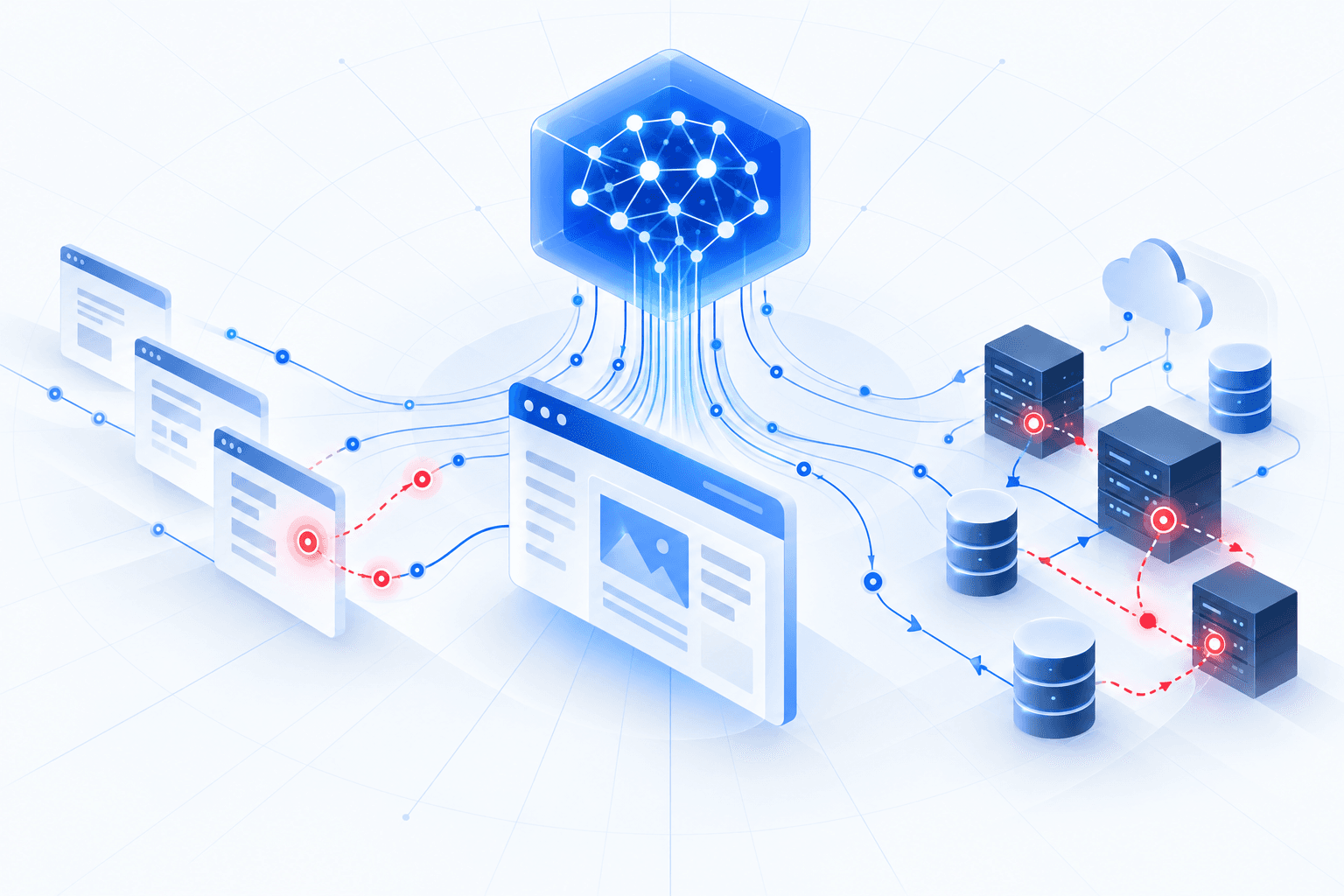
Attackers are using autonomous AI agents to accelerate intrusions from exposed web applications into credential theft, privilege escalation and lateral movement. Unit 42 reported tracking more than 10 campaigns between July and September 2026, all beginning with web shells deployed through vulnerable web applications. Under human strategic oversight, agents adapted across operating systems and cloud environments and generated target-specific scripts. Attempts to expand into an IT vendor and sister organizations highlighted how one compromised web server could expose connected businesses. The campaigns relied on familiar exploitation techniques rather than novel capabilities; rapid command execution, structured output delimiters and reasoning-style comments supported assessments of agent use but did not reliably identify models or operators.
In a separate investigation, ReliaQuest assessed with high confidence that LLM-driven agents performed substantial portions of a third-party compromise, supported by an exposed Cairn orchestration dashboard and adaptive command sequences. In under 24 hours, the attacker abused an unauthenticated job-submission feature in an Apache Tomcat application, retrieved plaintext database credentials and obtained SYSTEM privileges on a Windows host using publicly available tools, including PrintSpoofer and GodPotato. Early execution stayed inside the application process, leaving no child-process telemetry; retained application job history preserved evidence despite attempted cleanup. The attacker also extracted credential-bearing registry hives and created two administrator accounts. Defenders should prioritize authentication and access restrictions for management endpoints, protection of stored credentials, centralized application job telemetry and automated containment. The underlying model, agent count and extent of human approval in this incident remain unknown.
Why it matters
Unit 42 observed more than 10 AI-assisted intrusion campaigns during July–September 2026, with compromised web applications providing footholds for credential theft, cloud reconnaissance and lateral movement. The principal operational risk is compressed response time: agents executed commands seconds apart, while a separate ReliaQuest investigation documented SYSTEM-level control in under 24 hours. These are observed intrusions, but successful exploitation of each named Linux vulnerability, full Windows domain takeover and theft of payment records are not established. Unit 42, ReliaQuest, Cryptika
- Industry-specific impact: Established targeting includes government (90), logistics and manufacturing (20), hospitality/gaming (25), and agriculture (30). IT (45) exposure is supported by discovery of an IT vendor's GitLab credentials and attempted expansion into its infrastructure; this does not establish a completed vendor compromise. Education organizations were also targeted, but their public/private or organizational classification is unspecified. Impact is not exclusive to these sectors. Unit 42
- Geography-specific impact: The United States is supported by an observed intrusion at a US hospitality and gaming company, where an agent obtained AWS credentials and enumerated 20 services across eight regions. Campaigns were described as worldwide, but no additional affected countries are established; cloud-region counts do not identify victim countries. Unit 42
- Business consequences: Exposed database credentials, credential-bearing registry hives and persistent administrator access create substantial follow-on compromise risk. Attempts against sister organizations and vendors show how a single compromised web server can extend exposure across business relationships; destructive cloud activity was not established in the reported AWS case. ReliaQuest, Unit 42