Fake ChatGPT Site and Piracy Portals Deliver Cross-Platform Stealers and Cryptominers
Malware Intelligence · 3 sources · Updated 5mo ago · First seen May 28, 2026
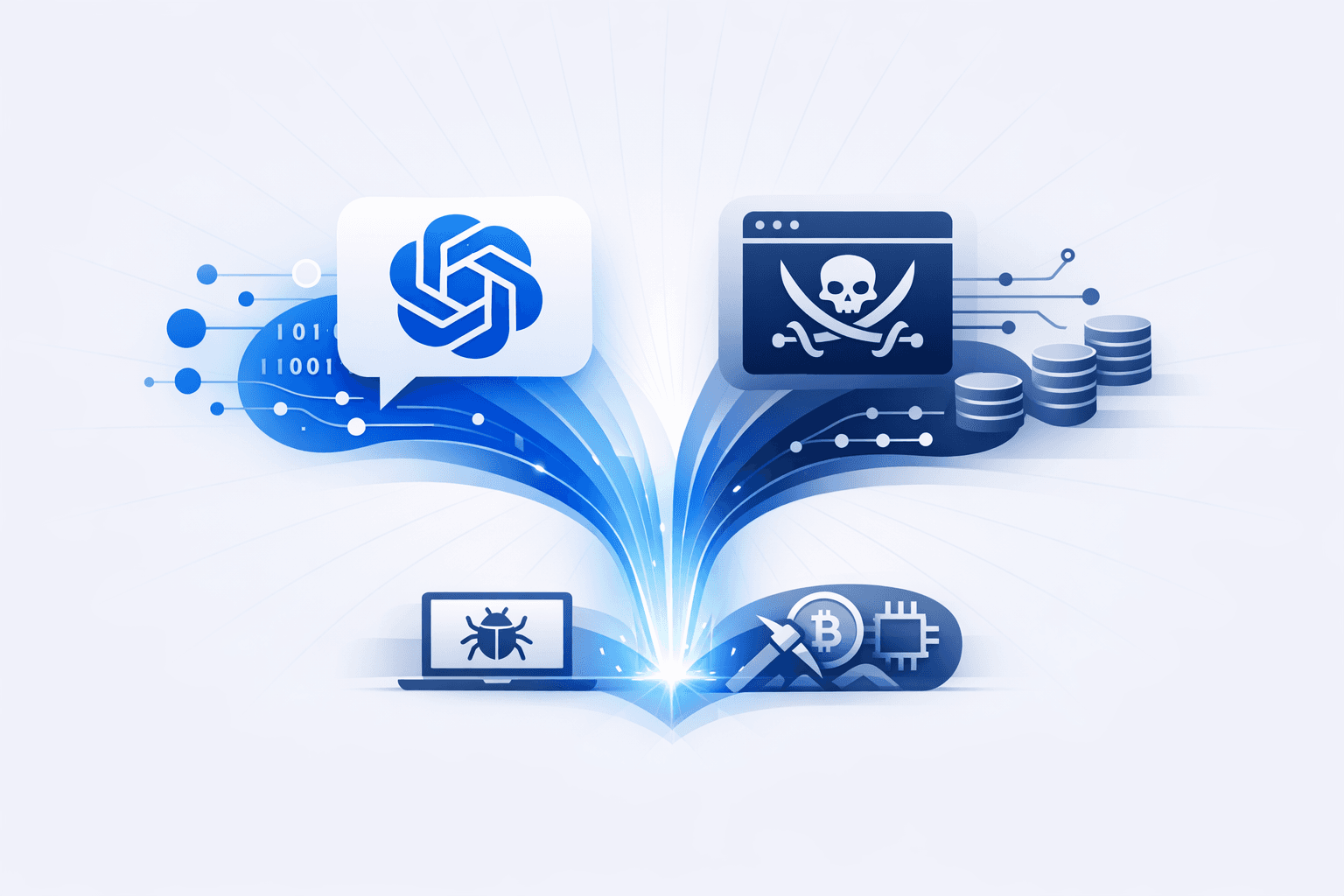
Threat researchers reported two large malware distribution operations that relied on popular consumer lures rather than software exploits. One campaign used piracy sites offering movies, TV shows, books, and digital library content to push fake plugin or browser update prompts; the downloaded ZIP files abused DLL side-loading, ROP-based decryption, and reflective loading to install a modified SilentCryptoMiner, a watchdog, a RAT component, and CPU/GPU miners. The malware gated execution through DNS tunneling and date-generated command-and-control infrastructure, harvested host data, and established persistence with a fake GoogleUpdateTaskMachineQC service and repeated UAC elevation attempts, with implicated sites drawing roughly 40 million visits in a single month.
A separate operation used openew[.]app, a fake ChatGPT download page impersonating OpenAI, to infect both Windows and macOS users with platform-specific malware. Windows visitors received a credential-stealing loader disguised as Chat_GPT.exe, built with Inno Setup and Electron and launching PowerShell activity that contacted 188.137.246.189, while macOS users were served Atomic Stealer (AMOS) to steal passwords, browser data, Telegram sessions, and cryptocurrency wallet information. Researchers said the macOS payload also attempted to replace legitimate Ledger and Trezor applications with trojanized versions, underscoring a strong cryptocurrency theft motive and showing how attackers are exploiting AI-brand search traffic and piracy demand to scale malware infections.
Why it matters
Impact assessment
These campaigns primarily affect consumers and unmanaged endpoints, but they also create enterprise risk when employees use corporate Windows or macOS devices for AI tool downloads, piracy access, or cryptocurrency management. Impact is high for infected users because the malware supports credential theft, keychain and browser-session theft, cryptocurrency wallet compromise, RAT access, and sustained CPU/GPU cryptomining that can degrade performance and increase support costs.
The scope is broad rather than narrowly targeted. The piracy-linked operation was tied to sites receiving roughly 40 million visits in April 2026, and the fake ChatGPT lure abuses strong brand recognition and search-driven traffic to reach both Windows and macOS users. Exploitation is confirmed in the wild through active malware delivery operations rather than exploitation of a software vulnerability.
Supporting facts
- Affected populations:
- Windows users downloading fake ChatGPT desktop software
- macOS users downloading fake ChatGPT desktop software
- Users visiting piracy portals for movies, TV shows, books, and digital library content
- Cryptocurrency holders using Ledger Live, Ledger Wallet, Trezor Suite, Exodus, Electrum, or Sparrow on infected systems
- Business and operational effects:
- Credential theft from browsers and local stores
- Theft of macOS login passwords in cleartext
- Keychain theft on macOS
- Telegram session theft
- Cryptocurrency wallet theft and wallet-application replacement with trojanized versions
- Remote command execution capability via RAT functionality
- Resource hijacking through CPU and GPU miners
- Persistence and repeated UAC prompts causing user disruption and complicating remediation
- Scope indicators:
- Piracy-linked sites associated with the campaign drew about 40 million visits in one month
- Researchers assessed the piracy operation as active since at least 2022
- The fake ChatGPT operation used a dual-platform lure to infect both Windows and macOS users
- Known in-the-wild activity:
- Incident responders investigated active miner infections in late April 2026
- Researchers observed live malware delivery from openew[.]app and piracy-linked delivery infrastructure