Resoker and CrySome RATs Expand Windows Remote Access and Evasion Capabilities
Malware Intelligence · 4 sources · Updated 5mo ago · First seen May 25, 2026
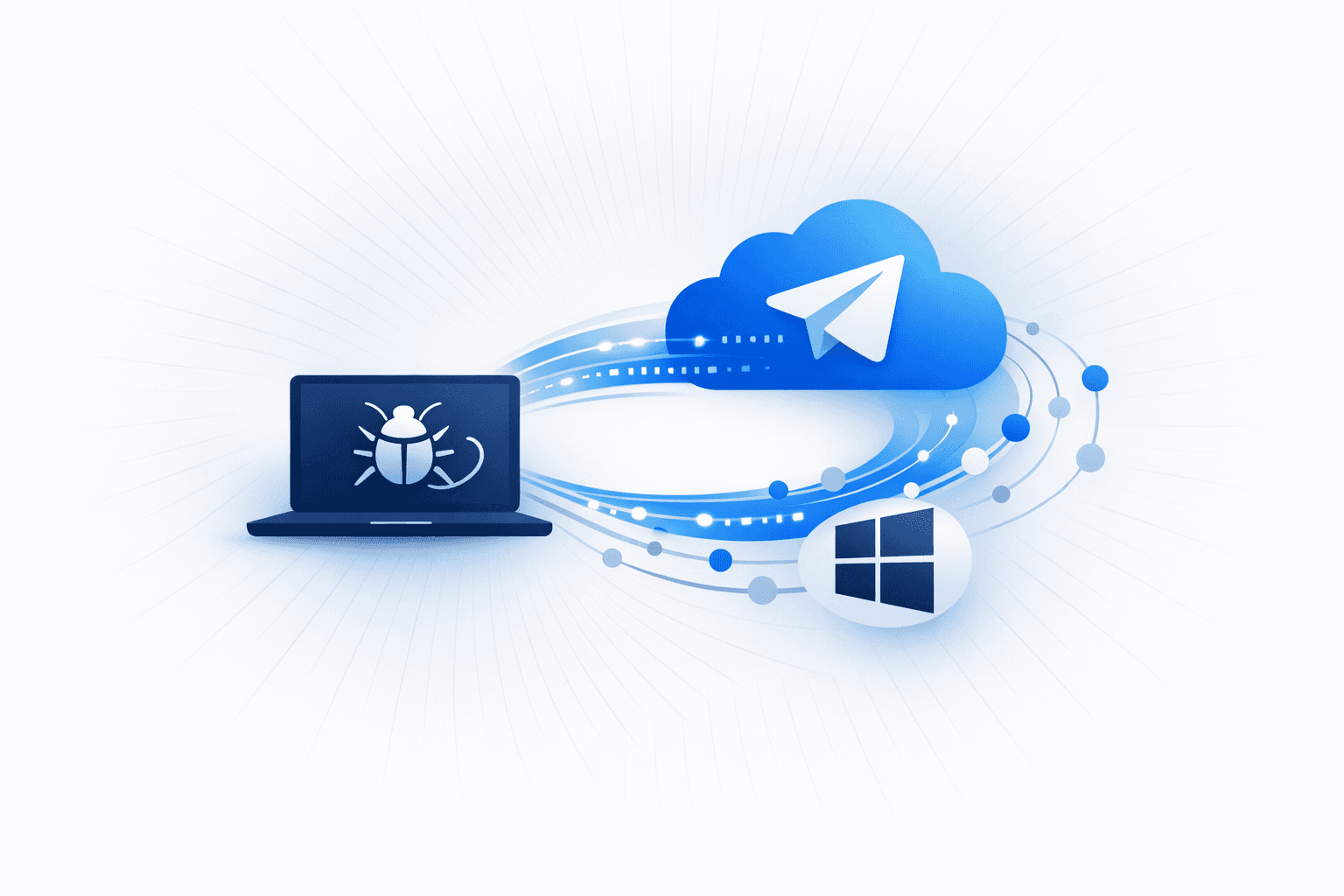
Security researchers detailed two Windows-focused remote access trojans, ResokerRAT and CrySome RAT, that use different command-and-control approaches while emphasizing stealth and persistent access on compromised systems. ResokerRAT was reported abusing the Telegram API as its control channel, allowing operators to issue commands to infected Windows hosts through a legitimate messaging platform and blend malicious traffic with normal network activity. Analysis described capabilities associated with remote command execution, host control, and data handling, highlighting Telegram-based C2 as a low-cost and resilient mechanism for managing infections.
CrySome RAT was separately identified as an advanced .NET malware family with a broader feature set aimed at long-term compromise and operator concealment. Researchers said the malware includes AV-killer functionality to disable security tools and HVNC support, enabling attackers to interact with victim machines through hidden virtual desktop sessions without alerting users. Together, the reports show continued development of commodity and advanced RAT tooling for Windows environments, with threat actors combining trusted services, defense evasion, and covert remote-control features to improve persistence and reduce detection.
Why it matters
Impact assessment
Windows environments are the primary target, with risk concentrated in enterprises that allow outbound access to trusted messaging platforms and that rely on endpoint security controls vulnerable to tampering. The impact can include persistent unauthorized remote access, command execution, covert operator interaction, security-tool disablement, and potential data theft or follow-on ransomware deployment.
The exposure appears broader than a single targeted campaign because both malware families are positioned as reusable RAT tooling rather than one-off implants. The story does not provide confirmed in-the-wild victim counts or named incident disclosures, but the described capabilities are consistent with active post-compromise tradecraft that can cause significant operational and reputational damage.
Affected entities
- Windows endpoints and servers
- Organizations permitting Telegram access from corporate networks
- Enterprises with .NET application environments where malicious .NET payloads may blend in more easily
- Security teams dependent on endpoint AV/EDR controls that may be targeted by AV-killer functionality
Severity and business risk
- Persistent remote access enables long-term compromise
- Remote command execution creates risk of lateral movement and destructive actions
- Hidden VNC capability supports covert hands-on-keyboard activity without user awareness
- Defense evasion increases dwell time and reduces containment speed
- Data handling and exfiltration capabilities raise confidentiality and compliance risk
Scope and exploitation status
- Scope is potentially widespread across Windows estates because the malware families are not described as sector-specific
- Telegram-based C2 increases resilience and may complicate network-based blocking in permissive environments
- No CVEs or public exploitation statistics are cited in the story
- No confirmed named victim organizations are provided in the supplied content