Mallory
← Back to News
remote-access-implantcommand-and-control-methodpersistence-methoddefense-evasion-method

ResokerRAT Uses Telegram Bot API to Control and Persist on Windows Hosts

Malware Intelligence · 4 sources · Updated 5mo ago · First seen Mar 31, 2026
ResokerRAT Uses Telegram Bot API to Control and Persist on Windows Hosts

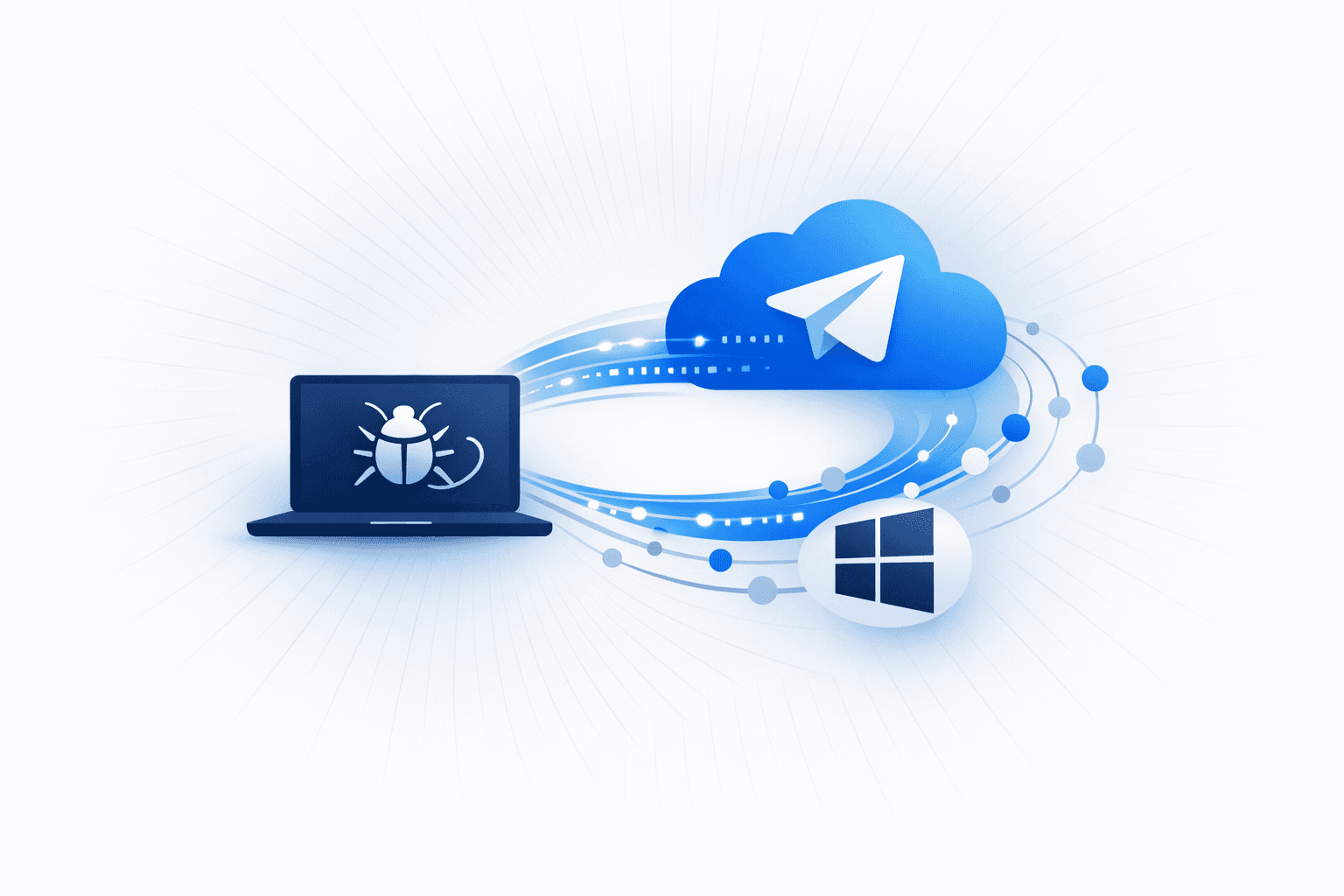
K7 Security Labs identified ResokerRAT, a Windows remote access trojan that uses Telegram’s Bot API as its command-and-control channel instead of dedicated attacker infrastructure. The malware, delivered as Resoker.exe, polls Telegram endpoints such as getUpdates with hardcoded bot credentials and chat IDs, allowing commands and stolen data to move over trusted HTTPS traffic to api.telegram.org, which can make network-based detection more difficult.

Researchers said the malware supports screen capture, keylogging, file download, privilege escalation, and persistence, while also attempting to evade analysis and disrupt defenders. ResokerRAT creates a mutex, checks for debuggers, relaunches with administrator rights, blocks tools including Task Manager and Process Hacker, weakens UAC-related settings, and adds itself to the Windows Run registry key for startup execution. Defenders were urged to monitor suspicious outbound Telegram API traffic, Run key persistence, restricted PowerShell activity, and user reports that security or system tools suddenly cannot be opened.

Why it matters

Impact assessment

ResokerRAT affects Windows endpoints and presents the greatest risk to enterprises with broad user workstation populations, especially where Telegram access is permitted and PowerShell use is loosely controlled. The malware enables surveillance, credential and data theft, persistence, privilege escalation, and defender impairment, creating moderate-to-high endpoint compromise risk with potential operational disruption and follow-on payload delivery.

The current reporting indicates a newly identified malware family rather than a mass exploitation event, so exposure appears targeted or opportunistic instead of internet-wide. There is reporting on intrusions involving ResokerRAT and active attacker infrastructure in the form of a live Telegram bot, but no large-scale campaign volume or victim count is provided.

Supporting facts

  • Affected platform: 64-bit Windows systems.
  • Malware family: ResokerRAT / Resoker, a Windows remote access trojan.
  • Delivery artifact: Resoker.exe.
  • Core impacts:
    • Screen capture and visual surveillance
    • Keylogging
    • Download of additional payloads
    • Persistence via Run key
    • Privilege escalation attempts
    • Disabling or restricting security and admin tools
  • Business risk:
    • Data loss from keylogging and screenshot theft
    • Operational disruption from blocked Task Manager and keyboard shortcuts
    • Increased incident severity due to follow-on payload download capability
    • Reduced defender visibility from anti-analysis and UAC weakening
  • Scope: targeted/opportunistic malware activity; no evidence in the reporting of widespread wormable propagation.
  • In-the-wild activity:
    • GBHackers News reportedly covered intrusions involving ResokerRAT.
    • Breakglass reported an active Telegram bot token tied to the malware on 2026-03-10.
Hunt this familyPull IOCs and campaign context straight into your stack.
Get the IOCs
Event timeline

How this story unfolded

Events from the most recent confirmed update back to the earliest known activity.

3 events · Mar 12, 2026 – Mar 31, 2026
  1. Mar 31, 20268mo ago

    Media reports disclose ResokerRAT's Telegram-based C2 and evasion features

    News coverage publicized ResokerRAT as a Windows RAT delivered as Resoker.exe that communicates with attackers through hardcoded Telegram bot credentials over HTTPS to api.telegram.org. Reports highlighted its persistence via the Run registry key, interference with tools such as Task Manager and Process Hacker, and recommendations for defenders to monitor suspicious Telegram API traffic and related host-based indicators.

  2. Mar 30, 20268mo ago

    K7 Security Labs publishes technical report on ResokerRAT

    A technical report by K7 Security Labs researcher Priyadharshini documented a newly identified Windows remote access trojan called ResokerRAT. The report described its use of Telegram Bot API for command-and-control, along with capabilities including persistence, privilege escalation, anti-analysis, screenshot capture, keylogging, and downloading additional payloads.

  3. Mar 12, 20269mo ago

    Breakglass Intelligence publishes first public report on ResokerRAT

    Breakglass Intelligence published an early technical analysis of a newly documented 64-bit Windows RAT called Resoker that used the Telegram Bot API as its sole command-and-control channel. The report detailed active bot infrastructure, capabilities such as screenshots, keylogging, persistence and UAC manipulation, and multiple OPSEC failures that made the malware straightforward to detect.

    Resoker RAT: First Report on a Telegram-Controlled Trojan With Every OPSEC Failure in the Book - Breakglass Intelligence - Breakglass Intelligence
Linked entities

Related entities

Vulnerabilities, threat actors, malware, products, organizations, breaches, and observables Mallory has linked to this story. Indicator values are masked here and available in full in the app.

Open in app →

Malware

2 linked

Affected products

1 linked
Windows

Observables

5 linked

Indicator values are masked on this page. See the values in Mallory Domains, IPs, hashes, and URLs are exportable to your SIEM.

Do you run this?Pull the IOCs, campaigns, and victimology behind this family, ready to push into your SIEM and EDR.
Hunt This Malware
Mallory platform

See the full picture, correlated to your attack surface.

This page covers what’s public. Mallory adds the parts that aren’t: which of your assets are affected, which threat actors are using it right now, and what to deploy next.

Exposure mappingMap indicators from this story to your assets and identify affected systems in minutes.
Threat actor evidenceEvery observed campaign, victim, and pivot linked to actors named in this story.
Associated malwareMalware, exploits, and IOCs connected to the activity described here.
Detection signaturesYARA, Sigma, and Snort rules deployed to your SIEM as soon as they’re published.
Scheduled alertsGet matching new stories delivered to your team as they break, not the next morning.
AI threadsAsk questions about this story and take action on the answers.