Mallory
← Back to News
state-sponsored-espionageinitial-access-methodremote-access-implantvendor-distribution-compromise

State-Linked Malware Campaigns Using Social Engineering and Trojanized Installers

Threat Actor Intelligence · 3 sources · Updated 5mo ago · First seen Jan 27, 2026
State-Linked Malware Campaigns Using Social Engineering and Trojanized Installers

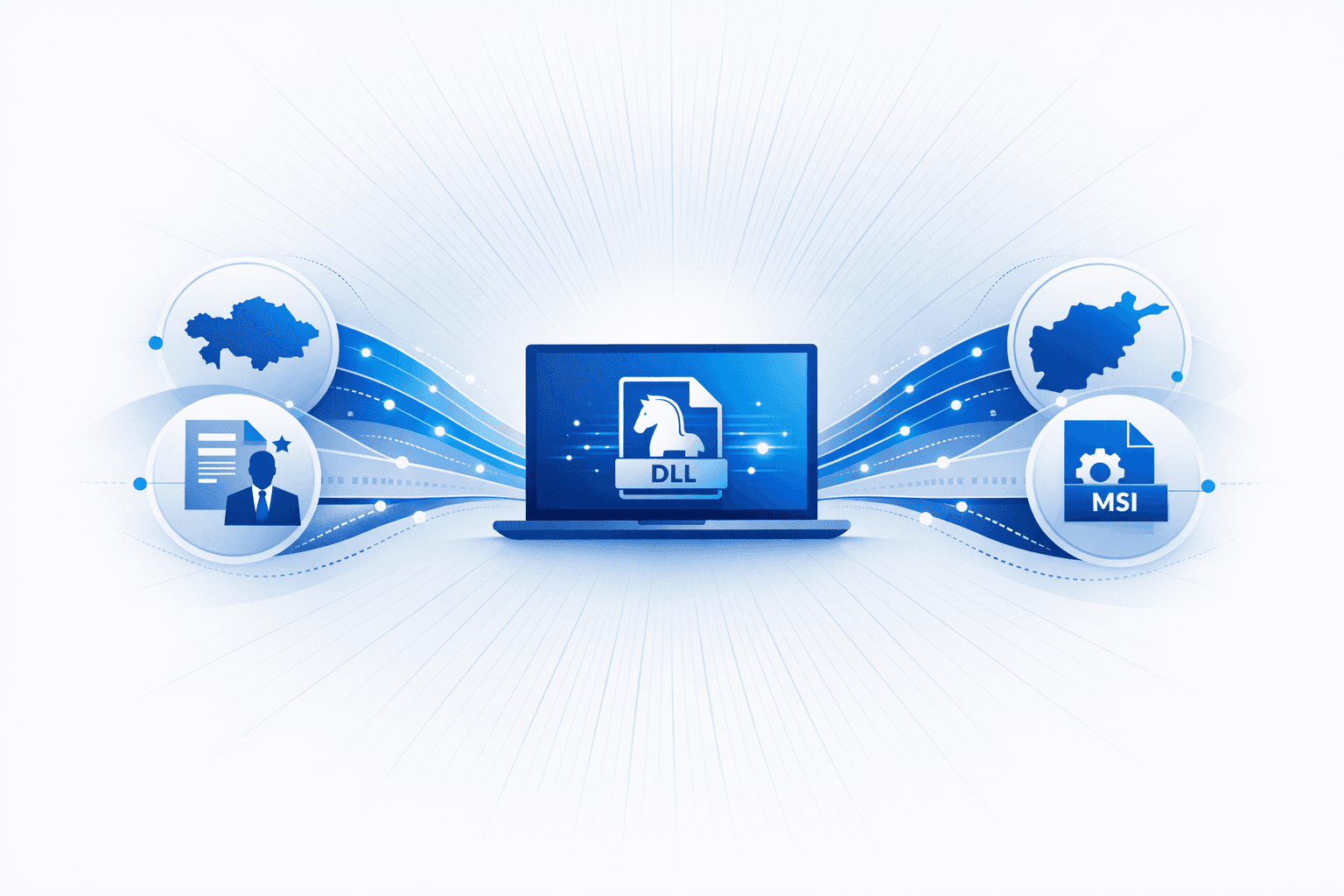
Multiple reports detailed state-linked intrusion activity relying on social engineering and trusted delivery mechanisms to gain initial access and establish remote control. Researchers reported a suspected state-affiliated espionage operation targeting government and financial organizations in Kazakhstan and Afghanistan, built around a previously unreported Windows DLL implant dubbed KazakRAT delivered via malicious MSI installers and decoy documents (e.g., a fake Kazakh presidential letter and an Afghan provincial memo). The malware was described as relatively unsophisticated—unencrypted HTTP beaconing and minimal obfuscation—yet capable of host reconnaissance, file search/exfiltration, and downloading/executing additional payloads, enabling long-running access since at least 2022.

Separately, Insikt Group described North Korean operators (tracked as PurpleBravo) running the “Contagious Interview” campaign, using fake recruiter personas and weaponized “coding tests” hosted on platforms like GitHub to trick software developers into executing malware on corporate devices, supporting software supply-chain targeting. The toolset reportedly includes BeaverTail (JavaScript infostealer) and newly identified RATs PylangGhost and GolangGhost. In another supply-chain style incident, Trend research and an Emurasoft advisory reported the official EmEditor download being tampered with to serve a trojanized MSI whose CustomAction launched PowerShell to fetch staged payloads from lookalike domains (e.g., EmEditorjp[.]com, EmEditorgb[.]com, EmEditorde[.]com), followed by environment fingerprinting and geofencing checks—highlighting ongoing risk from compromised public software distribution channels.

Why it matters

Impact assessment

These campaigns affect government and financial organizations in Kazakhstan and Afghanistan, software developers and IT staff using corporate devices, and any Windows enterprise that downloaded EmEditor during the compromised distribution window. The impact ranges from espionage and file exfiltration to credential theft, persistent remote access, and potential downstream supply-chain compromise into customer environments.

The scope is mixed: KazakRAT appears targeted and region-specific, while Contagious Interview and the EmEditor trojanized installer create broader exposure across software, AI, cryptocurrency, financial services, and IT services ecosystems. There are known real-world incidents and active victimization: KazakRAT sinkhole telemetry captured victim beacons, Insikt Group identified at least 20 victim organizations and more than 3,000 potential target IPs, and Emurasoft confirmed possible tampering of the official EmEditor download path.

Supporting facts

  • KazakRAT targeted government and financial entities in Kazakhstan and Afghanistan.
  • Sinkhole telemetry indicated victim activity concentrated in Kazakhstan, especially the Karaganda region.
  • PurpleBravo targeted software developers through fake recruiter workflows and GitHub-hosted coding tests executed on corporate laptops.
  • PurpleBravo victim organizations included AI, cryptocurrency, and financial services entities.
  • PurpleBravo activity can propagate beyond the initial user through IT services and staff-augmentation relationships.
  • The EmEditor incident exposed users who trusted the official vendor download channel.
  • EmEditor malware included credential theft, defense evasion, and preparation for lateral movement, increasing enterprise blast radius.
  • KazakRAT had been active since at least August 2022, indicating long dwell time and persistent access.
  • EmEditor compromise surfaced in late December 2025, a period likely chosen to exploit reduced staffing and slower response.
  • Exploitation in the wild is supported by sinkhole victim traffic, identified victim organizations, and a vendor emergency advisory.

Entities

  • KazakRAT
  • PurpleBravo
  • PurpleDelta
  • BeaverTail
  • PylangGhost
  • GolangGhost
  • EmEditor
  • Emurasoft
  • Insikt Group
  • TrendAI Research
  • APT36 / Transparent Tribe
  • XploitSpy
Know this adversaryTTPs, infrastructure, and targeting history in one profile.
Get the profile
Event timeline

How this story unfolded

Events from the most recent confirmed update back to the earliest known activity.

9 events · Aug 1, 2022 – Jan 27, 2026
  1. Jan 27, 202610mo ago

    Researchers publicly disclose KazakRAT campaign and APT36 overlap

    Researchers revealed the long-running KazakRAT espionage operation and noted overlaps with APT36/Transparent Tribe, including use of XploitSpy in related activity. While attribution remained unconfirmed, the disclosure established links in victimology and tooling patterns.

  2. Jan 27, 202610mo ago

    Researchers publicly disclose EmEditor supply-chain compromise

    TrendAI Research reported the EmEditor supply-chain attack, detailing how the official installer was hijacked to distribute malware through attacker-controlled domains. The disclosure highlighted the risk to organizations downloading the software from the compromised official source.

  3. Jan 27, 202610mo ago

    Researchers publicly disclose Contagious Interview and PurpleBravo details

    Insikt Group published findings on the North Korea-linked Contagious Interview campaign, linking PurpleBravo to large-scale targeting of more than 3,000 IPs and at least 20 victim organizations in AI, cryptocurrency, and financial services. The report also noted operational overlap with PurpleDelta, a network of fraudulent North Korean IT workers.

  4. Jan 27, 202610mo ago

    Emurasoft issues emergency advisory on tampered EmEditor download link

    Emurasoft acknowledged that the official EmEditor download link may have been tampered with and warned users to verify installer integrity. Organizations were urged to investigate possible compromise and look for traffic to the identified malicious domains.

  5. Jan 27, 202610mo ago

    Researchers sinkhole a KazakRAT command-and-control domain

    Investigators took over a key KazakRAT C2 domain after the threat actor failed to renew it, allowing them to sinkhole traffic and passively collect victim IP addresses. The telemetry reinforced that the campaign was targeting government and financial-sector roles, especially in Kazakhstan's Karaganda region.

  6. Jan 27, 202610mo ago

    Attackers launch Contagious Interview fake-job malware campaign

    A North Korea-linked threat cluster tracked as PurpleBravo began targeting IT and software supply-chain personnel through fake recruiter personas, interviews, and weaponized coding tests hosted on GitHub. The campaign used BeaverTail for initial compromise and later deployed the newly identified PylangGhost and GolangGhost RATs against victims using corporate devices.

  7. Dec 1, 20251y ago

    EmEditor malware campaign adds credential theft and lateral movement preparation

    Analysis of the trojanized EmEditor installer revealed a multi-stage payload chain that performed host fingerprinting, geofencing, credential theft, defense evasion, and preparation for lateral movement. Researchers assessed the operators were likely of Russian or broader CIS origin based on geofence exclusions and observed tradecraft.

  8. Dec 1, 20251y ago

    Trojanized EmEditor installer campaign surfaces on official download page

    In late December 2025, attackers hijacked EmEditor's official download flow and served a malicious MSI installer in place of the legitimate software. The trojanized package used a modified MSI CustomAction to launch PowerShell, retrieve first-stage code, and pull additional modules from attacker-controlled domains.

  9. Aug 1, 20224y ago

    KazakRAT espionage campaign begins targeting Kazakhstan and Afghanistan

    A suspected state-affiliated espionage campaign using the previously unreported KazakRAT malware was active by at least August 2022, targeting government and financial entities in Kazakhstan and Afghanistan. The operation used tailored decoy documents and malicious MSI installers to deliver a DLL-based Windows RAT.

Linked entities

Related entities

Vulnerabilities, threat actors, malware, products, organizations, breaches, and observables Mallory has linked to this story. Indicator values are masked here and available in full in the app.

Open in app →

Threat actors

1 linked

Organizations

1 linked
Emurasoft

Observables

5 linked

Indicator values are masked on this page. See the values in Mallory Domains, IPs, hashes, and URLs are exportable to your SIEM.

Do you run this?See this adversary's TTPs, infrastructure, and targeting history, correlated against your exposure.
Get the Full Actor Profile
Mallory platform

See the full picture, correlated to your attack surface.

This page covers what’s public. Mallory adds the parts that aren’t: which of your assets are affected, which threat actors are using it right now, and what to deploy next.

Exposure mappingMap indicators from this story to your assets and identify affected systems in minutes.
Threat actor evidenceEvery observed campaign, victim, and pivot linked to actors named in this story.
Associated malwareMalware, exploits, and IOCs connected to the activity described here.
Detection signaturesYARA, Sigma, and Snort rules deployed to your SIEM as soon as they’re published.
Scheduled alertsGet matching new stories delivered to your team as they break, not the next morning.
AI threadsAsk questions about this story and take action on the answers.