Malware campaigns abusing trusted software channels (browser extensions, developer tools, and Google Ads) to deliver RATs and stealers
Malware Intelligence · 5 sources · Updated 5mo ago · First seen Jan 20, 2026
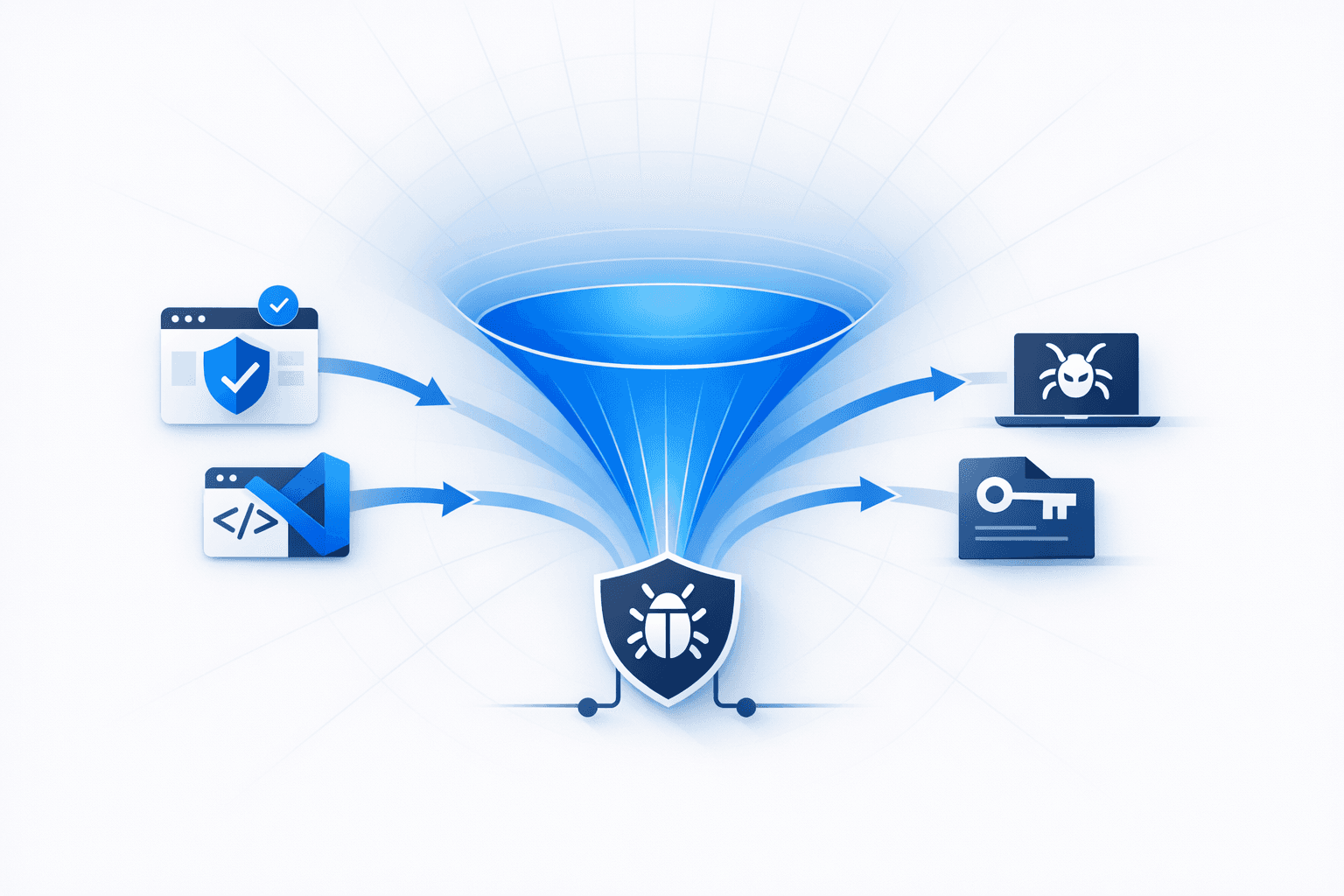
Multiple active malware campaigns are abusing trusted distribution channels—including Chrome/Edge extensions, Visual Studio Code extensions, and Google Ads/redirection infrastructure—to trick users into executing payloads that deliver remote access trojans (RATs) or information stealers. Huntress reported a malvertising-driven fake ad blocker extension, NexShield, that intentionally forces Chrome/Edge into a crash/DoS state by looping chrome.runtime port connections; on restart it displays a fake “security warning” and uses a ClickFix-style social engineering flow (“CrashFix”) to push users to paste and run clipboard-copied commands that trigger an obfuscated PowerShell download-and-execute chain, ultimately deploying the Python-based ModeloRAT in corporate environments. Separately, Trend Micro described Evelyn Stealer delivered via a trojanized Visual Studio Code extension that drops a malicious Lightshot.dll side-loaded by legitimate Lightshot (Lightshot.exe), then runs staged PowerShell and payload retrieval to steal browser credentials, cookies, crypto wallets, VPN/Wi‑Fi data, files, and screenshots before exfiltrating to an attacker-controlled FTP server—posing elevated risk when developer workstations are compromised.
South Korea-focused activity also features prominently across several reports, with multiple delivery vectors leading to RAT deployment. ASEC documented Remcos RAT distributed via fake installers masquerading as VeraCrypt and via gambling-related “lookup” tools, using multi-stage obfuscated VBS/PowerShell chains and enabling credential theft, keylogging, and device surveillance (webcam/mic). Genians attributed “Operation Poseidon” to the Konni APT, describing spear-phishing that abuses Google’s advertising/tracking redirection (e.g., ad.doubleclick.net parameters) to make malicious links appear legitimate, redirecting victims to compromised WordPress infrastructure hosting ZIPs with LNK files that launch AutoIt-based loaders to run an EndRAT variant in memory. Nextron Systems reported widespread trojanized “free converter” apps promoted via malicious Google ads and lookalike converter sites (e.g., ez2convertapp[.]com, convertyfileapp[.]com), with some payloads signed using abused/rotating code-signing certificates (e.g., BLUE TAKIN LTD, TAU CENTAURI LTD, SPARROW TIDE LTD) to evade trust checks while installing persistent backdoors.
Why it matters
Impact assessment
Multiple active campaigns are abusing trusted software channels to compromise users through browser extensions, VS Code extensions, fake installers, and Google Ads infrastructure. The highest-risk populations are enterprise users, developers, and South Korea-based organizations or individuals, with likely impacts including credential theft, persistent remote access, surveillance, source code and token exposure, and follow-on malware deployment.
The scope is broad rather than isolated because the delivery vectors rely on common user workflows and trusted ecosystems, but several campaigns show targeted elements, especially toward corporate domain-joined hosts and South Korean victims. Exploitation in the wild is established across all referenced campaigns, with active delivery of ModeloRAT, Remcos RAT, EndRAT variants, Evelyn Stealer, and persistent .NET backdoors.
Affected groups and products
- Chrome and Microsoft Edge users exposed to the fake NexShield extension.
- Windows enterprise endpoints, especially domain-joined corporate hosts targeted for ModeloRAT deployment.
- Developer workstations using Visual Studio Code and Lightshot.
- South Korean users, including gambling-related users and organizations targeted by Konni APT.
- Users searching for file conversion tools and clicking Google Ads.
Severity and business impact
- Credential theft: browser passwords, cookies, messaging sessions, VPN profiles, Wi‑Fi keys, and browser-stored credentials.
- Remote access and persistence: ModeloRAT, Remcos RAT, EndRAT, and .NET backdoors enable sustained attacker control.
- Surveillance: keylogging, screenshots, webcam and microphone access.
- Developer compromise risk: exposure of source code, cloud tokens, production credentials, and crypto wallets from a single infected workstation.
- Operational disruption: NexShield intentionally causes browser hangs/crashes and can trigger user-driven malware execution.
- Reputational and financial risk: theft of sensitive data, account takeover, fraud, and potential downstream ransomware or lateral movement.
Scope and observed activity
- Trusted-channel abuse spans browser extension stores, VS Code extension ecosystems, legitimate ad/tracking infrastructure, Telegram, and fake software sites.
- Huntress reported active malvertising and enterprise-focused post-compromise behavior tied to KongTuke.
- ASEC documented active Remcos delivery chains targeting South Korean users.
- Genians attributed Operation Poseidon to Konni APT with active spear-phishing and compromised WordPress infrastructure.
- Nextron reported widespread fake converter campaigns using rotating code-signing certificates and persistent scheduled-task execution.