North Korean 'Contagious Interview' Campaign Floods npm Registry with Malicious Packages Targeting Crypto Developers
Supply Chain Risk · 5 sources · Updated 5mo ago · First seen Oct 11, 2025
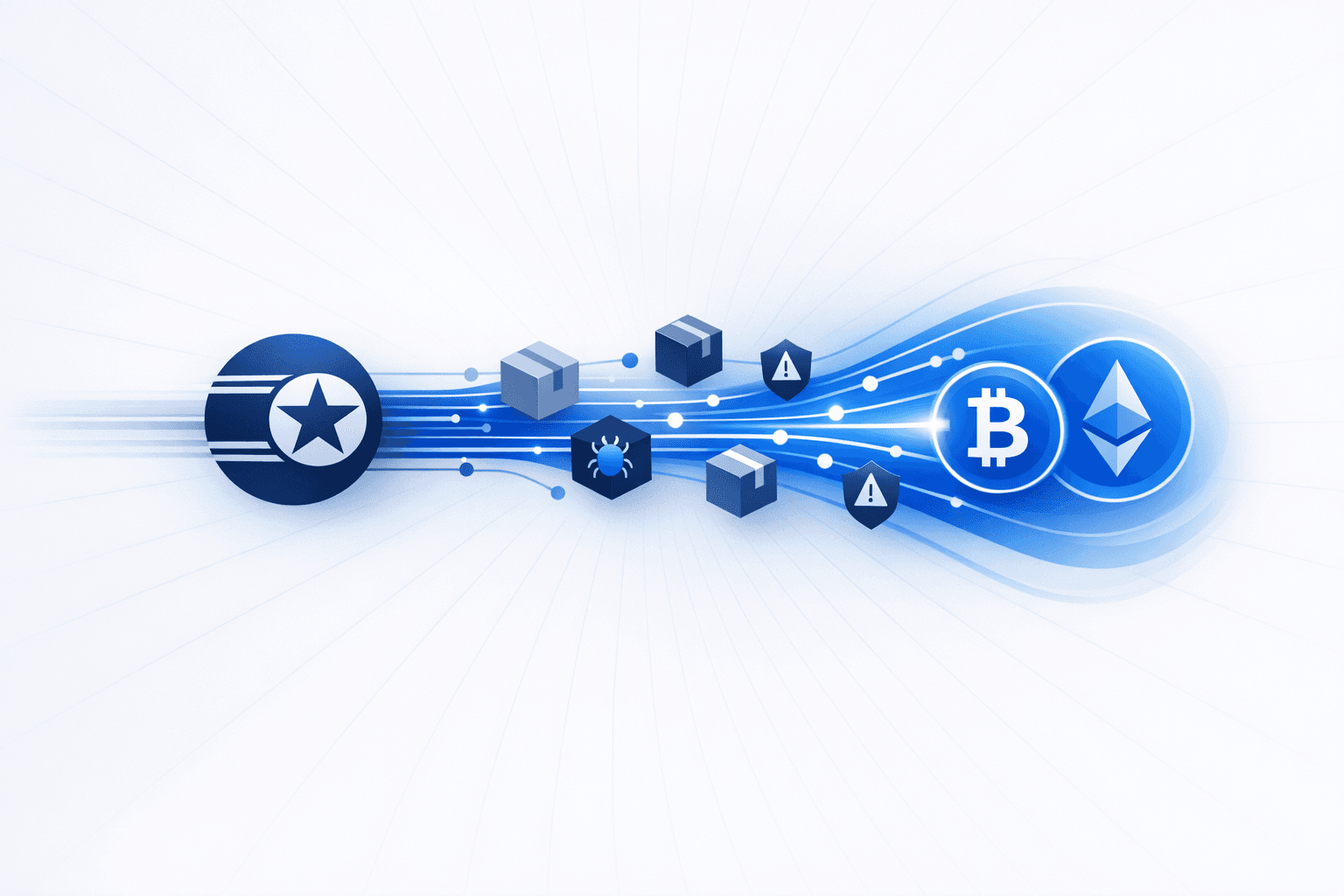
North Korean state-sponsored threat actors have significantly escalated their 'Contagious Interview' campaign by flooding the npm registry with over 338 malicious packages designed to steal cryptocurrency and sensitive credentials. The operation leverages a repeatable playbook, with threat actors creating more than 180 fake personas and using new npm aliases and registration emails to distribute the malware. These malicious packages have collectively been downloaded over 50,000 times, indicating a substantial reach and potential impact on the developer community. The attackers primarily target Web3, cryptocurrency, and blockchain developers, as well as technical job seekers, often approaching them on LinkedIn under the guise of recruiters or hiring managers. The campaign follows a multi-stage attack chain, beginning with reconnaissance on social media, followed by weaponization through the publication of typosquatted npm packages. Delivery occurs via recruiter lures, leading to exploitation through malware loaders that execute in memory. The malware tooling has evolved, with initial stages using direct BeaverTail droppers, and more recent waves employing HexEval, XORIndex, and encrypted loaders that reconstruct BeaverTail in memory. Once executed, these loaders typically fetch the InvisibleFerret backdoor, which establishes persistence and enables further malicious actions. The attackers use over a dozen command and control endpoints to manage the compromised systems. The campaign is iterative, with new malicious packages appearing weekly and loader code being regularly tweaked to evade detection. The npm security team has been notified, and takedown requests have been submitted, but as of the latest reports, 25 malicious packages remain live on the registry. The operation has resulted in multi-stage compromises, including the theft of wallet keys and sensitive credentials, leading to financial losses for victims. The attackers' use of social engineering, technical obfuscation, and rapid distribution across new aliases demonstrates a high level of sophistication and adaptability. The campaign has been mapped to the Lockheed Martin Cyber Kill Chain, illustrating its comprehensive approach from reconnaissance to actions on objectives. Security researchers emphasize the need for heightened vigilance among developers, especially those in the cryptocurrency and blockchain sectors, and recommend immediate review of npm dependencies and enhanced monitoring for suspicious package activity. The ongoing nature of the campaign and the attackers' ability to quickly adapt their tactics pose a persistent threat to the software supply chain. Organizations are urged to implement robust security controls, educate staff about social engineering risks, and coordinate with npm and security vendors to mitigate exposure. The incident highlights the growing risk of supply chain attacks via open-source ecosystems and the need for industry-wide collaboration to address such threats.
Why it matters
Impact assessment
The campaign is a high-impact software supply-chain threat targeting developers, especially Web3, cryptocurrency, blockchain, and broader technology organizations that consume open-source packages. Impact includes credential theft, crypto-wallet theft, persistent endpoint compromise, CI/CD exposure, and follow-on espionage or financial loss.
The scope is broad rather than narrowly targeted: researchers reported more than 338 malicious npm packages with over 50,000 downloads, and reporting across references indicates activity spanning npm, PyPI, Go Modules, crates.io, and Packagist, with more than 1,700 illicit packages tied to the broader campaign since January 2025. There are clear signs of active exploitation in the wild through recruiter-themed social engineering and live malicious packages remaining available at the time of reporting.
Supporting facts
- Threat actor: North Korea-linked “Contagious Interview” campaign.
- Primary victims: Web3, cryptocurrency, blockchain developers, technical job seekers, and developer environments.
- Secondary exposure: technology firms and CI/CD environments through compromised developer endpoints.
- Business impact:
- Theft of wallet keys and cryptocurrency.
- Theft of browser credentials, keychain data, clipboard contents, and other sensitive credentials.
- Persistent backdoor access on developer systems.
- Potential compromise of source code, build pipelines, and internal environments.
- Reputational and financial damage from developer workstation or software supply-chain compromise.
- Scope indicators:
- More than 338 malicious npm packages identified since 2025-07-14.
- More than 50,000 cumulative downloads.
- 25 malicious npm packages remained live at time of reporting.
- More than a dozen new malicious packages reported across multiple ecosystems.
- Broader campaign tied to more than 1,700 illicit packages since January 2025.
- Ecosystems affected:
- npm
- PyPI
- Go Modules
- crates.io
- Packagist
- Social engineering component:
- More than 180 fake personas.
- LinkedIn recruiter and hiring-manager lures.
- Malicious coding assignments and repositories used for delivery.