Water Utilities in 26 States Seek Free Cybersecurity Support After Iran-Linked Attacks
Sector Threat Intelligence · 3 sources · Updated 4d ago · First seen Nov 23, 2026
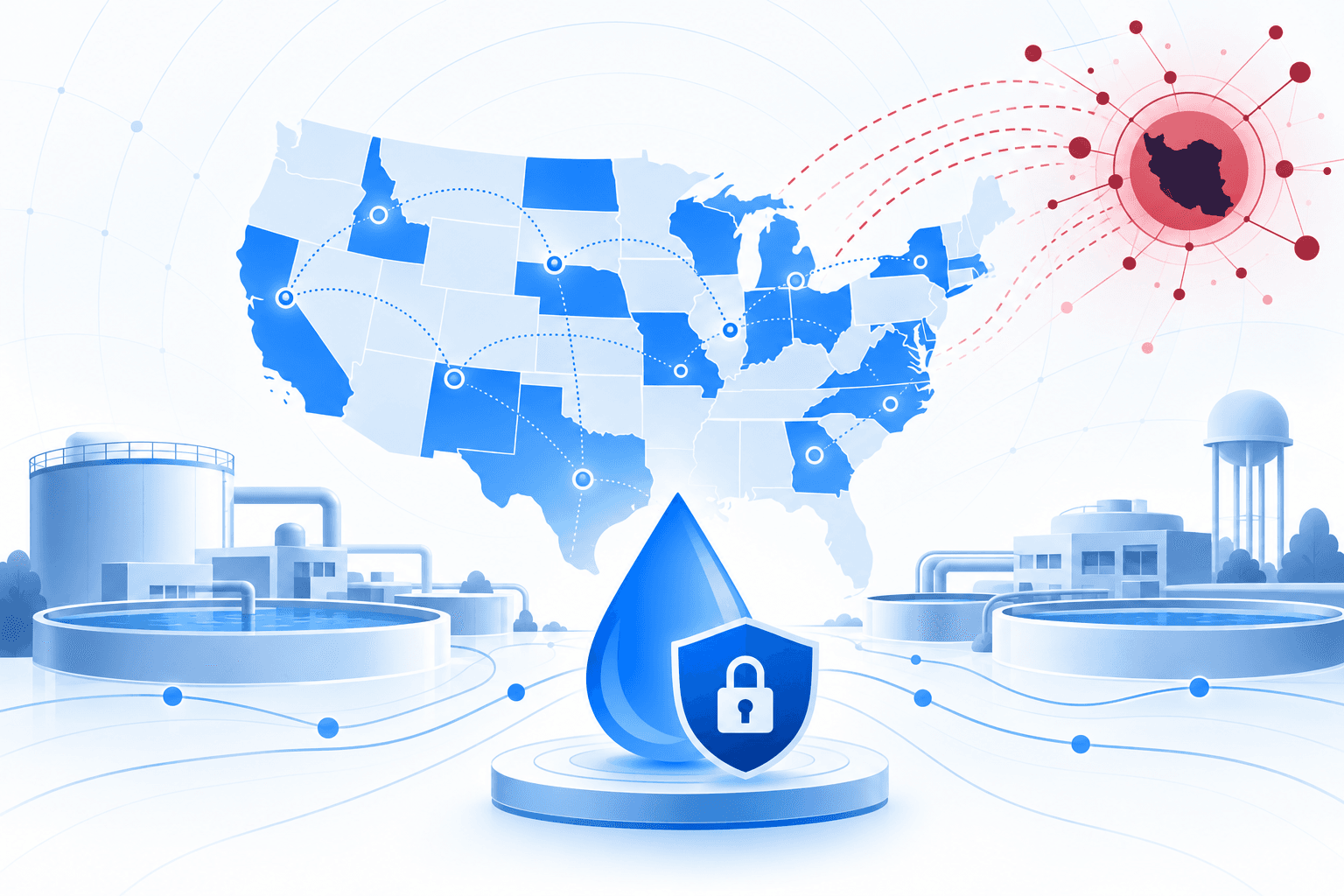
Water utilities across 26 U.S. states have signed up for free cybersecurity assistance from the Water Watch Center, which reports interest from more than 100 water and wastewater utilities, each serving 10,000 people or fewer. Many participants are already receiving cybersecurity hygiene support and professional, around-the-clock monitoring. The initiative follows attacks against water systems in Minnesota and at least six other states reportedly linked to hackers sympathetic to Iran.
Launched at the DEF CON convention in Las Vegas, the center is a joint initiative of the National Rural Water Association and DEF CON Franklin. Its services target small and rural utilities that lack sufficient cybersecurity staffing, funding, and expertise while relying on legacy operational technology. Programmable logic controllers without modern protections are among the security weaknesses highlighted in reporting on the program, underscoring the need for sustained monitoring and basic security improvements at resource-constrained water systems.
Why it matters
Small and rural U.S. water and wastewater utilities face operational cyber risk from legacy control systems, limited staffing, and constrained security budgets. The Water Watch Center reports enrollment across 26 states and interest from more than 100 utilities, each serving 10,000 people or fewer; enrollment does not establish compromise. Reported attacks affected water systems in Minnesota and at least six other states, but the supplied reporting does not establish service outages, water-quality effects, financial losses, or the technical extent of those compromises.
- Industry-specific impact: Utilities (55) is specifically affected: water and wastewater operators are receiving defensive assistance following reported attacks on water infrastructure. Small systems represent 91% of approximately 50,000 U.S. community drinking water systems, indicating a substantial population of potentially resource-constrained operators—not a count of compromised systems. Source
- Geography-specific impact: The United States (US) is specifically affected, with program enrollment across 26 states and reported attacks in Minnesota and at least six other states. The reporting does not identify all participating or attacked states; the attackers’ reported sympathy for Iran does not establish impact in Iran. Source