North Korea-Linked NodeLinkRAT Campaign Uses Public Notes for Command and Control
Attack Tradecraft · 7 sources · Updated 9d ago · First seen Oct 16, 2026
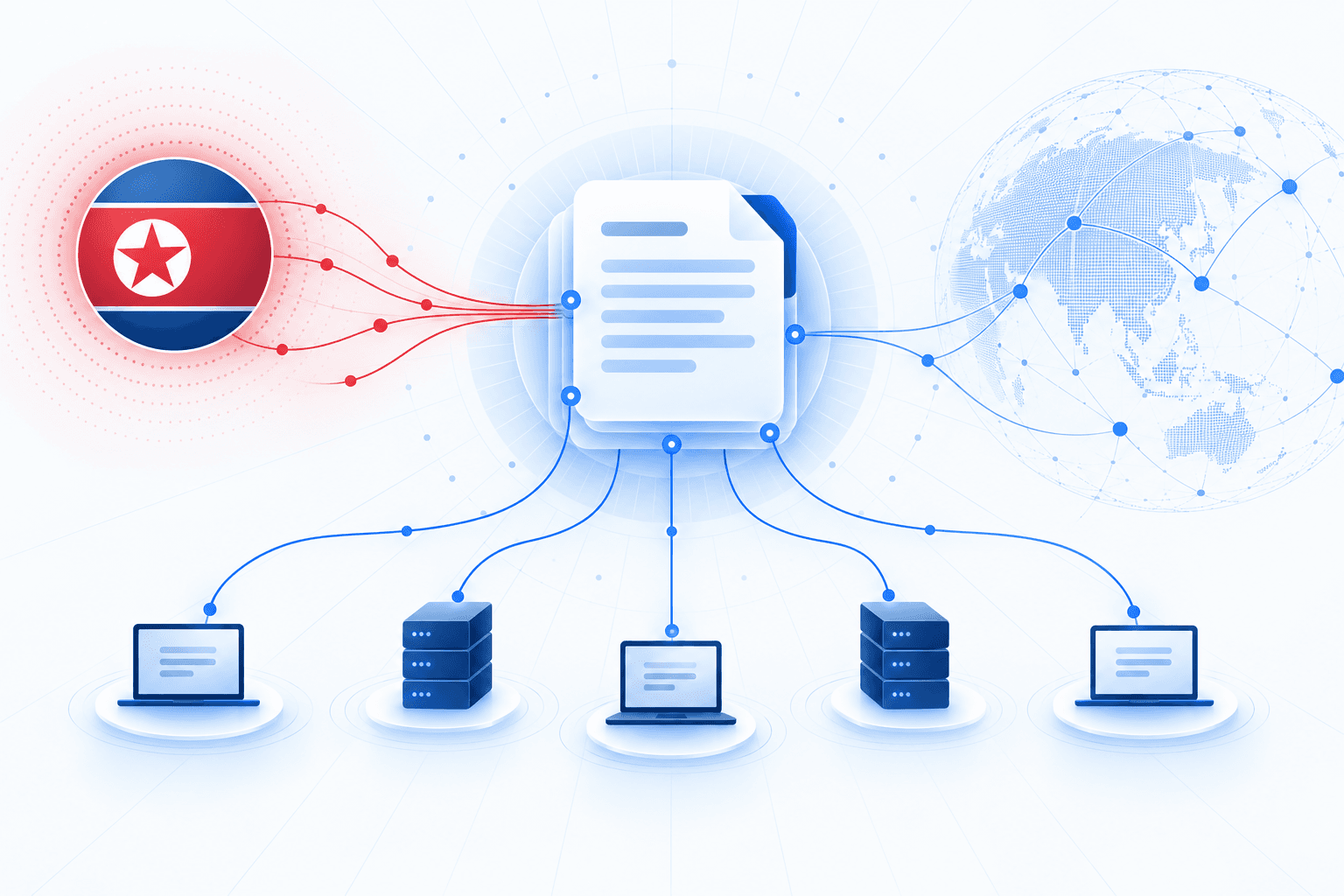
Genians Security Center (GSC) documented a cyberespionage campaign targeting South Korean policy and security personnel with spearphishing emails impersonating a senior secretary in a National Assembly member’s office. The emails sought replies using a seminar honorarium payment lure, then delivered a malicious Windows shortcut disguised as an HWP document. Execution triggered a multistage PowerShell infection chain using free web hosting and scheduled-task persistence. GSC attributed the campaign to the North Korea-linked Kimsuky group with moderate confidence, citing overlapping accounts, infrastructure, malware configurations, and targeting patterns, while acknowledging that decisive attribution evidence was absent.
The attackers abused aNotepad pages as mutable command channels, changing hosted code to deliver XenoRAT, reconnaissance and document-exfiltration scripts, or the newly identified JavaScript tool NodeLinkRAT. Running through a legitimate Node.js runtime, NodeLinkRAT supported command execution, file operations, directory exfiltration, and screenshot capture. Different second-stage code could be returned on successive command-and-control connections, complicating analysis and repeat collection. GSC’s findings underscore the need to retain initial-execution logs and correlate shortcut launches, script execution, scheduled tasks, and outbound transfers through behavior-based EDR rather than rely solely on filenames, signatures, or static network indicators.
Why it matters
Genians Security Center (GSC) documented targeted cyberespionage against South Korean policy and security personnel, with observed payloads enabling recurring document theft, system reconnaissance, remote command execution, and screen capture. The campaign presents substantial confidentiality and account-compromise risks; its total victim count and confirmed data-loss volume are not established, and attribution to Kimsuky remains moderate-confidence rather than conclusive.
- Industry-specific impact is not established. The sources identify victims by policy and security roles, not confirmed employer sectors; impersonation of a National Assembly aide does not establish compromise of a government organization.
- Geography-specific impact: South Korea is explicitly identified as the location of the targeted policy and security population. The documented September 12–18, 2026 exchange targeted an actual seminar attendee using an honorarium-payment lure (GSC).
- Scope and observed activity: GSC collected operational payloads spanning June–October 2026. Distinct collection folders suggest multiple victims, but their number and the precise victim-selection mechanism remain unconfirmed. This is an observed malicious campaign, not merely a theoretical exposure.
- Additional exposure: The decoy requested names and banking details, potentially enabling further disclosure if returned. Related infrastructure hosted NAVER credential-phishing files, indicating parallel account-theft activity; neither detail establishes a financial-sector victim.