Exposed CyberXero Workstation Reveals AI-Assisted Access Brokering and Ukrainian Targeting
Threat Actor Intelligence · 2 sources · Updated 18d ago · First seen Nov 10, 2026

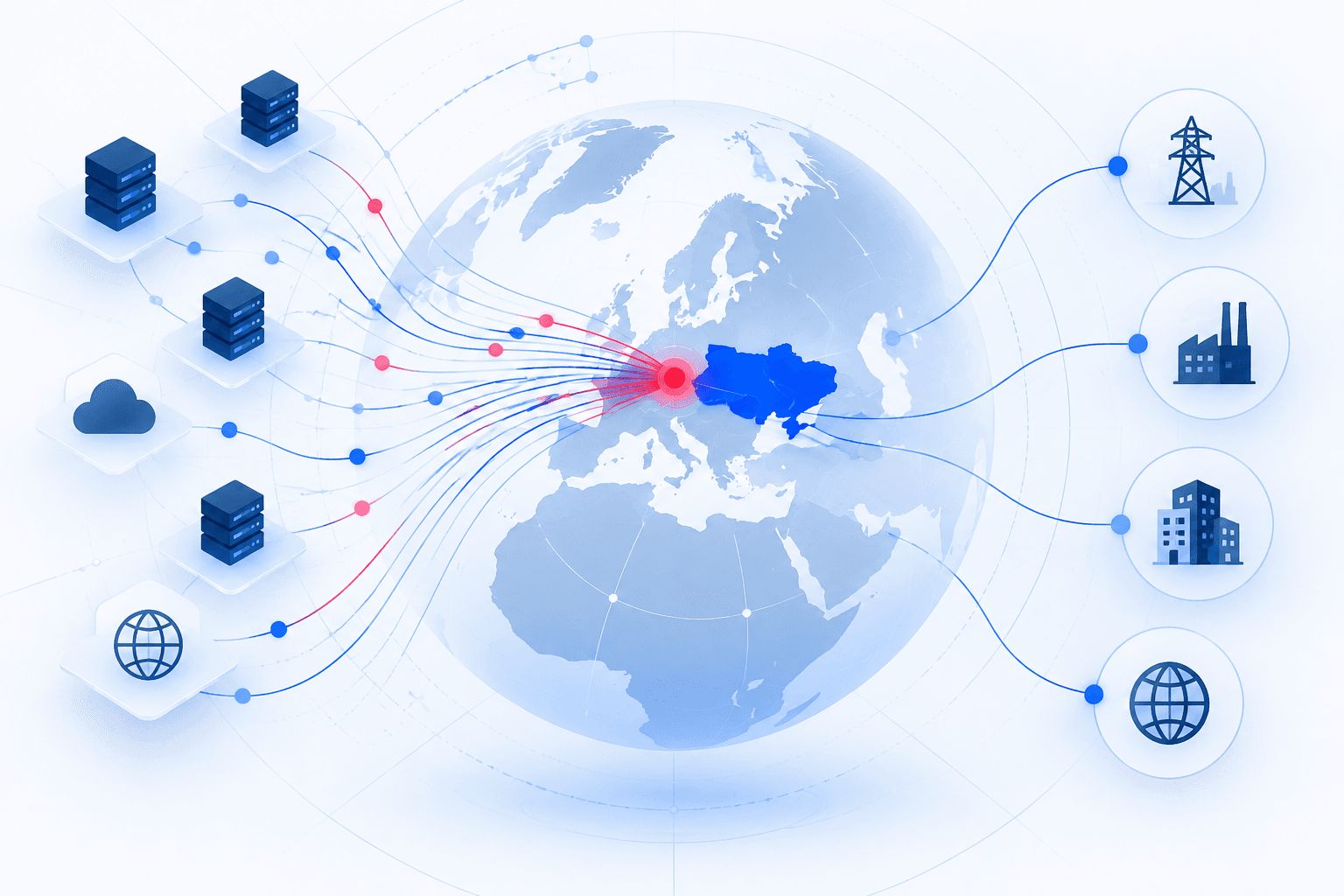
SOCRadar reported that an exposed workstation belonging to CyberXero, a Russian-speaking, financially motivated initial access broker, revealed operational records, stolen databases, exploitation tools, and an AI-assisted workflow involving up to 51 Claude Code agents and PentAGI integrated with Cobalt Strike. The investigation identified more than 40 affected organizations across five countries, separate from thousands of WordPress sites targeted through automated exploitation, and more than 628,000 records containing Ukrainian personal data. CyberXero combined mass web-application exploitation with targeted reconnaissance against Ukrainian energy and utilities organizations.
Documented techniques included SQL injection, malicious administrator creation, webshell deployment, stolen or hardcoded credential abuse, Redis exploitation, and lateral movement within a Chinese corporate network. CyberXero monetizes access and stolen data and has tested payment-card skimming, but SOCRadar found no evidence establishing a buyer, sale, or external tasking behind the Ukrainian critical-infrastructure reconnaissance. Defenders should prioritize web-application patching, investigate rogue WordPress administrator accounts and plugins, remediate exposed credentials, restrict Redis access, and hunt for the reported command-and-control infrastructure.
Why it matters
SOCRadar reports active exploitation by CyberXero, a financially motivated initial access broker, affecting more than 40 organizations across five countries, separately from more than 4,500 WordPress sites targeted through automated exploitation. Observed consequences include stolen databases, credentials and sessions, persistent access, and exposure of more than 628,000 Ukrainian personal records; these create account-takeover, fraud, privacy and downstream intrusion risks, but the supplied evidence does not establish disruption of critical-infrastructure operations.
- Industry-specific impact: Yes. Energy (10) and Utilities (55) are supported by targeted reconnaissance against seven Ukrainian energy/utilities organizations, including a transmission operator and private energy holding, plus data theft from district heating and gas providers. Consumer Discretionary (25) is supported by confirmed e-commerce compromises in Poland and Ukraine; Communication Services (50) by regional ISP customer-data theft and telecommunications compromises; Information Technology (45) by reported CRM/SaaS victims; and Government & Public Sector (90) by concentrated scanning of Polish government domains and attempted intrusions against two Pakistani national-security government entities. These represent a mixture of confirmed compromise and targeting, not equivalent intrusion outcomes. Source
- Geography-specific impact: Yes. Ukraine (UA) has documented data theft and infrastructure reconnaissance; Poland (PL) has two confirmed e-commerce compromises and government-domain scanning; China (CN) has a compromised corporate network spanning at least three internal segments; the Netherlands (NL) has a company accessed through exposed Magento configuration; and Pakistan (PK) has targeted government intrusion attempts without confirmed success. These locations are supported by victim operations or targeting, not attacker infrastructure. Source
- Scope and uncertainty: Automated web exploitation coexisted with curated Ukrainian reconnaissance. No buyer, completed sale or external tasking was established for that reconnaissance, and Russian-language artifacts and working hours do not establish state sponsorship. Neither the number of targeted WordPress sites nor the number of scanned URLs should be treated as a count of confirmed compromises.