Mallory
← Back to News
ai-enabled-threat-activitycritical-infrastructure-threatransomware-group-operation

NCSC Warns UK Critical Infrastructure to Prepare for AI-Powered Ransomware by 2028

Emerging Technology Risk · 6 sources · Updated 24d ago · First seen Nov 3, 2026

NCSC Warns UK Critical Infrastructure to Prepare for AI-Powered Ransomware by 2028

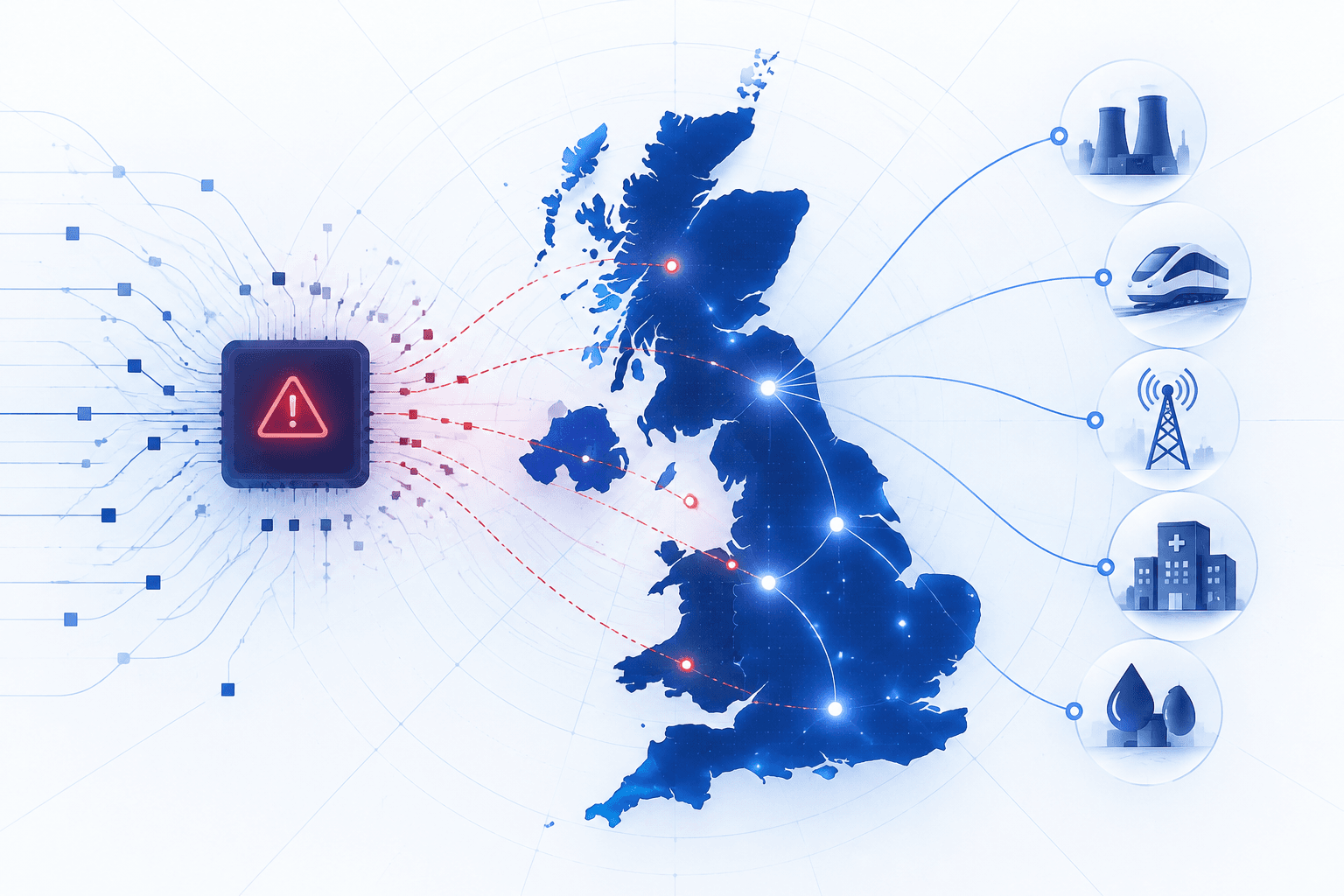
The UK’s National Cyber Security Centre warned that critical national infrastructure should prepare for ransomware involving AI-powered malware by 2028. Its State of the Cyber Nation annual review assesses that hostile actors’ adoption of AI is highly likely to increase the scale and efficiency of ransomware, social engineering and vulnerability exploitation within two years. At the report’s launch, NCSC CEO Richard Horne warned that AI could accelerate discovery and exploitation of longstanding weaknesses, driving a sharp increase in incidents where organisations have underinvested in security. He highlighted Russian campaigns, Iranian operations, Chinese capabilities and criminal ransomware as significant threats.

The NCSC urged organisations to reduce unnecessary internet exposure, replace unsupported technology, strengthen access controls and monitoring, and address insecure supply chains, including those supporting operational technology and essential services. It described Cyber Essentials as a baseline, not a complete security strategy, and called for leadership accountability for resilience. The government announced £60 million for the first phase of the national Cyber Shield and £70 million for a National Exposure and Real-Time Vulnerability Centre, alongside a new AI Cyber Security Centre of Excellence in Manchester, to strengthen AI-enabled cyber defence.

Why it matters

The NCSC warns that UK critical national infrastructure should prepare for ransomware involving AI-powered malware by 2028, with AI accelerating exploitation of existing weaknesses rather than necessarily introducing new attack methods. Potential consequences include extortion, data disclosure, interruption of essential services and disruption of physical processes, particularly where unsupported IT/OT and insecure supply chains persist. This is a forward-looking assessment, not confirmation of an AI-powered ransomware incident; the references separately describe existing attacks and historical disruption.

  • Industry-specific impact: Utilities (55) and Industrials (20) face explicitly identified OT exposure involving electricity switching, water facilities, dams and manufacturing lines. Consumer Staples (30) faces potential disruption to food availability and refrigeration-dependent operations. Military & Defense (92) has observed targeting: Horne describes sustained attempts to penetrate UK military networks. These are identified exposures or targeting, not evidence that every sector has suffered AI-enabled compromise (NCSC speech, NCSC warning). Consumer Discretionary (25) has historical observed impact: the secondary account reports approximately £196 million in direct costs from the 2025 JLR cyberattack, without establishing AI involvement (Arctic Wolf).
  • Geography-specific impact: The United Kingdom (GB) is explicitly identified through the warning to UK critical infrastructure, reported targeting of UK military networks and the assessment of Chinese intent toward UK strategic targets. Refrigeration disruption across Europe is also cited, but individual affected countries are not named (NCSC speech).
New surface, new adversariesTrack how attackers are adapting to this technology.
Track this risk
Event timeline

How this story unfolded

Events from the most recent confirmed update back to the earliest known activity.

8 events · Oct 2026 – Nov 3, 2026
  1. Reported Nov 4, 202624d ago

    Minister announces nearly £10 million for small-business Cyber Essentials subsidies

    Cybersecurity minister Baroness Lloyd of Effra announced nearly £10 million to cover 75% of Cyber Essentials costs for small and medium-sized businesses. The subsidy is available until the end of March 2027.

    The Next Decade of Cyber Resilience Starts With the Basics | Arctic Wolf
  2. Reported Nov 3, 202626d ago

    Government announces AI Cyber Security Centre of Excellence in Manchester

    The government announced a new NCSC-run AI Cyber Security Centre of Excellence in Manchester to develop AI security expertise within government.

    Cyber chief: UK facing AI-powered attacks on critical infrastructure within two years | National Cyber Security Centre
  3. Reported Nov 3, 202626d ago

    Government announces £70 million for national vulnerability centre

    The government announced £70 million for the National Exposure and Real-Time Vulnerability Centre, known as NERV. The planned centre will use AI to identify vulnerabilities across UK critical infrastructure and the wider economy.

    Cyber chief: UK facing AI-powered attacks on critical infrastructure within two years | National Cyber Security Centre
  4. Reported Nov 3, 202626d ago

    Chancellor announces £60 million for national Cyber Shield

    During the week preceding the NCSC report's publication, the Chancellor announced £60 million to develop the first phase of a national Cyber Shield.

    Cyber chief: UK facing AI-powered attacks on critical infrastructure within two years | National Cyber Security Centre
  5. Nov 3, 202626d ago

    NCSC chief warns AI will accelerate exploitation of longstanding weaknesses

    At the annual review launch in London, Richard Horne warned that AI could drive an unprecedented rise in incidents by accelerating exploitation of existing weaknesses, and assessed that China highly likely intends to use AI against UK critical infrastructure and other strategic targets. He urged leaders to replace end-of-life technology, protect critical physical systems and adopt passkeys.

    Richard Horne's speech at the NCSC Annual Review 2026 launch | National Cyber Security Centre
  6. Nov 3, 202626d ago

    NCSC publishes State of the Cyber Nation and warns of AI-enabled ransomware

    The NCSC published its 2026 annual review, warning that UK critical national infrastructure should prepare for ransomware involving AI-powered malware by 2028. The report assessed that AI adoption would likely increase the scale and efficiency of ransomware, social engineering and vulnerability exploitation.

    rxerium: RT @NCSC: Today, we've published our 2026 annual review: The State of the Cyber Nation. The UK faces a moment of choic...
  7. Reported Nov 3, 202626d ago

    NCSC and partners issue over 110,000 alerts about a PHP vulnerability

    The NCSC and industry partners issued more than 110,000 proactive notifications and Early Warning alerts to UK organisations in response to a PHP vulnerability. Horne's speech did not identify the vulnerability.

    Richard Horne's speech at the NCSC Annual Review 2026 launch | National Cyber Security Centre
  8. Oct 2026

    Linux Kernel Project patches more than 1,000 vulnerabilities

    Richard Horne reported that the Linux Kernel Project patched more than 1,000 vulnerabilities in the month preceding his November 2026 speech, illustrating the scale of vulnerability remediation.

    Richard Horne's speech at the NCSC Annual Review 2026 launch | National Cyber Security Centre
Linked entities

Related entities

Vulnerabilities, threat actors, malware, products, organizations, and breaches Mallory has linked to this story.

Open in app →

Organizations

1 linked
National Cyber Security Centre
Do you run this?Follow how adversaries are adapting to this technology, and where it touches your stack today.
Track This Risk
Mallory platform

See the full picture, correlated to your attack surface.

This page covers what’s public. Mallory adds the parts that aren’t: which of your assets are affected, which threat actors are using it right now, and what to deploy next.

Exposure mappingMap indicators from this story to your assets and identify affected systems in minutes.
Threat actor evidenceEvery observed campaign, victim, and pivot linked to actors named in this story.
Associated malwareMalware, exploits, and IOCs connected to the activity described here.
Detection signaturesYARA, Sigma, and Snort rules deployed to your SIEM as soon as they’re published.
Scheduled alertsGet matching new stories delivered to your team as they break, not the next morning.
AI threadsAsk questions about this story and take action on the answers.