Mallory
← Back to News
persistence-methodransomware-group-operationdefense-evasion-methodinitial-access-method

Ransomware Operators Abuse Employee-Monitoring Software and SimpleHelp for Persistent Access

Attack Tradecraft · 4 sources · Updated 2mo ago · First seen Jan 23, 2026

Ransomware Operators Abuse Employee-Monitoring Software and SimpleHelp for Persistent Access

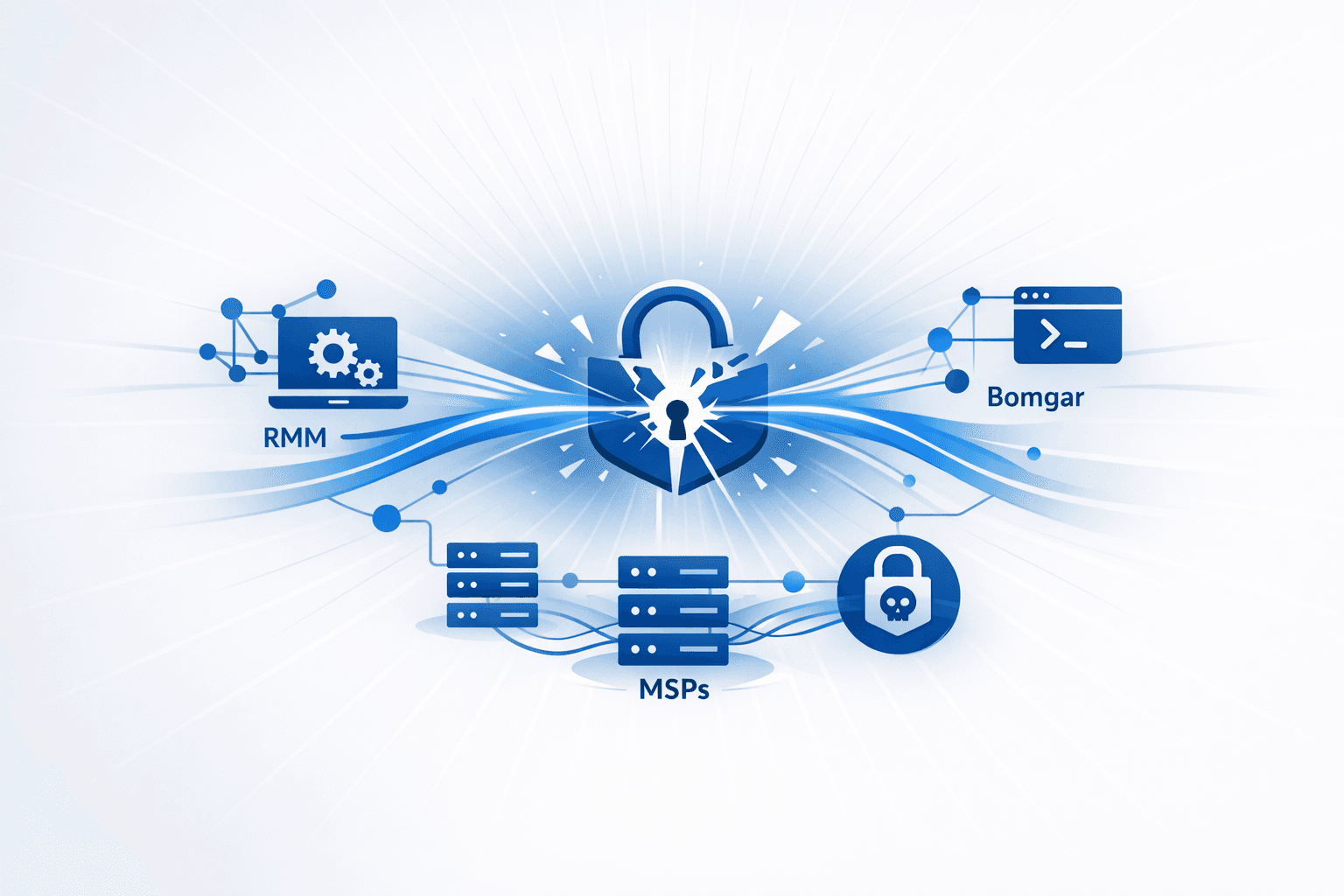
Ransomware reporting on Black Shrantac highlights attackers’ use of legitimate software against global organizations, while Huntress documented two related intrusions abusing Net Monitor for Employees Professional and SimpleHelp. Net Monitor’s bundled pseudo-terminal, winpty-agent.exe, enabled command execution, reconnaissance, tool delivery, and installation of additional remote-access channels. Attackers disguised services and processes as OneDrive and svchost.exe. Reuse of the SimpleHelp filename vhost.exe and overlapping gateway infrastructure, including dronemaker[.]org, suggested a common operator across the two Huntress cases; the supplied evidence does not establish attribution to Black Shrantac.

One intrusion involved account manipulation, attempted Windows Defender tampering, and attempted deployment of Crazy ransomware from the VoidCrypt family. In the other, attackers used a compromised vendor SSL VPN account, accessed a domain controller through RDP, and installed both remote-access products, with SimpleHelp running as a Windows service. Monitoring rules targeting cryptocurrency and remote-access keywords indicated potential financial theft beyond ransomware. Defenders should prioritize vendor VPN account security, investigate unexpected monitoring or RMM installations and misleading service names, and correlate remote-access activity with account changes and endpoint-protection tampering.

Why it matters

Attackers abused legitimate employee-monitoring and remote-management software to maintain redundant access in two reported intrusions, including one involving a domain controller reached through a compromised vendor VPN account. Potential consequences include domain-wide compromise, ransomware disruption, and cryptocurrency theft; Crazy ransomware deployment was attempted, but successful encryption or financial theft is not established. The supplied evidence describes targeted intrusions, not a quantified global campaign, and does not establish attribution to Black Shrantac.

  • Affected populations: Organizations using vendor SSL VPN access, Windows infrastructure, and employee-monitoring or RMM products; IT teams and MSPs must distinguish authorized installations from attacker-deployed agents.
  • Operational exposure: Two independent remote-access channels can preserve attacker access after only one tool is removed. Domain-controller access raises the stakes for identity security and recovery.
  • Observed activity: Account manipulation, attempted Windows Defender tampering, reconnaissance, and attempted deployment of Crazy ransomware from the VoidCrypt family.
  • Financial exposure: Cryptocurrency-focused monitoring indicates potential theft intent, not confirmed theft.
Who uses this technique?Get the actors, campaigns, and ATT&CK mapping behind it.
Get the tradecraft
Event timeline

How this story unfolded

Events from the most recent confirmed update back to the earliest known activity.

2 events
  1. Reported Sep 4, 20251y ago

    Compromised vendor VPN account enables monitoring-tool intrusion

    In the second intrusion, an attacker used a compromised vendor SSL VPN account, connected to a domain controller through RDP, and installed Net Monitor for Employees Professional and SimpleHelp with disguised processes and redundant remote-access infrastructure. SimpleHelp logs revealed monitoring triggers for cryptocurrency and remote-access keywords; Huntress assessed that shared infrastructure and tradecraft linked the two intrusions to one operator or group.

    Employee Monitoring and SimpleHelp Software Abused in Ransomware Operations | Huntress
  2. Reported Sep 4, 20251y ago

    Attacker abuses monitoring tools and attempts Crazy ransomware deployment

    In the first of two intrusions observed across late January and early February 2026, an attacker used Net Monitor for Employees Professional and SimpleHelp for remote access and persistence. The attacker manipulated Windows accounts, attempted to tamper with Windows Defender, and dropped multiple Crazy ransomware binaries associated with the VoidCrypt family.

    Employee Monitoring and SimpleHelp Software Abused in Ransomware Operations | Huntress
Linked entities

Related entities

Vulnerabilities, threat actors, malware, products, organizations, breaches, and observables Mallory has linked to this story. Indicator values are masked here and available in full in the app.

Open in app →

Organizations

1 linked
SimpleHelp

Observables

12 linked

Indicator values are masked on this page. View all 12 in Mallory Domains, IPs, hashes, and URLs are exportable to your SIEM.

Do you run this?Get the adversaries, campaigns, and ATT&CK mapping behind this technique, with detections ready to deploy.
See Who Uses This Technique
Mallory platform

See the full picture, correlated to your attack surface.

This page covers what’s public. Mallory adds the parts that aren’t: which of your assets are affected, which threat actors are using it right now, and what to deploy next.

Exposure mappingMap indicators from this story to your assets and identify affected systems in minutes.
Threat actor evidenceEvery observed campaign, victim, and pivot linked to actors named in this story.
Associated malwareMalware, exploits, and IOCs connected to the activity described here.
Detection signaturesYARA, Sigma, and Snort rules deployed to your SIEM as soon as they’re published.
Scheduled alertsGet matching new stories delivered to your team as they break, not the next morning.
AI threadsAsk questions about this story and take action on the answers.