
Loading story…
VirusTotal classified 6,637 of 35,878 AI agent skills (18.5%) as malicious, with 52.9% carrying broader security or abuse risks. Among malicious skills, 62% contained attacks entirely in natural-language instructions, demonstrating that agent extensions can introduce supply-chain threats without malicious executable code. Stealers and loaders accounted for 78.5% of malicious skills, while 78.2% belonged to recurring families, including campaigns spanning multiple agent platforms. The findings follow OpenClaw’s announcement of a partnership with VirusTotal for skill security.
VirusTotal introduced CARO-A, a naming convention that identifies malicious skills by capability, targeted ecosystem, campaign family, and payload location. In its benchmark, three open-source scanners missed substantial shares of malicious skills and produced high false-positive rates; a single-pass language model achieved 81.3% detection and 97.7% precision against internally generated reference labels, rather than independently validated ground truth. The report recommends reviewing both skill instructions and scripts, pinning trusted versions, isolating agents from sensitive credentials, and monitoring unexpected data transfers and configuration changes—controls that address instruction-based abuse as well as conventional malicious payloads.
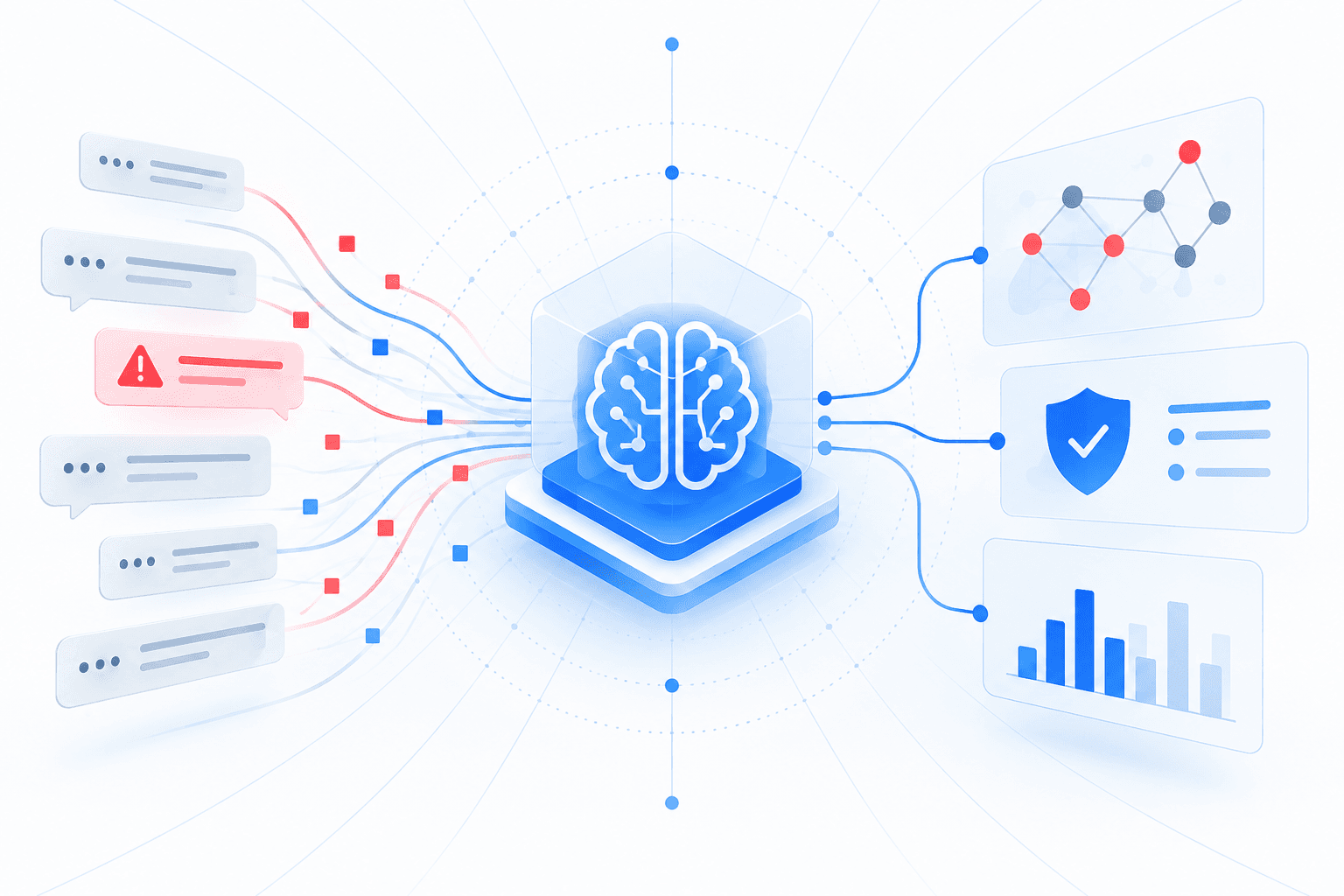
Track how attackers are adapting to this technology.
5 events from the most recent confirmed update back to the earliest known activity.
VirusTotal benchmarked Tencent AI-Infra-Guard, NVIDIA SkillSpector, and Cisco Skill Scanner, finding default detection rates of 63.7%, 43.1%, and 28.5%, respectively, alongside substantial false-positive rates. A single-pass Gemma-based model achieved 81.3% detection and 97.7% precision against VirusTotal's internally generated reference labels.
VirusTotal introduced CARO-A to describe malicious skills by capability, targeted ecosystem, campaign family, and payload location. The convention derives campaign families from similarity clustering of skill content and infrastructure rather than author or repository names.
VirusTotal expanded its study to 35,878 skills and classified 6,637, or 18.5%, as malicious; 62% of malicious skills contained attacks entirely in natural-language instructions. It also identified 337 malicious campaign families spanning multiple platforms.
VirusTotal analyzed an initial collection of 3,016 AI agent skills, which served as the predecessor to its larger study.
OpenClaw established a VirusTotal partnership for skill security. VirusTotal's subsequent report stated that every skill published to ClawHub was scanned through the partnership.
Vulnerabilities, threat actors, malware, products, organizations, breaches, and observables Mallory has linked to this story. Indicator values are masked here and available in full in the app.
Indicator values are masked on this page. See the values in Mallory Domains, IPs, hashes, and URLs are exportable to your SIEM.
Follow how adversaries are adapting to this technology, and where it touches your stack today.
2 references tracked. Mallory keeps watching after this page renders.
Map indicators from this story to your assets and identify affected systems in minutes.
Every observed campaign, victim, and pivot linked to actors named in this story.
Malware, exploits, and IOCs connected to the activity described here.
YARA, Sigma, and Snort rules deployed to your SIEM as soon as they’re published.
Get matching new stories delivered to your team as they break — not the next morning.
Ask questions about this story and take action on the answers.
Other stories Mallory is tracking that overlap on entities, sources, or topic labels.
OWASP has published a final Top 10 list of security risks for agentic AI skills and introduced the **Universal Agentic Skill Format v1.0**, warning that **malicious skills** and **supply-chain compromise** are the most urgent threats facing enterprise AI agents. The guidance highlights how untrusted external instructions, overprivileged skills, and weak visibility into deployed agents can let attackers abuse legitimate automation paths rather than relying on classic prompt injection alone. The release follows public demonstrations showing how a single weaponized skill or plugin can compromise agents at scale. Researchers described a campaign in which a malicious skill distributed through an Instagram ad reportedly led to the hijacking of **26,000 agents**, while another proof of concept showed an unofficial Claude Code marketplace plugin coercing an AI coding assistant to install a trojanized `httpx` package from an attacker-controlled source. OWASP and industry practitioners said such attacks can steal credentials, persist through dependency manipulation, and evade detection unless organizations inventory agent usage and can rapidly disable malicious skills across their environments.
Aug 21, 2026
*OpenClaw*, an autonomous AI agent platform with a community “skills” marketplace, integrated **VirusTotal** scanning to check skills uploaded to *ClawHub* after security firms and researchers highlighted that the ecosystem is being abused to distribute malicious components. Reporting described attackers leveraging trust in marketplaces and “skills” registries to seed malware, and noted active discussion in criminal forums about using OpenClaw skills to support illicit activity (e.g., botnet operations). Separate research also pointed to rapid growth in lookalike packages (e.g., “claw” on npm/PyPI), reinforcing concerns that the surrounding supply chain is being targeted as the platform’s popularity increases. Enterprise risk assessments emphasized that many organizations are granting OpenClaw **privileged access** quickly (including via shadow deployments), creating high-impact failure modes if a host or skill is compromised—potentially exposing **API keys, OAuth tokens, and sensitive conversations**. OpenClaw acknowledged that VirusTotal-based scanning is **not sufficient** to detect non-signature threats such as prompt-injection-driven malicious behavior or skills that use natural language instructions to induce harmful actions, leaving material residual risk even with malware scanning in place.
Jul 1, 2026
AI-agent skill packages and repository instruction files are emerging as a supply-chain attack vector: attackers can alter natural-language instructions in files such as `SKILL.md` or `AGENTS.md` to hijack an agent’s goals and use its existing tools, credentials, filesystem access, and network connectivity. Reported examples include the ClawHavoc campaign, Atomic macOS Stealer distribution through OpenClaw skills, and a malicious ClawHub skill identified by Cisco that exfiltrated data and injected prompts; compromised release pipelines and malicious package releases can also seed this control plane. The impact depends on the authority granted to the affected agent, particularly where it can execute commands or access secrets without meaningful approval. Organizations should treat agent instructions and skills as privileged, untrusted dependencies: maintain an inventory, review raw source and Unicode content, use vetted internal registries and pinned versions, sandbox agents, constrain credentials and outbound access, and ensure approval prompts disclose the actual command payload and destination. Instruction-file tampering should trigger investigation and restart of potentially compromised agent sessions.
Sep 3, 2026