OFAC Sanctions Iranian Crypto Exchange BitBank Over IRGC Bitcoin Transfers
Regulatory & Policy · 2 sources · Updated 2mo ago · First seen Sep 18, 2026
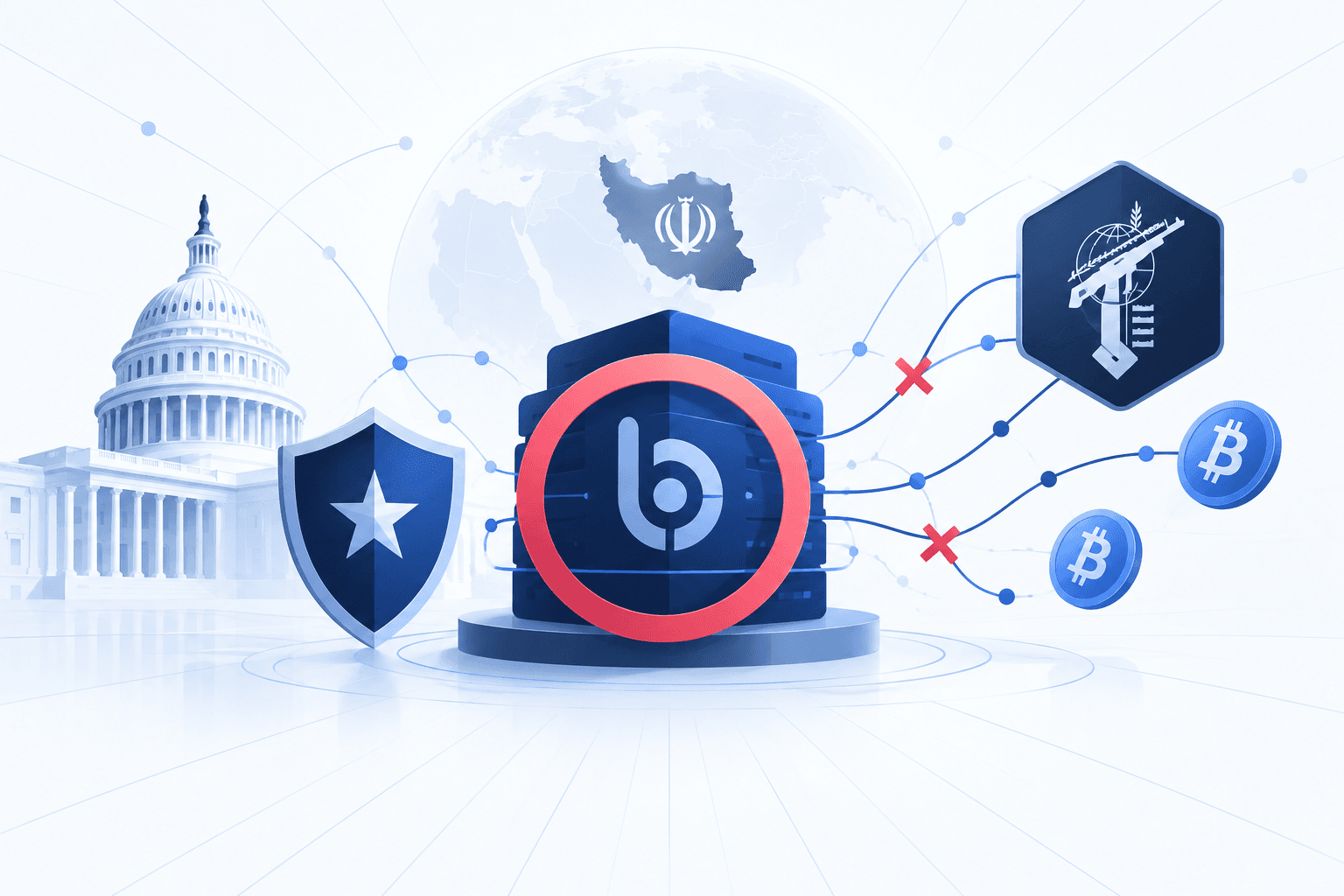
The U.S. Treasury Department’s Office of Foreign Assets Control (OFAC) designated Iranian cryptocurrency exchange BitBank—also known as BitBank3—under Executive Order 13902 for its alleged role in financier Babak Zanjani’s digital-asset network. Treasury said the exchange transferred hundreds of millions of dollars’ worth of Bitcoin to Iran’s Islamic Revolutionary Guard Corps (IRGC) in June and July 2026, and that sanctioned maritime-services firm Hormuz Safe Marine Services Authority used BitBank to process cryptocurrency payments collected for services in the Strait of Hormuz.
OFAC also sanctioned BitBank developer Pishtaz Simorgh Electronic Trade Company and three executives tied to the Dot One Value Creation Group. The action extends prior measures against Zanjani-linked entities including Zedcex, Zedxion, ZedPay, ZEDX DMCC, BZ Diamond, and other Dot One operations, which include the MyDot platform, DOTO token, Dot One Smart Chain, and exchange services. Treasury’s public announcement did not provide wallet addresses, transaction hashes, counterparties, or other on-chain evidence supporting the stated transfer total.
Why it matters
Impact assessment
OFAC's 17 September 2026 designation creates immediate sanctions-compliance and counterparty risk for cryptocurrency exchanges, payment providers, financial institutions, maritime-services firms, and organizations that may transact with Iranian digital-asset services. The action targets a network that OFAC says transferred hundreds of millions of dollars in Bitcoin to the IRGC and processed maritime-service payments tied to the Strait of Hormuz.
- Directly affected entities: BitBank/BitBank3, developer Pishtaz Simorgh Electronic Trade Company, and named Dot One-linked executives.
- Indirectly exposed populations: virtual-asset service providers (VASPs), blockchain analytics teams, financial institutions, sanctions-screening teams, and companies accepting or facilitating crypto payments connected to Iranian counterparties or Strait of Hormuz maritime operations.
- Business impact: dealings involving designated persons or entities can create blocking, reporting, enforcement, correspondent-banking, reputational, and vendor-risk consequences, particularly for U.S. persons and firms subject to U.S. secondary-sanctions risk.
- Scope: targeted at a specific Iranian digital-asset and commercial network, but potentially broad across counterparties using BitBank, BitBank3, Dot One services, or associated exchange infrastructure.
- Exploitation status: this is not a software vulnerability or intrusion report. OFAC alleges real-world sanctions-evasion and IRGC-financing activity; public reporting provides no wallet addresses, transaction hashes, or other on-chain evidence to independently validate the stated transfer volume.
Designated and associated entities
- BitBank / BitBank3
- Pishtaz Simorgh Electronic Trade Company
- Dot One Value Creation Group
- Babak Zanjani
- Hormuz Safe Marine Services Authority
- Zedcex Exchange
- Zedxion Exchange
- ZedPay
- ZEDX DMCC
- BZ Diamond
- Avan Exchange
Named individuals
- Hossein Ali Zaker Hossein
- Mohammad Mahdi Zaker Hossein, CEO of Pishtaz Simorgh Electronic Trade Company
- Seyed Adel Heydari / Heidari, identified in source reporting as Dot One board vice chairman