US Sanctions Nobitex and Other Iranian Crypto Exchanges Over IRGC-Linked Finance
Regulatory & Policy · 4 sources · Updated 5mo ago · First seen Jun 2, 2026
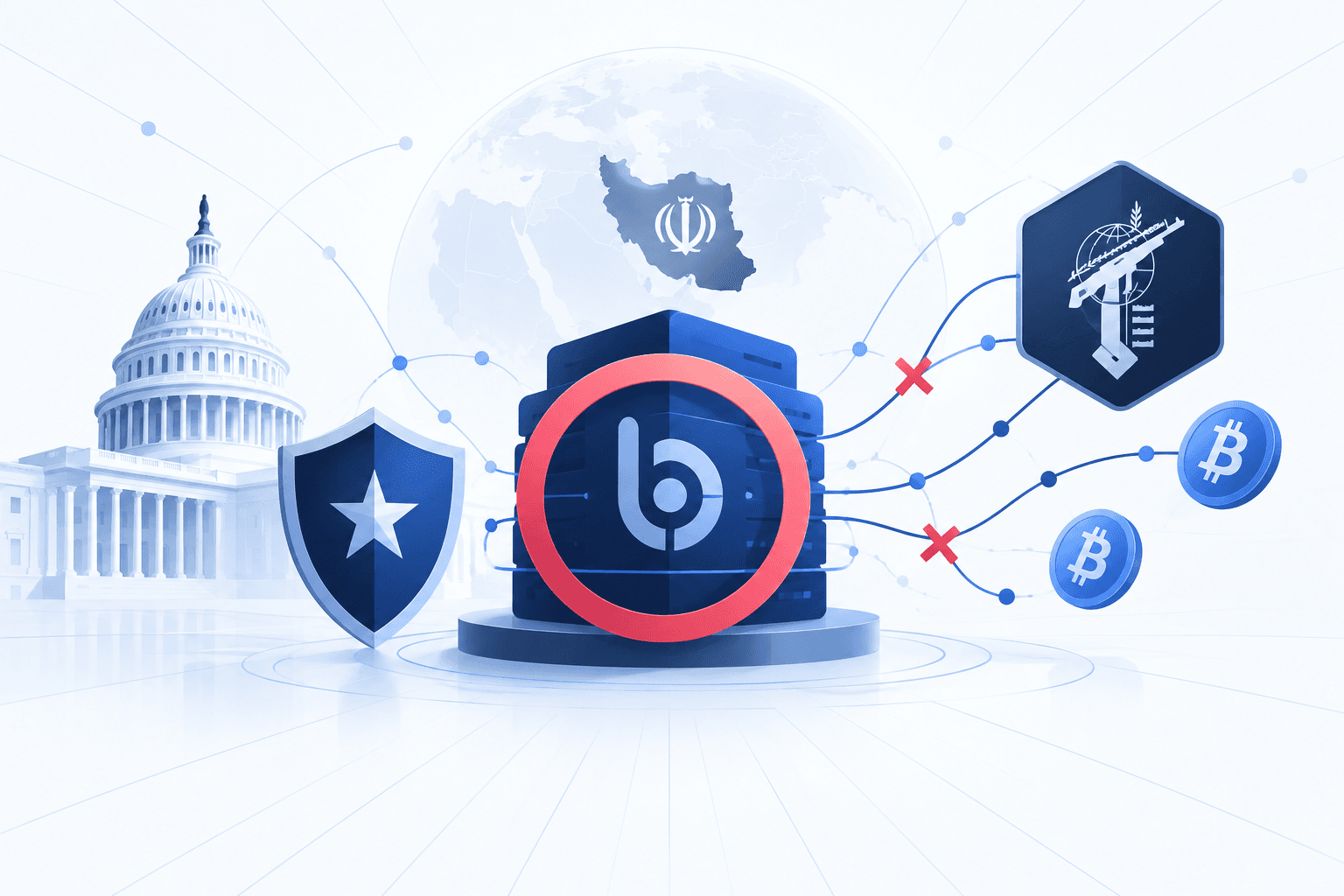
The U.S. Treasury's Office of Foreign Assets Control (OFAC) sanctioned four Tehran-based cryptocurrency exchanges—Nobitex, Wallex, Bitpin, and Ramzinex—along with several executives and founders, alleging they helped Iran evade sanctions and move regime funds through digital assets. Treasury said Nobitex, Iran's largest exchange, processed more than half of Iranian digital-asset inflows in 2025, enabled the Central Bank of Iran to access hundreds of millions of dollars in stablecoins, and facilitated transactions tied to the Islamic Revolutionary Guard Corps (IRGC), including IRGC-affiliated ransomware operators and other illicit finance activity.
The designations, issued under the Trump administration's Economic Fury campaign, freeze any sanctioned assets under U.S. jurisdiction and bar U.S. persons from dealing with the listed entities and individuals. Treasury described the move as the first time OFAC has individually placed an Iran-incorporated digital-asset exchange on the SDN list, while reporting that Ramzinex alone processed more than $2.45 billion in transactions and that Iran's crypto ecosystem received nearly $7.8 billion in 2025. The action expands U.S. pressure on Iranian financial networks that officials say support sanctions evasion, terrorism-linked finance, and ransomware-related transactions.
Why it matters
Impact assessment
This action primarily affects cryptocurrency exchanges, financial institutions, sanctions compliance teams, and any organization with exposure to Iranian digital-asset counterparties. The immediate impact is legal, financial, and operational: U.S. persons are barred from dealing with the designated entities and individuals, U.S.-linked assets are blocked, and non-U.S. firms face secondary sanctions risk for facilitating prohibited transactions.
The exposure is targeted rather than indiscriminate, but it is significant because the sanctioned exchanges appear to represent a large share of Iran’s crypto ecosystem. Treasury states Nobitex alone processed more than 50% of Iranian digital-asset inflows in 2025, while Wallex and Bitpin accounted for 12% and 10% respectively, indicating broad ecosystem relevance and likely downstream exposure for global exchanges, OTC desks, payment processors, and blockchain analytics teams.
Supporting facts
- Sanctioned entities: Nobitex, Wallex, Bitpin, Ramzinex.
- Sanctioned individuals: Amir Hossein Rad, Seyed Ali Khoee, Seyed Mohammad Ali Aghamir Mohammad Ali, Seyed Mohammad Aghamir Mohammad Ali.
- Treasury states Nobitex facilitated transactions tied to sanctions evasion, terrorist financing, and IRGC-linked activity, including IRGC-affiliated ransomware actors.
- Treasury states Ramzinex processed more than $2.45 billion in transactions.
- Chainalysis data cited in the reporting says Iran’s crypto ecosystem received nearly $7.8 billion in 2025.
- Chainalysis data cited in the reporting says IRGC-associated addresses accounted for more than 50% of value received by the Iranian crypto ecosystem in Q4 2025.
- Known incident: Predatory Sparrow claimed it breached Nobitex in June 2025 and stole about $90 million in digital assets.
- OFAC states blocked property under U.S. jurisdiction must be reported and prohibited dealings can trigger civil or criminal penalties.
Affected sectors and populations
- Cryptocurrency exchanges and brokers
- Banks and payment processors with crypto exposure
- Blockchain analytics and compliance vendors
- OTC trading desks and market makers
- Organizations screening counterparties, wallets, and sanctions exposure
- Users or firms transacting with Iranian exchanges directly or indirectly