ICEDID Banking Trojan Enables Credential Theft and Ransomware Intrusions
Malware Intelligence · 4 sources · Updated 3mo ago · First seen Oct 14, 2022

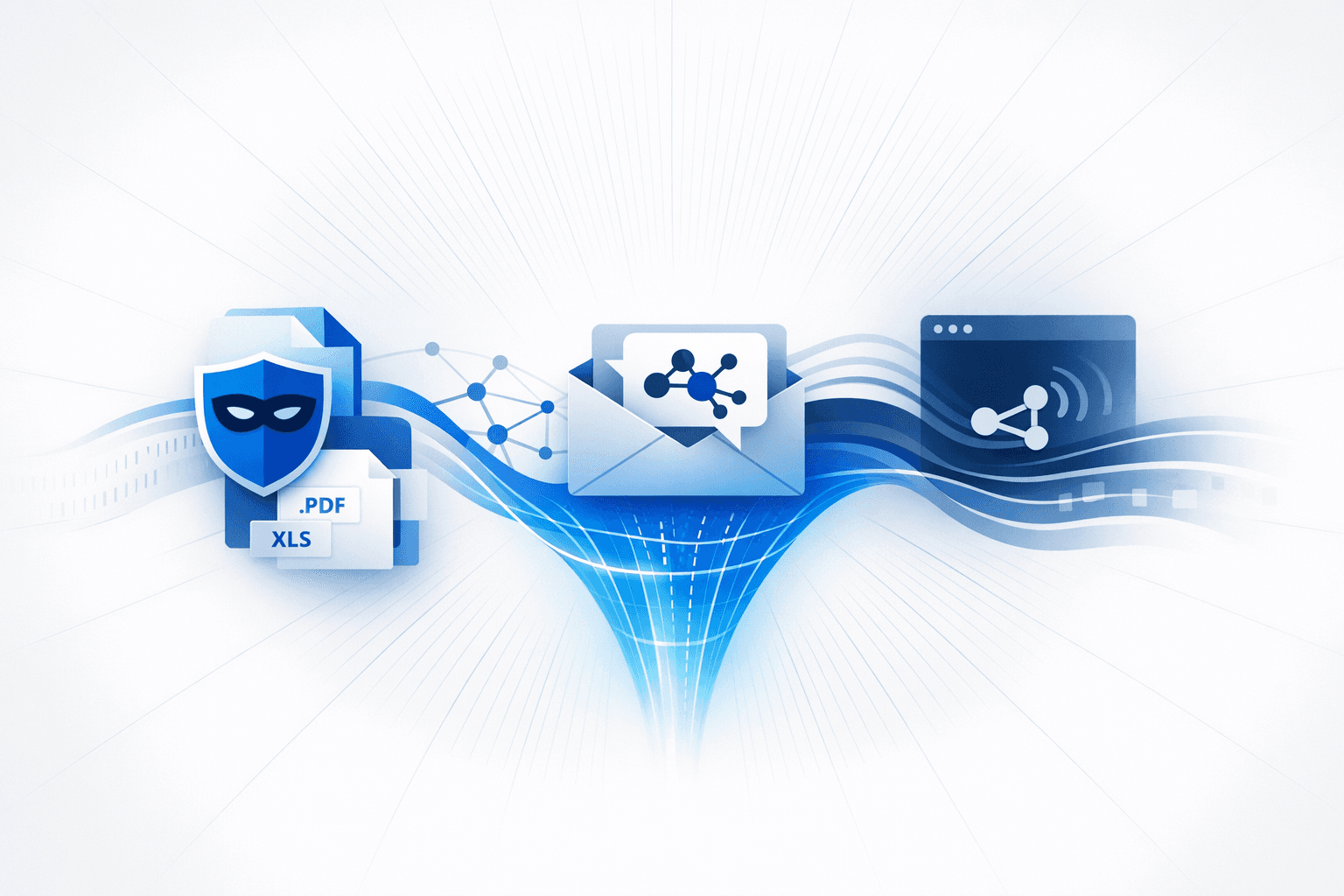
ICEDID (Bokbot), a modular banking trojan active since 2017, is delivered through phishing campaigns and can provide initial access for follow-on tools including Cobalt Strike and ransomware. Recent variants use multistage loaders and bot payloads, with lures such as ZIP archives containing ISO files and malicious LNK shortcuts that invoke rundll32.exe; earlier campaigns also used password-protected ZIP files carrying macro-enabled Word documents. The malware persists through scheduled tasks or Windows Registry Run keys, retrieves components dynamically, and supports credential and browser-cookie theft, host discovery, command execution, browser-traffic proxying, process injection, reverse shells, and VNC access.
ICEDID-enabled intrusions have progressed rapidly to RansomExx deployment: one observed operation used ICEDID, Vatet, PyXie, and Cobalt Strike to reach ransomware execution in roughly five hours. RansomExx operators also developed a Linux ELF variant targeting VMware-related storage environments, recursively encrypting a supplied directory with AES keys protected by a hardcoded RSA-4096 public key. Defenders can more reliably identify ICEDID command-and-control infrastructure through its TLS certificate-pinning implementation—validating certificate serial numbers against public-key hashes—combined with self-signed certificate metadata and scan results; JARM and JA3S fingerprints alone are not sufficient for attribution.
Why it matters
Impact assessment
ICEDID/Bokbot is a high-impact initial-access and credential-theft malware family that can rapidly progress from phishing to hands-on-keyboard intrusion and ransomware. The reported RansomExx chain reached ransomware deployment in approximately five hours, creating severe risk of credential compromise, data theft, business disruption, and Linux/VMware storage encryption.
Affected populations and scope
- Organizations with Windows endpoints whose users can receive phishing attachments are exposed to the documented delivery chains.
- Environments with browser-stored credentials, privileged Windows accounts, accessible SMB shares, and insufficiently segmented administration infrastructure face elevated follow-on risk.
- Linux systems used as VMware-related storage are a specific RansomExx encryption target.
- The references document active campaigns and observed intrusions, including organizations in the United States, Canada, and Brazil. They do not establish current 2026 exploitation volume.
Business consequences
- Credential and banking-information theft, browser cookie theft, and browser-traffic interception can enable account takeover, fraud, and unauthorized access to SaaS and internal services.
- ICEDID supports discovery, remote shells, VNC, proxying, and process injection, enabling lateral movement and extended attacker dwell time.
- RansomExx deployment can cause rapid operational outages and recovery costs; its Linux ELF variant can recursively encrypt a supplied directory, including VMware-related storage paths.
Reference-specific facts
- Elastic Security Labs, 2023: ICEDID supports credential access, browser proxying, reverse shells, VNC, dynamic component retrieval, and scheduled-task persistence.
- Elastic Security Labs, 2022: ICEDID phishing delivery and loader activity resulted in an in-memory core payload and provided modules for credential theft, discovery, command execution, and process injection.
- Trend Micro, 2021: An observed ICEDID → Vatet → PyXie/Cobalt Strike → RansomExx intrusion completed ransomware deployment in about five hours; the Linux RansomExx variant targeted VMware-related storage environments.
- Malwarebytes Labs, 2019: The reference title identifies an ICEDID version using steganographic payloads; no technical synopsis was supplied.