IcedID campaigns used stealth loaders, thread hijacking, and fake file types
Malware Intelligence · 12 sources · Updated 4mo ago · First seen May 4, 2023
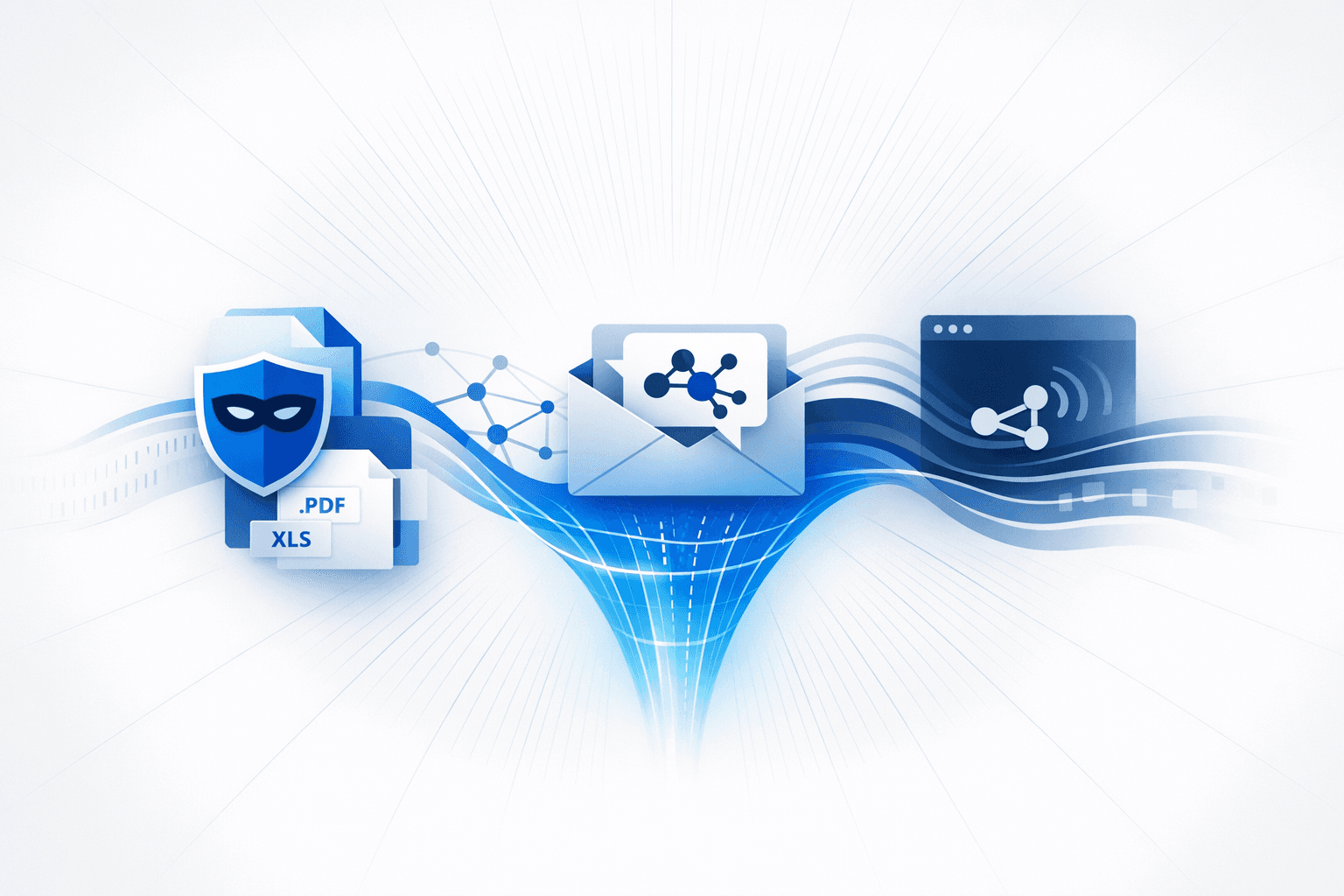
Researchers and incident responders detailed multiple IcedID intrusion chains that used phishing, hijacked email threads, contact-form abuse, and compromised mail infrastructure to deliver the malware through deceptive attachments and loaders. Campaigns sent password-protected ZIPs, ISO and LNK chains, macro-enabled Office files, and JavaScript or HTA downloaders, while also abusing legitimate services such as Google Sites and trusted email conversations. Several delivery paths relied on masquerading techniques, including DLLs disguised as .jpg files, fake GZip wrappers, and steganographic payloads hidden in PNG images, with follow-on execution through tools and binaries such as mshta.exe, rundll32, regsvr32.exe, WScript, and PowerShell.
Once executed, IcedID unpacked encrypted configurations and payloads, injected into legitimate processes, established persistence with scheduled tasks, and contacted command-and-control infrastructure including URI paths such as /news/. Technical analyses showed the malware using custom encryption, custom PE formats, RC4-decrypted PNG loaders, anti-analysis checks, and browser-hook or secondary payload components, while incident reporting tied infections to rapid post-compromise activity including Cobalt Strike deployment, credential theft from LSASS, Active Directory reconnaissance, SMB and RDP lateral movement, and use as an access broker for ransomware or espionage operations, including attacks against Ukrainian government entities.
Why it matters
Impact assessment
IcedID remains a high-risk initial access and malware delivery threat for enterprises that rely on email, Office documents, Exchange, and webmail workflows. The affected population is broad because observed delivery chains used phishing, hijacked reply chains, contact-form abuse, macro-enabled Office files, ZIP/ISO/LNK attachment chains, and trusted infrastructure such as Google Sites and compromised mail servers.
Operational impact is severe because IcedID infections were repeatedly tied to rapid hands-on-keyboard follow-on activity including Cobalt Strike deployment, LSASS credential theft, Active Directory reconnaissance, SMB/RDP lateral movement, and access-broker activity that can enable ransomware or espionage. Exposure is both widespread and targeted: broad spam and thread-hijacking campaigns hit general enterprise users, while specific incidents targeted Ukrainian government entities and organizations with exposed or unpatched Exchange or Zimbra infrastructure.
Supporting details
- Affected sectors and populations:
- Enterprise email users receiving phishing or reply-chain messages
- Organizations operating Microsoft Exchange servers
- Organizations using Zimbra Collaboration Suite 8.7 and older
- Government entities, including Ukrainian government agencies
- Financially motivated crimeware victims and organizations at risk of ransomware follow-on
- Severity:
- Credential theft from browsers and LSASS
- Host and domain reconnaissance
- Lateral movement to file servers and domain controllers
- Potential ransomware staging via Cobalt Strike and initial access brokerage
- Email exfiltration in Zimbra exploitation cases
- Scope:
- Large-scale phishing activity documented across nearly 500 artifacts in one SentinelLabs campaign
- Multiple delivery formats and infrastructure patterns indicate durable, reusable tradecraft rather than a single isolated incident
- Campaigns abused trusted conversations, contact forms, and legitimate services to increase reach and bypass controls
- Known in-the-wild activity:
- Confirmed IcedID phishing and intrusion chains across 2020-2023 reporting
- CERT-UA reported IcedID delivery against Ukrainian government agencies
- DFIR reporting documented post-compromise lateral movement within 35 minutes of initial infection
- Exchange-linked reply-chain campaigns were observed in active operations