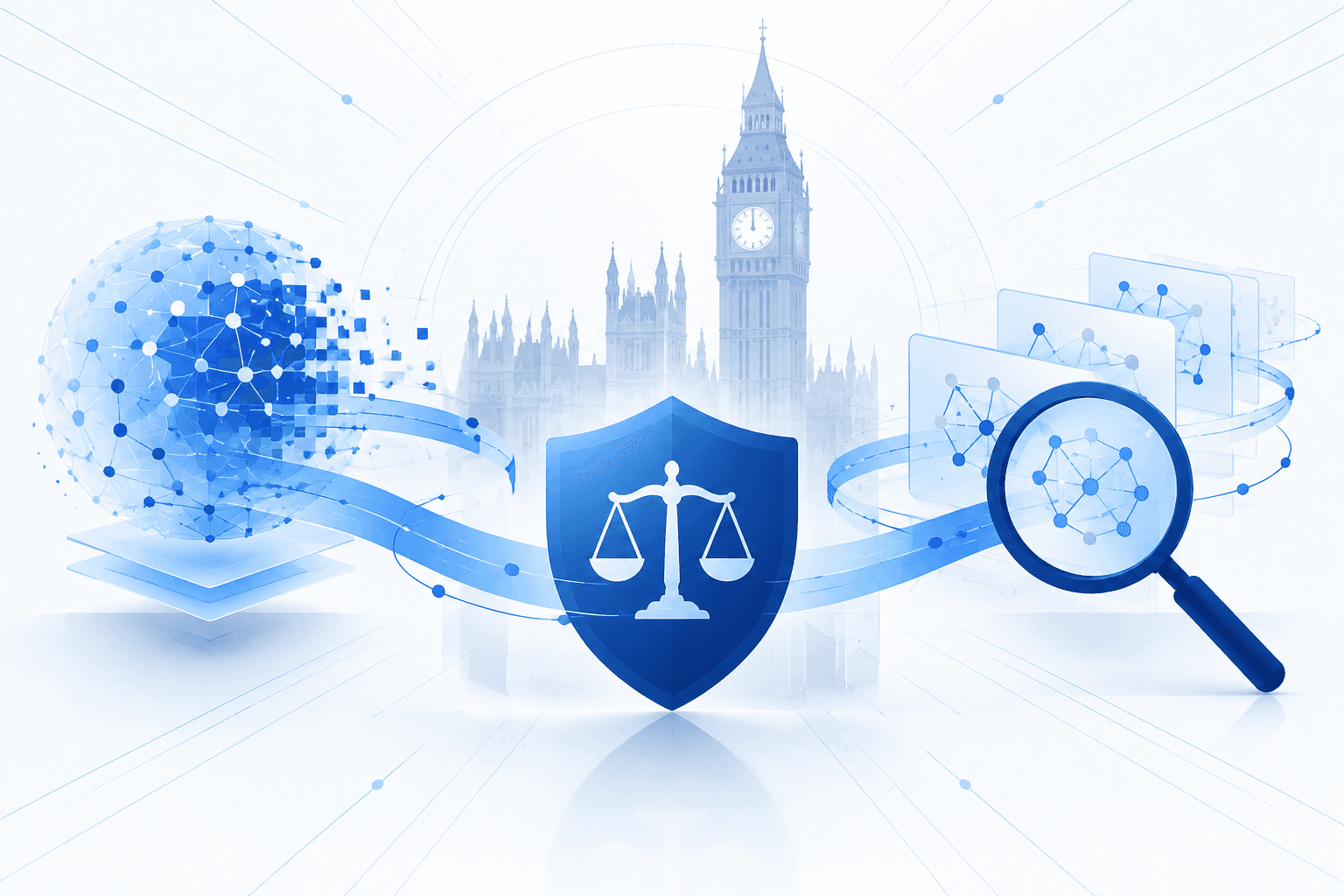
UK Cyber Bill Faces Calls for Executive Liability and AI Shutdown Powers
Regulatory & Policy · 6 sources · Updated 3mo ago · First seen Sep 7, 2026

House of Lords peers proposed amendments to the UK Cyber Security and Resilience Bill that would make senior executives personally civilly liable for serious cybersecurity failures. The government rejected the measure, citing proposed penalties of up to £17 million or 4% of annual turnover and forthcoming board-governance requirements. Peers also warned that the bill's 24-hour incident-notification and 72-hour detailed-reporting deadlines could drive defensive over-reporting, while the government said the measures are needed to modernize the NIS Regulations 2018 and enable NCSC response.
Liberal Democrat peer Lord Tim Clement-Jones also sought emergency powers for the government to deactivate dangerous AI systems and, in national-security emergencies, shut down data centers. He framed the AI “kill switch” as a last-resort control against autonomous systems compromising critical national infrastructure, including misuse by state-backed actors or ransomware groups. Industry voices supported emergency controls in principle but cautioned that the UK's dependence on foreign technology suppliers would limit their practical effectiveness without greater sovereign technology capacity and procurement reform.
Why it matters
Impact assessment
The proposed UK Cyber Security and Resilience Bill (CSRB) would materially increase regulatory, operational, and procurement risk for organisations supporting essential services, particularly energy, healthcare, telecommunications, managed service providers, cloud providers, data centres, and designated critical suppliers. The story describes proposed legislation and policy debate, not a vulnerability or confirmed cyberattack; no exploitation in the wild is reported.
- Regulated organisations may face penalties of up to £17 million or 4% of annual turnover, whichever is higher, for noncompliance.
- The proposed regime would impose a 24-hour initial incident notification and a 72-hour detailed report to the sector regulator and NCSC. Broad reporting language could increase compliance workload and defensive reporting.
- Supplier-risk exposure is a central impact: ministers could restrict future deployment of high-risk supplier technology and direct removal, disabling, or modification of existing technology.
- Forced supplier exits could create service disruption, abandoned equipment, delayed programmes, migration costs, and concentration risk if replacement suppliers share dependencies.
- Proposed AI and data-centre emergency shutdown powers, if enacted, could create continuity risk for organisations dependent on affected AI services, cloud platforms, or data-centre operations during a national-security event.
- Board accountability is increasing even though the proposed personal civil-liability amendment was rejected. Forthcoming governance requirements are expected to align with the NCSC Cyber Assessment Framework (CAF) and the UK Cyber Governance Code of Practice.
- The UK government reports that hostile activity is increasing in intensity, frequency, and sophistication. Its cited 2024 survey found breaches or attacks affecting 70% of medium businesses and 74% of large businesses over the prior 12 months.
Supporting facts
- The CSRB is intended to modernise the UK NIS Regulations 2018 and expand regulatory coverage.
- The secretary of state would be able to add sectors or sub-sectors and change regulator responsibilities.
- Retail and manufacturing were raised as sectors omitted from the currently proposed scope.
- Continuous oversight could permit pre-incident audits of cloud providers, data centres, and managed service providers.
- The government policy position states that fewer than one in ten essential-service operators are confident managing risk across their wider supply chains.