Kimsuky Evolves GitHub PAT-Based LNK Campaign With AI-Generated Decoys
Social Engineering & Fraud · 10 sources · Updated 3mo ago · First seen Sep 6, 2026
Kimsuky-linked Operation GitPower activity distributed at least 13 malicious .LNK files in ZIP archives through spearphishing, posing as finance, insurance, payment, and retail business documents. The shortcuts execute obfuscated PowerShell loaders that use a GitHub personal access token (PAT) to retrieve decoy files and subsequent payloads from GitHub Raw Content; one Visa5499 variant also used Pastebin as a second-stage delivery channel.
The malware establishes persistence through hidden scheduled tasks disguised as legitimate software, can delete itself and PowerShell history, and checks for analysis tools, virtual-machine processes, and sandbox usernames before execution. Downloaded PDF decoys contained opencode metadata, matching creation timestamps, unreplaced temporary-value placeholders, and HeadlessChrome/Skia artifacts, suggesting an automated AI/LLM-assisted lure-production workflow. Defenders should correlate LNK-launched PowerShell, unusually long whitespace-padded command lines, .ps1 creation in AppData or Temp, masqueraded scheduled tasks, and GitHub PAT or Pastebin communications.
Why it matters
Impact assessment
Kimsuky-linked Operation GitPower is actively targeting Korean financial, insurance, payment, retail, certificate-management, and corporate personnel through spearphishing ZIP attachments containing malicious Windows shortcut files. Successful execution provides stealthy, persistent access and enables detailed host reconnaissance, payload staging, and potential remote access through trusted cloud services; this creates material espionage, data-loss, and operational risks for targeted organizations.
Scope and severity
- The activity is targeted rather than indiscriminate. Korean business-document lures are prominent; English-language lures may support additional victim populations.
- Genians analyzed 13 malicious LNK samples collected from 2026-08-11 through 2026-08-19. The campaign used 29 decoy files, representing 11 unique documents redistributed under randomized names.
- Initial access requires a recipient to extract a ZIP archive and execute the contained LNK. The use of plausible business lures, PDF/XLSX/PNG decoys, browser-style icons, and forged metadata increases social-engineering effectiveness.
- No confirmed victim compromise, data theft, or public incident count is reported. The campaign has working persistence, reconnaissance, cloud-based staging, and an alternate Pastebin delivery route, making confirmed execution high risk.
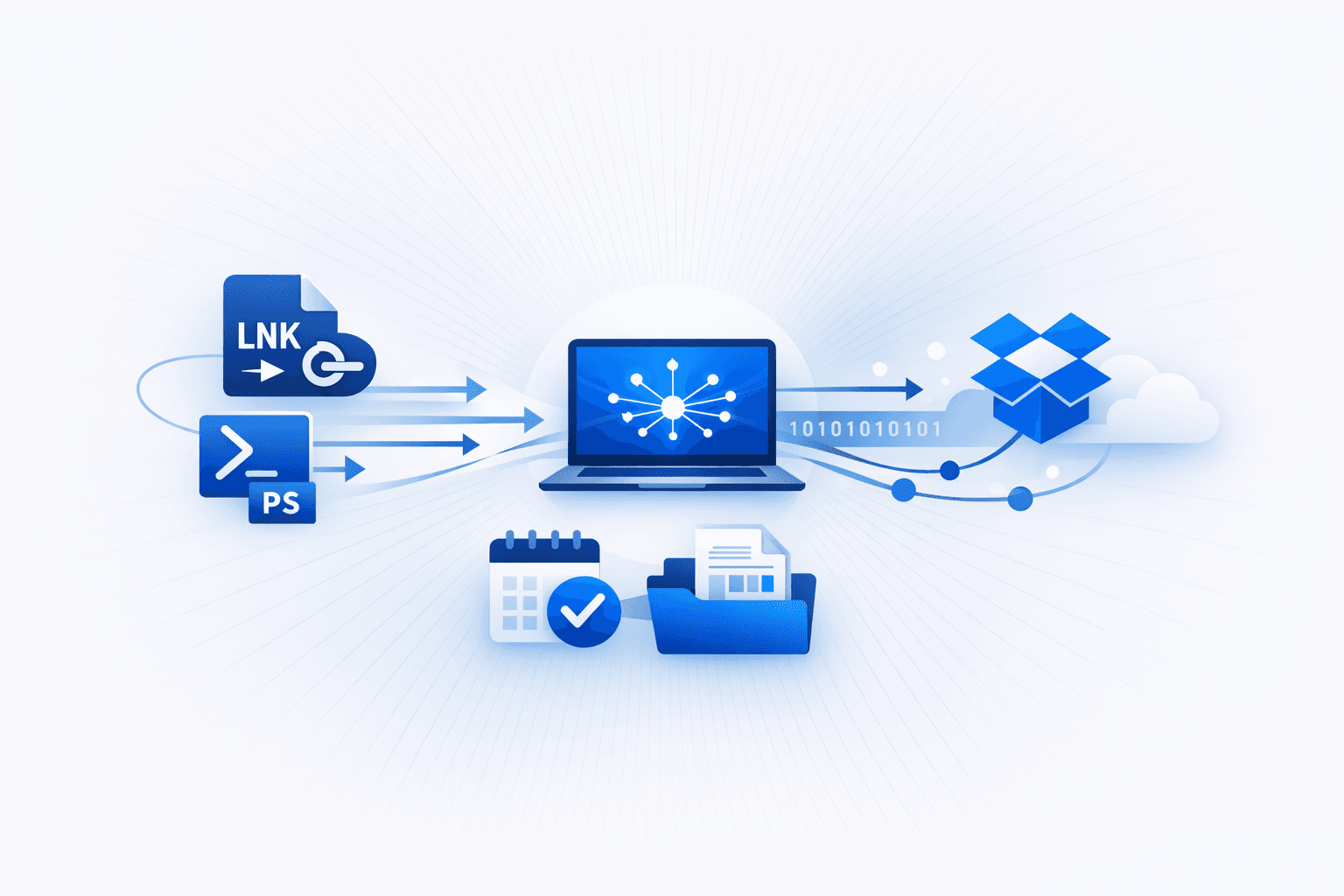
- A related Kimsuky-assessed Korean financial-PDF LNK campaign uses GitHub, Wasmer-hosted WordPress, Dropbox, and pinggy.io infrastructure for host profiling, exfiltration, and possible reverse-tunnel access. Treat it as related reporting, not confirmed as the same GitPower cluster.
Affected populations
- Windows users who receive unsolicited finance, insurance, payment, Visa, retail, policy-fund, customer-document, certificate-renewal, or corporate-document ZIP attachments.
- Organizations permitting direct user access to GitHub Raw Content, Pastebin, Dropbox APIs, or public tunneling services without endpoint and proxy monitoring.