Mallory
← Back to News
package-repository-poisoningextension-plugin-hijackbuild-pipeline-compromisestate-sponsored-espionage

PolinRider Campaign Hijacked GitHub Maintainer Accounts to Push Malware to npm

Supply Chain Risk · 2 sources · Updated 3mo ago · First seen Aug 25, 2026

PolinRider Campaign Hijacked GitHub Maintainer Accounts to Push Malware to npm

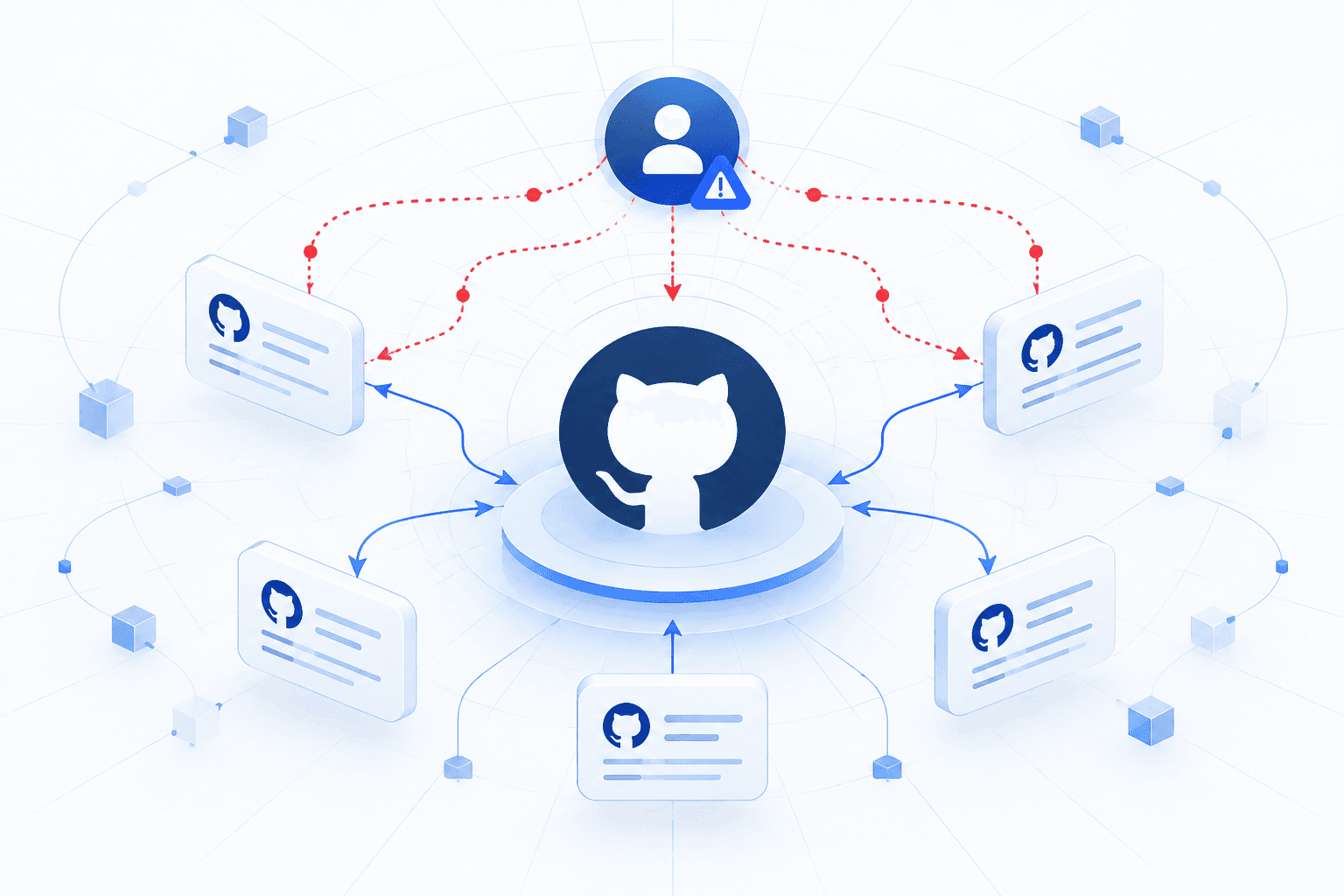
A report from OpenSource Malware says the DPRK-linked PolinRider campaign compromised legitimate GitHub maintainer accounts and used them to publish malicious npm releases, highlighting a case involving developer DiogoAngelim and the packages fetch-page-assets and html-to-gutenberg. The report says fetch-page-assets version 1.2.9 was identified and removed under advisory GHSA-vxq2-vhm7-7mhq, but attackers continued publishing malicious versions 1.2.10 through 1.2.14, with payloads tied to PolinRider/NullReceiver concealed in files including .vscode/tasks.json, a fake .woff2 font, and later babel.config.cjs.

The article says the compromise extended beyond a single package: all seven non-archived public repositories under the maintainer’s account were allegedly reinfected in coordinated force-push waves, indicating sustained attacker control over both the GitHub account and build environment. OpenSource Malware estimates the campaign has reached 4,367 repositories across 2,152 owners and argues that current GitHub and npm response mechanisms, which focus on removing specific malicious versions, are insufficient when attackers retain control of trusted maintainer accounts and can repeatedly ship new poisoned releases.

Why it matters

Impact assessment

PolinRider is a software supply-chain threat affecting npm consumers, GitHub maintainers, and organizations that build or deploy JavaScript packages from compromised upstream projects. The impact is high because attackers allegedly retained control of legitimate maintainer accounts and build environments, enabling repeated malicious releases after prior takedowns and increasing the chance of downstream developer workstation compromise and enterprise build-pipeline exposure.

Summary

The exposure is broader than a single malicious package version: the reporting indicates sustained compromise of trusted maintainer infrastructure and propagation across thousands of repositories. Exploitation appears active in the wild through published npm releases, with the campaign attributed in reporting to DPRK-linked operators.

Supporting facts

  • Affected ecosystems: GitHub-hosted JavaScript projects and npm package consumers.
  • Primary victim maintainer identified in the case study: DiogoAngelim.
    • GitHub handle: digelo
    • npm handle: digelim
  • Compromised packages named:
    • fetch-page-assets
    • html-to-gutenberg
  • Reported malicious npm releases:
    • fetch-page-assets v1.2.9
    • fetch-page-assets v1.2.10
    • fetch-page-assets v1.2.11
    • fetch-page-assets v1.2.12
    • fetch-page-assets v1.2.13
    • fetch-page-assets v1.2.14
    • html-to-gutenberg v4.2.11
  • Scope claimed by the report:
    • 4,367 repositories
    • 2,152 owners
  • Reported account-wide compromise indicators:
    • All seven non-archived public repositories under the maintainer account were allegedly reinfected.
    • Coordinated force-push bursts occurred on 2026-07-31 and 2026-08-23.
  • Business risk:
    • Developer endpoint compromise via malicious project files.
    • CI/CD and software build contamination.
    • Potential credential theft, persistence, and downstream package poisoning.
    • Reputational damage for maintainers and organizations distributing affected packages.
  • Known exploitation status:
    • Yes. The story describes malicious versions published to npm and available to consumers, not just a theoretical vulnerability.
Does this reach your builds?Trace attribution and downstream blast radius.
Trace the chain
Event timeline

How this story unfolded

Events from the most recent confirmed update back to the earliest known activity.

11 events · Mar 29, 2026 – Aug 24, 2026
  1. Aug 24, 20263mo ago

    Bluesky post links OpenSourceMalware PolinRider case study

    A Bluesky account, lazarusholic, published a post on 2026-08-24 linking to the OpenSourceMalware article titled "NPM Isn't Prepared For North Korean PolinRider Attack." The post associated the case with GitHub, npm, PolinRider, and NullReceiver and characterized it as a North Korean attack.

    Post by @lazarusholic.bsky.social - Bluesky
  2. Aug 24, 20263mo ago

    OpenSourceMalware verifies malicious task file across seven repos

    The article says a raw-content check on 2026-08-24 returned HTTP 200 for .vscode/tasks.json on the main branch of all seven affected repositories. This was presented as confirmation that the malicious launcher remained present across the victim's public repos.

    NPM Isn't Prepared For North Korean PolinRider Attack | OpenSource Malware Blog
  3. Aug 23, 20263mo ago

    Malicious fetch-page-assets v1.2.13 and v1.2.14 published

    The report says fetch-page-assets versions 1.2.13 and 1.2.14 were published on 2026-08-23 and refreshed the babel.config.cjs payload. It identifies both versions with campaign marker global.i="A8-3292-2" and says v1.2.14 became the latest dist-tag on npm.

    NPM Isn't Prepared For North Korean PolinRider Attack | OpenSource Malware Blog
  4. Aug 23, 20263mo ago

    Seven DiogoAngelim repositories reinfected in second burst

    The article states the same seven DiogoAngelim repositories were reinfected in another coordinated force-push burst on 2026-08-23. GitHub timestamps reportedly showed the updates landed across all seven repositories within 30 seconds.

    NPM Isn't Prepared For North Korean PolinRider Attack | OpenSource Malware Blog
  5. Jul 31, 20264mo ago

    fetch-page-assets v1.2.12 restores payload and adds babel loader

    The report says commit 7bd8eb2 on 2026-07-31 restored the fake font payload and added a second obfuscated NullReceiver loader to babel.config.cjs in fetch-page-assets v1.2.12. It identifies this version with campaign marker global.i="A8-3292-1".

    NPM Isn't Prepared For North Korean PolinRider Attack | OpenSource Malware Blog
  6. Jul 31, 20264mo ago

    Seven DiogoAngelim repositories force-pushed with malware

    The article says all seven non-archived public repositories under DiogoAngelim were infected in a coordinated burst on 2026-07-31. GitHub server-side timestamps reportedly showed the seven repositories were updated within 56 seconds, indicating account-wide attacker control.

    NPM Isn't Prepared For North Korean PolinRider Attack | OpenSource Malware Blog
  7. Jun 24, 20265mo ago

    npm removes fetch-page-assets v1.2.9

    The report states npm pulled fetch-page-assets version 1.2.9 on 2026-06-24 after it was flagged. However, the article says later malicious versions remained available.

    NPM Isn't Prepared For North Korean PolinRider Attack | OpenSource Malware Blog
  8. Jun 24, 20265mo ago

    GitHub advisory published for fetch-page-assets v1.2.9

    On 2026-06-24, GitHub Security Advisory GHSA-vxq2-vhm7-7mhq was published for fetch-page-assets. The advisory identified version 1.2.9 as malicious.

    NPM Isn't Prepared For North Korean PolinRider Attack | OpenSource Malware Blog
  9. Jun 2026

    JFrog publishes research on compromised npm packages

    The article says JFrog published research in June about compromised npm packages fetch-page-assets v1.2.9 and html-to-gutenberg v4.2.11. This marked public reporting on the malicious package activity.

    NPM Isn't Prepared For North Korean PolinRider Attack | OpenSource Malware Blog
  10. May 25, 20266mo ago

    Malicious fetch-page-assets v1.2.9 released to npm

    According to the report, fetch-page-assets version 1.2.9 was released on 2026-05-25 and was the first npm version to ship the malicious files to downstream users. The package carried the hidden VS Code task trigger and NullReceiver loader components.

    NPM Isn't Prepared For North Korean PolinRider Attack | OpenSource Malware Blog
  11. Mar 29, 20268mo ago

    Maintainer release workflow compromised in DiogoAngelim repository

    The OpenSourceMalware case study says the initial compromise occurred on 2026-03-29 via a github-actions[bot] commit during a release workflow. It states the malicious changes added .vscode/tasks.json and a fake font file, public/fonts/fa-solid-400.woff2, to the repository.

    NPM Isn't Prepared For North Korean PolinRider Attack | OpenSource Malware Blog
Linked entities

Related entities

Vulnerabilities, threat actors, malware, products, organizations, breaches, and observables Mallory has linked to this story. Indicator values are masked here and available in full in the app.

Open in app →

Threat actors

1 linked

Malware

1 linked

Affected products

2 linked
GithubNpm

Organizations

2 linked
GitHubnpm, Inc.

Observables

16 linked

Indicator values are masked on this page. View all 16 in Mallory Domains, IPs, hashes, and URLs are exportable to your SIEM.

Do you run this?See attribution and downstream blast radius, and whether this package or vendor reaches your builds.
Trace the Supply Chain
Mallory platform

See the full picture, correlated to your attack surface.

This page covers what’s public. Mallory adds the parts that aren’t: which of your assets are affected, which threat actors are using it right now, and what to deploy next.

Exposure mappingMap indicators from this story to your assets and identify affected systems in minutes.
Threat actor evidenceEvery observed campaign, victim, and pivot linked to actors named in this story.
Associated malwareMalware, exploits, and IOCs connected to the activity described here.
Detection signaturesYARA, Sigma, and Snort rules deployed to your SIEM as soon as they’re published.
Scheduled alertsGet matching new stories delivered to your team as they break, not the next morning.
AI threadsAsk questions about this story and take action on the answers.