PolinRider Supply Chain Campaign Hijacks Developer Packages and Uses Blockchain Dead Drops
Supply Chain Risk · 9 sources · Updated 4mo ago · First seen Jul 5, 2026

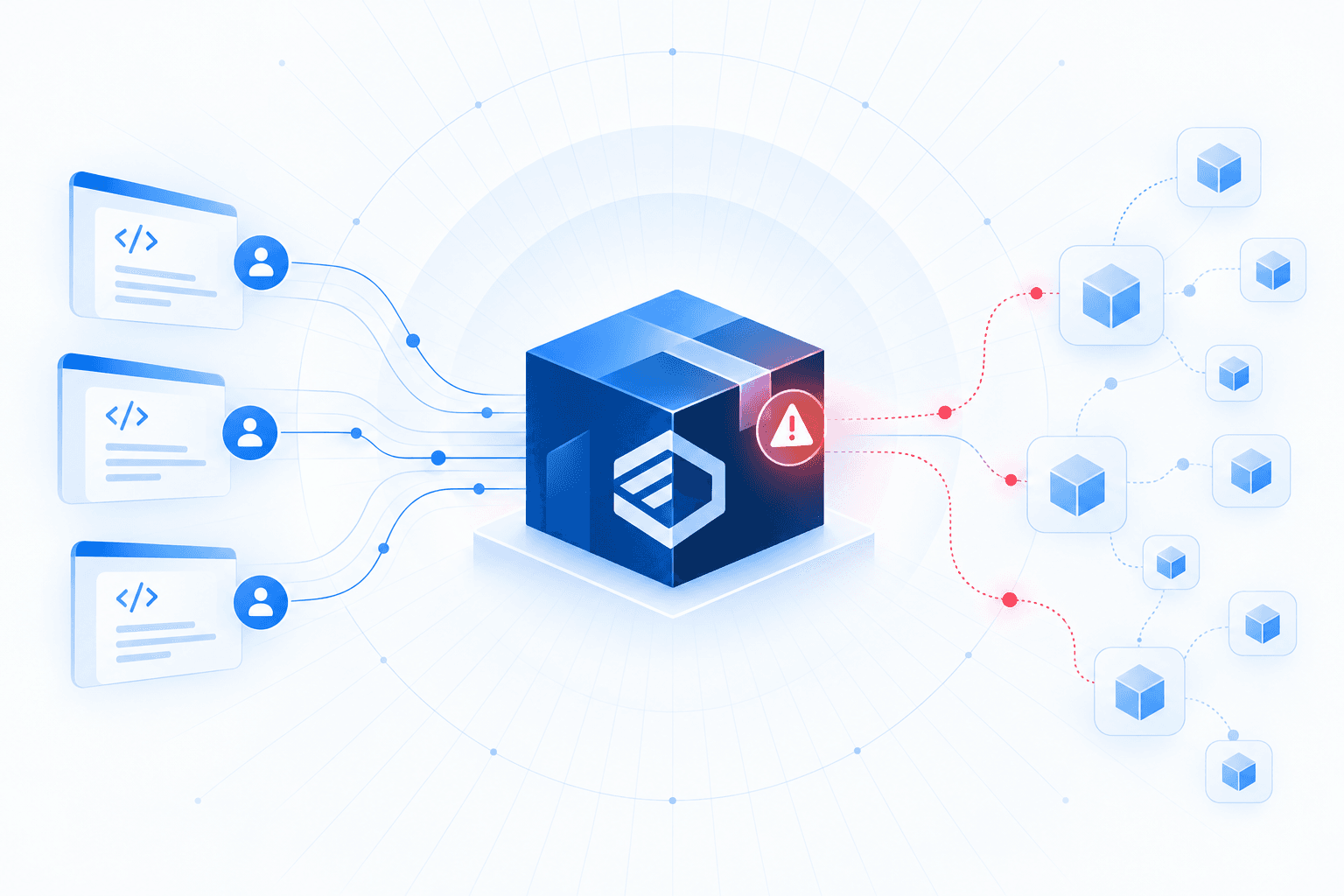
Researchers reported a broad software supply chain campaign targeting developers and cryptocurrency users through hijacked packages, browser extensions, and compromised maintainer accounts across ecosystems including npm, Go, Chrome, and Packagist. Socket linked the activity to North Korean actors associated with the Contagious Interview operation and identified 108 malicious packages and extensions spanning 162 release artifacts, while JFrog separately analyzed hijacked npm packages html-to-gutenberg 4.2.11 and fetch-page-assets 1.2.9 that were uploaded with malicious code. The activity appears to rely on account hijacking rather than compromise of GitHub itself, and some attacker infrastructure reportedly remains active even after certain packages were removed.
The malware chain used unusual delivery and evasion techniques aimed at developer workstations, including a VS Code folder-open task instead of standard npm lifecycle scripts, JavaScript hidden in a fake font file, and encrypted payload retrieval from blockchain transaction data on TRON, Aptos, and BNB Smart Chain. Researchers said the campaign deployed components including BeaverTail, DEV#POPPER RAT, OmniStealer, a socket.io backdoor, and a Python infostealer to steal browser credentials, password-manager contents, cryptocurrency wallet data, developer secrets, and operating system credential-store material across Windows, macOS, and Linux. Security firms warned that affected developer systems and credentials should be treated as fully compromised.
Why it matters
Impact assessment
PolinRider is a high-severity software supply-chain campaign targeting open-source developers, package maintainers, and downstream users of compromised packages across npm, Go modules, Packagist, Chrome extensions, and Git-backed ecosystems. The primary impact is credential theft and developer workstation compromise, with likely follow-on exposure of source code, CI/CD secrets, cloud tokens, registry credentials, browser-stored credentials, password-manager contents, and cryptocurrency wallets.
The scope is broad rather than narrowly targeted: reporting ties the activity to 108-111 malicious packages and extensions, 162 release artifacts, and up to 1,951 compromised GitHub repositories across 1,047 owners. Multiple sources state active infrastructure remains online and that environments which installed affected versions should be treated as fully compromised; exploitation in the wild is confirmed through observed malicious package uploads, hijacked maintainer accounts, and active malware delivery.
Affected populations and products
- Open-source maintainers with GitHub-backed publishing workflows
- Developers consuming packages from npm, Go, Packagist/Composer, and Chrome extension ecosystems
- Organizations relying on repo-sourced package ecosystems where Git repository access effectively equals publishing access
- Cryptocurrency users and developer workstations storing wallet extensions or secrets
- Affected packages explicitly include npm packages
html-to-gutenberg4.2.11,fetch-page-assets1.2.9,tailwind-color-shades1.0.2, andsafe-validate1.0.4
Severity and business risk
- High risk of enterprise credential compromise, source-code theft, cloud account abuse, CI/CD compromise, and wallet theft
- Potential for downstream software supply-chain propagation from a single compromised maintainer account
- Reputational and operational impact for software vendors and internal engineering teams due to poisoned dependencies and repository tampering
- SecurityWeek and Socket guidance indicate affected systems and credentials should be assumed compromised until proven otherwise
Scope and observed activity
- 162 malicious release artifacts reported across 108 unique packages by Socket
- OpenSourceMalware reported nearly 200 malicious artifacts tied to 111 packages/extensions
- More than 80 Go modules and 10 Packagist packages were identified
- One Chrome extension and clusters of npm libraries were also implicated
- Initial reporting identified 675 compromised repositories; later reporting raised this to 1,951 repositories across 1,047 owners
- Exploitation is active and ongoing; some attacker infrastructure and some malicious packages reportedly remain live